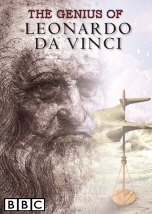
Dr Janina Ramirez embarks on a journey through six decades of the BBC archives to create a television history of one of the most celebrated figures in art - Leonardo Da Vinci. Ramirez shows how experts and art presenters have turned to television to bring Leonardo's artwork out of galleries and into our living rooms. Through television they have explored the origins of Leonardo's boundless curiosity, his pioneering use of light and shade, and his remarkable scientific exploration. Along the way Dr Ramirez discovers Britain's little-known version of The Last Supper, the gruesome ways Leonardo acquired his anatomical knowledge - and even what lies beneath the Mona Lisa.
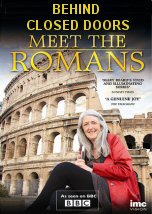
In this final episode, Mary Beard delves even deeper into ordinary Roman life by going behind the closed doors of their homes. She meets an extraordinary cast of characters - drunken housewives, teenage brides, bullied children and runaway slaves - and paints a more dynamic, lusty picture of Roman family life. Mary uncovers their preserved beds, furniture and cradles, tries on Roman wedding rings and meets some eccentric wives like Glyconis, praised by her husband for liking a drink or two, and Allia Potestas, who lived in a Roman menage a trois. Mary explores Roman parenting, childbirth and children, including Sulpicius Maximus, an 11-year-old schoolboy who was worked to death by his pushy parents, and Geminia Mater, a 5-year-old tomboy. Finally, Mary paints a more nuanced picture of Roman slavery and asks why if it was such a brutal institution did many Romans choose to be buried with their servants - living cheek by jowl in death, as in life
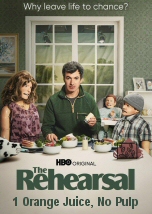
In a world where nothing seems to ever work out as you had hoped, The Rehearsal features Nathan Fielder helping ordinary people rehearse difficult conversations or life events through the use of sets and actors hired to recreate real situations. The situations can be trivial, like confessing to a lie about educational history, or more complex, like raising a child. Fielder commissions extravagant sets with every detail recreated. He hires actors to inhabit these sets and practice different dialogue trees with his clients dozens of times. Information used to train the actors and build the sets is often collected without the subjects' knowledge. In the firs episode, Nathan Fielder helps Kor Skeete, a Brooklyn-based trivia aficionado who wants to confess to his bar trivia team that he lied about having a master's degree. Nathan reveals an elaborate method of rehearsals involving an actor (K. Todd Freeman) playing a 'fake Kor'. To help Kor rehearse the difficult conversation with his teammate Tricia to clean this long-held lie, Nathan creates simulations of trivia night with a fake Tricia in a full-scale replica of the Alligator Lounge, a Brooklyn bar. Kor overcomes his fears and makes his confession to the real Tricia.
Richard Dawkins deals with some of the philosophical and social ramifications of the theory of evolution. Dawkins starts out in Kenya, speaking with palaeontologist Richard Leakey. He then visits Christ is the Answer Ministries, Kenya's largest Pentecostal church, to interview Bishop Bonifes Adoyo. Adoyo has led the movement to press Kenya's national museum to sideline its collection of hominid bones pointing to man's evolution from ape to human.[5] The collection includes the Turkana Boy discovered by Kamoya Kimeu, a member of a team led by Richard Leakey in 1984. Dawkins discusses social darwinism and eugenics, explaining how these are not versions of natural selection, and that 'Darwin has been wrongly tainted'. He then meets with evolutionary psychologist Steven Pinker to discuss how morals can be compatible with natural selection. He goes on to explaining sexual selection, with peafowls as an example. To find out whether sexual selection plays a role for altruism and kindness among humans, he visits women who are looking for sperm donors, as well as a sperm bank manager. Dawkins also explains kin selection and selfish genes.
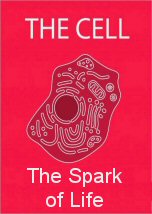
The final part reveals how our knowledge of cells has brought us to the brink of one of the most important moments in history. Scientists are close to repeating what has happened only once in four billion years - the creation of a new life form.
Dr Thomas Dixon delves into the BBC's archive to explore the troubled relationship between religion and science. From the creationists of America to the physicists of the Large Hadron Collider, he traces the expansion of scientific knowledge and asks whether there is still room for God in the modern world. He looks at what happens when new scientific discoveries start to explain events that were once seen as the workings of God, and explains how some of our most famous scientists have seen God in the grandest laws of the universe. Finally, he finds intriguing evidence from brain science which hints that belief in God is here to stay.

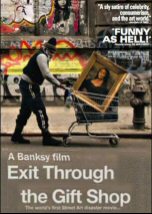





Along the way Dr Ramirez discovers Britain's little-known version of The Last Supper, the gruesome ways Leonardo acquired his anatomical knowledge - and even what lies beneath the Mona Lisa.