





Last Watched

"Palaeontology"  Sort by

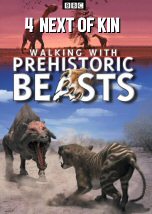
Next of Kin

       Science
Moving on to Ethiopia 3.2 million years ago, we witness the beginnings of mankind via a group of australopithecus - a type of ape which, like us, walks upright on two legs. But unlike us, these early members of the human family weren't predators, they were prey. Things get worse for the group as they are hunted by a sabre-tooth cat called dinofelis and fall victim to other dangers such as malaria, rival australopithecus and a rampaging 14-tonne deinotherium.
Series: Walking with Prehistoric Beast

Attenborough and the Giant Egg

   2011    Science
David Attenborough returns to the island of Madagascar on a very personal quest. In 1960, he visited the island to film one of his first ever wildlife series - Zoo Quest. Whilst he was there, he acquired a giant egg belonging to an extinct bird known as the 'elephant bird' - the largest bird that ever lived. It has been one of his most treasured possessions ever since. Fifty years older, he now returns to the island to find out more about this amazing creature and to see how the island has changed. Could the elephant bird's fate provide lessons that may help protect Madagascar's remaining wildlife?
Using Zoo Quest archive and specially shot location footage, this film follows David as he revisits scenes from his youth and meets people at the front line of wildlife protection. On his return, scientists at Oxford University are able to reveal for the first time how old David's egg actually is, and what that might tell us about the legendary elephant bird.

Uncovering Our Earliest Ancestor

   2009    Science
The BBC has made an extraordinary new documentary, presented by Sir David Attenborough, which will reveal the discovery of a fossilised skeleton that may be a vital ‘missing link’ in human evolution. The centrepiece of the programme is the unveiling of the first-ever complete skeleton of an extinct animal called an adapid

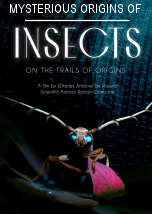
Mysterious Origins of Insects

   2024    Science    HD
The film explores the eye-opening realm of these creatures to better understand how they evolved. Travelling from the rain forests of French Guiana to the Arctic Ocean, scientists use traditional and cutting edge techniques to examine both modern insects and the fossil record in their search for a single common insect ancestor. Insects are vital to life on our planet, yet almost 40% of known species are in danger of extinction.
Insects are the most diverse group of organisms on Earth. The true number of species is unknown, but some estimates suggest that only a fraction have been identified. They have successfully adapted to every ecosystem on our planet. But insects still harbour many mysteries. Where do they come from? When did they first appear on Earth? How and why have they diversified and multiplied so successfully? At a time when certain insect species are in danger of extinction and there is greater interest in their role within ecosystems, this is the fascinating story of their origins.

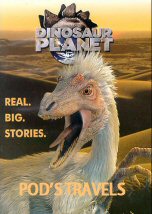
Dinosaur Planet: Pod Travels

   2003    Science
SETTING: 70 million years ago in Europe, near present-day Romania. Pod, a male pyroraptor, is alone in the world after his sisters die in a tidal wave that sweeps him out to sea. After landing on an island populated with dwarf-sized dinosaurs, Pod discovers that he's become the apex predator. But, Pod learns it's lonely at the top.
Series: Dinosaur Planet

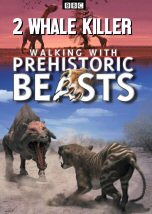
Whale Killer

       Science
Moving on to the Late Eocene period 36 million years ago and mammals have prospered and are now the largest creatures on land and sea. This is an era of animals like andrewsarchus, the biggest mammal carnivore ever to walk on land, and the brontotheres, small-brained herbivores. It is in the sea, however, that the most monstrous mammals of all can be found. We follow the fate of a female basilosaurus, a huge serpent-like early whale, but nothing like the gentle filter feeding whales of the 21st century. Four times the length of the great white shark, with jaws to match, she is every inch a killer.
Series: Walking with Prehistoric Beast