The film examines the profound claim that most, if not all, of the degenerative diseases that afflict us can be controlled, or even reversed, by rejecting our present menu of animal-based and processed foods. Despite the most advanced medical technology in the world, we are sicker than ever by nearly every measure. Cases of diabetes are exploding, especially amongst our younger population. About half of us are taking at least one prescription drug and major medical operations have become routine. Heart disease, cancer and stroke are the country's three leading causes of death, even though billions are spent each year to 'battle' these very conditions. Millions suffer from a host of other degenerative diseases. Could it be there's a single solution to all of these problems?
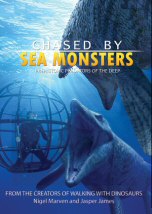
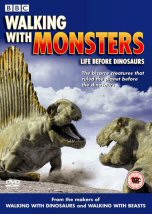
From the makers of Walking With Dinosaurs comes an epic and entertaining new exploration of early life on Earth, revealing that before the age dinosaurs, a succession of fantastical animals and plants ruled the planet. A time when a two-ton predatory fish came on land to hunt, when four-metre sea scorpions sliced sushi in the shallows and when just one species of lumbering reptile represented 80 per cent of all life. For the first time, this special two-hour presentation uncovers and recreates these creatures and the bizarre world they inhabited.
Academy Award-winning director Alex Gibney (Taxi to the Dark Side) masterfully explores the fall of the disgraced cycling champion following the 2009 Tour de France, making use of his extraordinary access to attain rare interviews with former teammates, alleged doping mastermind Dr. Michele Ferrari, and Armstrong himself. What was Lance Armstrong thinking? For years, after seizing international fame as the cancer survivor who won seven Tour de France titles, he fiercely denied accusations that he used performance-enhancing drugs. He used his power to aggressively litigate journalists and publicly humiliate former friends who claimed otherwise. His deceit finally cracked in January 2013, when he admitted guilt to Oprah Winfrey in a television interview that critics decried for only scratching the surface. Academy Award-winning director Alex Gibney approaches Armstrong with unique and extraordinary access. In 2009, Gibney was commissioned to make a film about Armstrong's return to the Tour de France, four years after the racing champion had declared retirement. That race would later stir up devastating evidence in the case against Armstrong. But Gibney came away from the experience unable to reconcile the discrepancy between doping allegations and Armstrong's emphatic denials. Then, post-Oprah, Gibney went back to Armstrong for new interviews to extract a more detailed account of his double life. In The Armstrong Lie, Gibney masterfully explores the complexities of the case, interweaving the dramatic action of the 2009 Tour de France, when Armstrong found himself unexpectedly competing against his own teammate Alberto Contador. Gibney attains rare interviews with Armstrong's former teammates and alleged doping mastermind Dr. Michele Ferrari. The film also raises troubling questions about the process of doping regulation. Recently, when asked to give advice to documentary filmmakers, Gibney responded with a motto exemplified by this film: "Embrace contradictions."
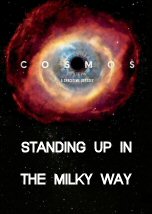
Famed astrophysicist Neil deGrasse Tyson takes a tour of the Solar System and the known universe establishing the components of Earth's "address" within the Virgo Supercluster. He then shares the story of the person who championed an expansive understanding of Earth's place in the universe by presenting Renaissance Italian Giordano Bruno's vision of the universe as a limitless expanse of space and time. He then makes an exploration into the Cosmic Calendar, which dates back to the dawn of the Big Bang (similar to the presentation from episode 1 of the original series). The episode ends with deGrasse Tyson narrating how he met his mentor Carl Sagan, who hosted the first Cosmos series.
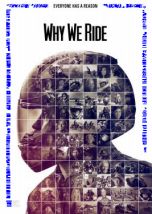
An inspiring celebration of the motorcycling community, this documentary film shares the passion of motorcycle riding and shows the camaraderie of the friends and families who ride together. As told by the many racers, riders, pioneers, and parents in the sport, the story weaves its way through generations of motorcyclists who live each day to the fullest on their two-wheeled machines. The refreshing message about the joys of motorcycling, coupled with state of the art photography, capture the imagination and set the soul in motion.
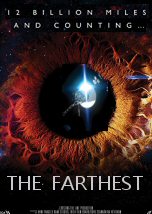
Is it humankind's greatest achievement? 12 billion miles away a tiny spaceship is leaving our Solar System and entering the void of deep space. It is the first human-made object ever to do so. Slowly dying within its heart is a plutonium generator that will beat for perhaps another decade before the lights on Voyager finally go out. But this little craft will travel on for millions of years, carrying a Golden Record bearing recordings and images of life on Earth. In all likelihood Voyager will outlive humanity and all our creations. It could be the only thing to mark our existence. Perhaps some day an alien will find it and wonder. The story of Voyager is an epic of human achievement, personal drama and almost miraculous success. Launched 16 days apart in Autumn 1977, the twin Voyager space probes have defied all the odds, survived countless near misses and almost 40 years later continue to beam revolutionary information across unimaginable distances.

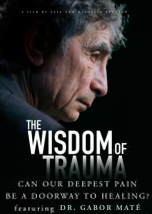







Despite the most advanced medical technology in the world, we are sicker than ever by nearly every measure. Cases of diabetes are exploding, especially amongst our younger population. About half of us are taking at least one prescription drug and major medical operations have become routine. Heart disease, cancer and stroke are the country's three leading causes of death, even though billions are spent each year to 'battle' these very conditions. Millions suffer from a host of other degenerative diseases. Could it be there's a single solution to all of these problems?