‘Retrograde’ offers a deeply intimate account of the end of Americas's longest war and humanizes the individuals most impacted through both US and Afghan perspectives. With a character-driven, cinema-verite approach, the film functions as an up-close record of a turning point in American and Afghan history while also providing an emotional reminder of the human costs of war. ‘Retrograde’ focuses in the relationship between American Green Berets and the Afghan officers they trained.
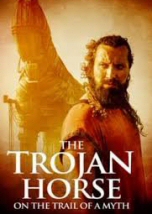
Was the famous wooden structure a clever war tactic—or pure invention? This documentary dives into ancient clues, archaeological digs, and expert theories to uncover the truth behind this iconic tale. It challenges long-held beliefs about the fall of Troy. With vivid reenactments and insights from leading historians, it blurs the line between legend and reality, revealing a story more intriguing than we ever imagined.
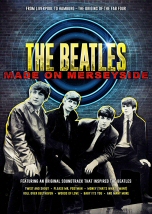
They defined music and popular culture like no other band ever will - but how did The Beatles make the journey from Merseyside teenagers to international pop stars in the 1960s? Made on Merseyside - The Beatles discovers how American rock 'n' roll and rhythm and blues dragged post-war Liverpool into one of the most vibrant music cities ever with the Mersey Sound. Featuring revealing interviews from those involved in the early years of The Beatles in Liverpool and Hamburg and unique archive, the incredible story of The Beatles' previous band formations and why it took so long for them to achieve success makes riveting viewing. From school bands, to colleges; Hamburg to The Cavern Club, The Beatles changed the world of pop music forever, but was Pete Best's sacking from the band and Ringo's replacement the final part of the jigsaw?
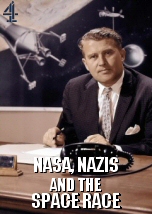
Against the backdrop of Cold War tensions and a global race for supremacy, this riveting film unveils a deeply unsettling chapter in space history. It reveals how the triumph of the 1969 Moon landing was made possible through the morally contentious recruitment of former Nazi scientists—most notably Wernher von Braun—who had engineered Germany’s V‑2 rockets during World War II through Operation Paperclip. As America navigated the ethical maze of enlisting men with dark pasts, these scientists became pivotal in crafting the mighty Saturn V rocket and ushering in the age of space exploration. This documentary invites viewers to confront the unspoken complexity behind progress: the collision of ambition, conscience, and the weight of history.
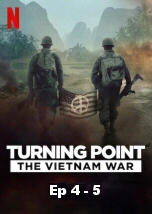
In Episodes 4 and 5, the war reaches a brutal turning point. As the Tet Offensive erupts, Hunter embeds with American and South Vietnamese troops caught completely off guard. What unfolds is raw, unfiltered chaos—urban combat in shattered cities, desperate ambushes in the jungle, and a shocking realization that the war is far from over. Through Hunter’s lens, we see not just the front lines, but the crumbling morale, the divided home front, and the faces of those questioning what they’re fighting for. These episodes pull you straight into the eye of the conflict—and what you’ll witness will stay with you forever.
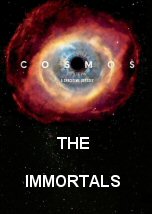
This episode covers the nature of how life may have developed on Earth and the possibility of life on other planets. Tyson begins by explaining how the human development of writing systems enabled the transfer of information through generations, describing how Princess Enheduanna ca. 2280 BCE would be one of the first to sign her name to her works, and how Gilgamesh collected stories, including that of Utnapishtim documenting a great flood comparable to the story of Noah's Ark. Tyson explains how DNA similarly records information to propagate life, and postulates theories of how DNA originated on Earth, including evolution from a shallow tide pool, or from the ejecta of meteor collisions from other planets. In the latter case, Tyson explains how comparing the composition of the Nakhla meteorite in 1911 to results collected by the Viking program demonstrated that material from Mars could transit to Earth, and the ability of some microbes to survive the harsh conditions of space. With the motions of solar systems through the galaxy over billions of years, life could conceivably propagate from planet to planet in the same manner. Tyson then moves on to consider if life on other planets could exist. He explains how Project Diana performed in the 1960s showed that radio waves are able to travel in space, and that all of humanity's broadcast signals continue to radiate into space from our planet. Tyson notes that projects have since looked for similar signals potentially emanating from other solar systems. Tyson then explains that the development and lifespan of extraterrestrial civilizations must be considered for such detection to be realized. He notes that civilizations can be wiped out by cosmic events like supernovae, natural disasters such as the Toba disaster, or even self-destruct through war or other means, making probability estimates difficult. Tyson describes how elliptical galaxies, in which some of the oldest red dwarf stars exist, would offer the best chance of finding established civilizations. Tyson concludes that human intelligence properly applied should allow our species to avoid such disasters and enable us to migrate beyond the Earth before the Sun's eventual transformation into a red giant.








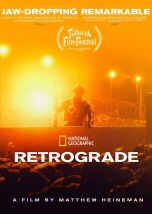






‘Retrograde’ focuses in the relationship between American Green Berets and the Afghan officers they trained.