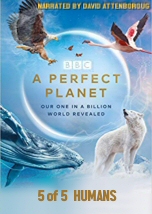
A new force threatens our perfect planet. In the past, five mass extinction events were caused by cataclysmic volcanic eruptions. It was not the lava or ash that wiped out life, but an invisible gas released by volcanoes: carbon dioxide. Almost every part of modern life depends on energy created by burning fossil fuels, and this produces CO2 in huge amounts. Humans are changing our planet so rapidly, it’s affecting earth’s life support systems: our weather, our oceans and the living world. The greatest change to be made is in how we create energy, and the planet is brimming with natural power that can help us do just that. It’s these forces of nature - the wind, the sun, waves and geothermal energy - that hold the key to our future. Through compelling animal-led stories and expert interviews, we discover how CO2 is destabilising our planet. We meet rescued orphaned elephants in Kenya, victims of ever worsening droughts, and join ocean patrols off the coast of Gabon fighting to save endangered sharks. In the Amazon, we witness wildlife teams saving animals in the shrinking forests, and in San Diego we enter a cryogenic zoo preserving the DNA of endangered species before they become extinct.
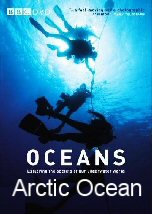
With much of it covered in ice all year round and with no daylight from October to March, the Arctic Ocean is one of the world's most remarkable oceans. Its home to a multitude of unique life forms, all highly adapted to cope with the extreme and seasonal conditions. The impacts of climate change are more strongly felt here than anywhere else in the world.
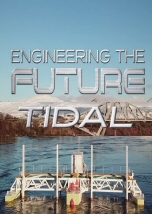
As tides rise and fall twice a day, vast amounts of water swirl around the earth. This is a huge energy source that's currently largely untapped. An estimated 3000 gigawatts are available to be harvested globally, enough to power a third of the earth's homes. Yet compared to wind and solar, the technology needed to harness tidal power is still in its infancy. The power of the ocean’s tides is the last great untapped energy source on Earth. From sub-sea kites to floating platforms, teams of engineers are racing to perfect the technology to harness the vast flows of water.
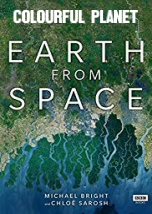
The Blue Marble is an image of Earth taken on 1972, from a distance of about 18,000 miles from the planet's surface. It was taken by the crew of the Apollo 17 spacecraft on its way to the Moon. Before it was photographed from space, our perspective of Earth was fragmented and disconnected. Recent discoveries have revealed a dynamic and rapidly changing planet, above the crust and below.
The world's shipping industry is facing a major challenge. If global shipping were a country it would be the sixth largest producer of greenhouse gas emissions. At current growth rates, if we do nothing, those emissions could double or even triple by 2050. But shipping companies and engineers are creating remarkable new machines to make their industry greener, using a resource that has moved man across the world’s oceans for thousands of years…Wind.
Even as the science grew more certain, the oil industry continued to block action to tackle climate change in the new millennium. In a revelatory interview, Christine Todd Whitman, George W. Bush's former environment chief, tells the story of how the industry successfully lobbied President Bush to reverse course on his campaign promise to regulate carbon emissions. Tensions grew between two of the world's biggest oil companies, ExxonMobil and BP, after the latter publicly called for action to tackle climate change. The election of Barack Obama provided hope for supporters of climate action, but the billionaire Koch brothers made an effort to block the new president's attempts to pass climate change legislation, and climate denialism became the mainstream position of the Republican Party. A lawyer who worked for Koch brothers through this period speaks on camera for the first time.



















Through compelling animal-led stories and expert interviews, we discover how CO2 is destabilising our planet. We meet rescued orphaned elephants in Kenya, victims of ever worsening droughts, and join ocean patrols off the coast of Gabon fighting to save endangered sharks. In the Amazon, we witness wildlife teams saving animals in the shrinking forests, and in San Diego we enter a cryogenic zoo preserving the DNA of endangered species before they become extinct.