




Last Watched

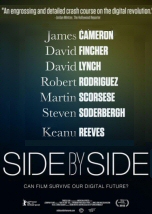
Side by Side

   2012    Art
Join Keanu Reeves on a tour of the past and the future of filmmaking. Since the invention of cinema, the standard format for recording moving images has been film. Over the past two decades, a new form of digital filmmaking has emerged, creating a groundbreaking evolution in the medium. The film investigates the history, process and workflow of both digital and photochemical film creation. We will explore it via in-depth interviews with directors, cinematographers, colorists, scientists, engineers and artists such as James Cameron, David Fincher, David Lynch, Martin Scorsese, Steven Soderbergh, and many more
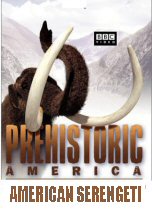
American Serengeti

   2003    Nature
Journey through the long-vanished corners of prehistoric North America, beginning when man first entered the vast, unspoiled continent some 14,000 years ago, in this appealing BBC documentary. Witness ancient beasts, mammoths, mastodons, giant bears, and sabre-toothed cats, and see the legacies each has passed to their modern successors. Computer animation and digital effects bring to life mammoths, saber-toothed cats, giant ground sloths, short-faced bears, glyptodonts, and a plethora of smaller animals in a lush Ice Age mosaic. Discoveries from sites across America are the basis for the reconstructions.
Series: Prehistoric America

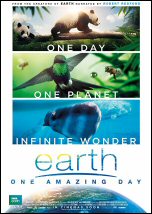
Earth: One Amazing Day

   2017    Nature
An astonishing journey revealing the awesome power of the natural world. Over the course of one single day, we track the sun from the highest mountains to the remotest islands, from exotic jungles to urban jungles. Breakthroughs in filmmaking technology bring you up close with a cast of unforgettable characters: a baby zebra desperate to cross a swollen river, a penguin who heroically undertakes a death-defying daily commute to feed his family, a family of sperm whales who like to snooze vertically, and a sloth on the hunt for love.
Told with humour, intimacy and a jaw-dropping sense of cinematic splendour, Earth: One Amazing Day highlights how every day is filled with more wonders than you can possibly imagine- until now.

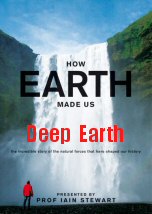
Deep Earth

   2010    Science
Our planet has amazing power, and yet that's rarely mentioned in our history books. This series tells the story of how the Earth has influenced human history, from the dawn of civilisation to the modern industrial age. It reveals how geology, geography and climate have been a far more powerful influence on the human story than has previously been acknowledged. A combination of epic story telling, visually stunning camerawork, extraordinary locations and passionate presenting combine to form a highly original version of human history" In the first episode professor Iain Stewart explores the relationship between the deep Earth and the development of human civilisation. He visits an extraordinary crystal cave in Mexico, drops down a hole in the Iranian desert and crawls through seven-thousand-year-old tunnels in Israel. His exploration reveals that throughout history, our ancestors were strangely drawn to fault lines, areas which connect the surface with the deep interior of the planet. These fault lines gave access to important resources, but also brought with them great danger.
Series: How Earth Made Us

Amanda Knox

   2016    Culture
American exchange student Amanda Knox is convicted and eventually acquitted for the 2007 death of another student in Italy. Was she a cold-blooded psychopath who brutally murdered her roommate or a naive student abroad trapped in an endless nightmare? Directors Rod Blackhurst (Tribeca Audience Award-winner Here Alone) and Brian McGinn (IDA Award-winner Chef's Table) and producer Mette Heide (Peabody Award-winner India's Daughter) explore the notorious case that made headlines around the world.

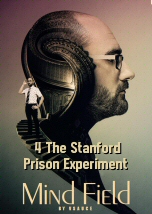
The Stanford Prison Experiment

   2019    Culture
It all begins as a study on the psychology of prison life led by Stanford psychology professor Dr. Philip Zimbardo. 24 volunteers - 12 guards and 12 prisoners - have agreed to spend the next two weeks recreating life in a correctional facility. Normal people can become monsters, given the right situation, that's the standard narrative of the Stanford Prison Experiment, one of the most famous psychological experiments of all time.
But what if the cause of its participants' cruel behavior wasn't what we've always been told?
Series: Mind Field