The fourth part of the series focuses on the exciting and dramatic Formula 1 race in which Rubens Barrichello and Jenson Button, drivers of the Brawn GP team, fought for the championship. Rubens Barrichello leads the race. However, tension rises when Jenson Button, his teammate and main rival for the title, begins to gain ground. The narration intensifies with the description of technical problems and crucial strategic decisions. As the race unfolds, the internal dynamics of the Brawn GP team are explored, as well as the rivalry between the drivers and the pressure to win the championship. The narrative reaches its climax in the thrilling final laps, where victory and defeat are decided by small margins. The episode concludes with the celebration of victory and reflection on the significance of this race for the drivers, the team, and their place in the history of Formula 1. The documentary is a mix of on-track action, human and technical drama, and a deep exploration of what it takes to win at the highest level of motorsport.
Oscar-nominated actor, screenwriter, director, and producer, Sylvester Stallone has entertained audiences for nearly half a century. This revealing documentary offers an intimate and inspiring glimpse into his life, featuring sincere, previously unreleased interviews and extensive archival footage. It explores his journey from humble beginnings to Hollywood stardom, drawing parallels between his personal underdog story and the legendary characters he's played in blockbuster franchises like 'Rocky', 'Rambo', and 'The Expendables'. This film not only highlights Stallone's remarkable career but also provides a deeper understanding of the man behind the unforgettable roles.
On 20th and 21st of December 1980, Dire Straits played at the Rainbow Theatre, London. Both nights were recorded for broadcasting on BBC2 television. Cameras were on hand to film the return of Dire Straits from their triumphant 1980 Brothers in Arms world tour. The film features a superb concert they played and band members talk about their music and the pressures and the consequences of success. Rehearsals took place at the Whood Wharf studio in London as well, between March 4-7, 1980, as well as interviews Less than a year later, before the recording sessions for ‘Making Movies’ ended (after Mark admitted that he wished they would continue indefinitely), David would leave the band, never to return.
The 1980s was an era in which a fusillade of new genres emerged, and many are still with us today, such as hip-hop and house. Dylan Jones has mined the archives to select some of the most crucial tracks in the rise of these two genres. From a young Kurtis Blow making his Top of the Pops debut to the sonic bombardment of Public Enemy and the sampling skills of Bomb the Bass, this episode showcases the evolution in rap and house music across the decade. There are rare archival interviews and stellar performances from Run-DMC, Salt 'N' Pepa, S'Express, Cookie Crew and Neneh Cherry, as well as iconic videos from Herbie Hancock, The Beastie Boys, M/A/R/R/S, Grandmaster Flash and the Furious Five, and many more.
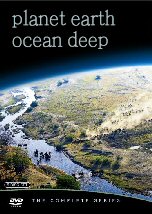
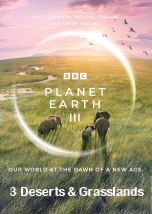
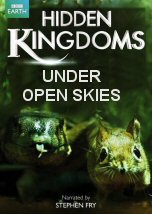
The third episode takes viewers on a riveting journey to some of the world's most extreme and breathtaking deserts and grasslands, where nature puts on its most dramatic show. It begins in the arid landscapes of Central Africa's Guelta d'Archei and the Namib Desert in Southwest Africa, places where water is scarce, and survival is a daily battle. The focus then shifts to the remarkable adaptability of creatures like ostriches, who brave the scorching heat and predators to raise their young and a handful of leopards who learned to hunt from trees on the African plains. In Australia, viewers witness the intricate courtship rituals of the spotted bowerbird, a species facing challenges due to climate change. The narrative then takes us to the vast Eurasian Steppe, home to the unique Saiga antelope, and to Brazil's Cerrado, a biodiverse grassland where the elusive maned wolf plays a crucial role in maintaining the ecosystem. The episode highlights not only the resilience and beauty of these creatures but also the fragility of their habitats, emphasizing the urgent need for conservation efforts.
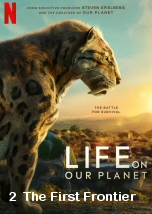
The second episode of the series immerses the viewer in a fascinating journey through the history of life on our planet, focusing on the evolution and adaptation of life in the seas. It begins billions of years ago, when the Earth was an inhospitable place and life was impossible on the surface due to a hostile environment. The documentary highlights how, beneath the waves, life began to flourish, protected from storms and other elements of nature. It addresses the development of photosynthesis by plankton and how this led to a significant change in the Earth's atmosphere, allowing the emergence of animal life. This visually stunning narrative chronicles the evolution of various forms of marine life, from the earliest complex life forms to the appearance of the first fish and cephalopods. The documentary shows how marine life has influenced terrestrial life, emphasizing the impact of the 'greening' of planet Earth.












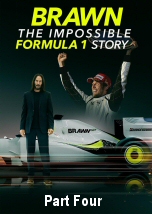








The episode concludes with the celebration of victory and reflection on the significance of this race for the drivers, the team, and their place in the history of Formula 1. The documentary is a mix of on-track action, human and technical drama, and a deep exploration of what it takes to win at the highest level of motorsport.