










Last Watched

"Sea"  Sort by

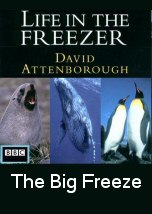
The Big Freeze

   1993    Nature
As almost all animal inhabitants of Antarctica are forced to migrate north, the sea underneath the frozen ice still provides a home to many specially adapted fish whose cells are protected from freezing through an 'antifreeze' liquid. Many of them feed on the faeces of other animals. The most notable larger animal that does not migrate north is perhaps the Weddell Seal, which can be found as close as 1300 kilometres to the pole. Groups of seals tear holes into the ice to dive for food and come up to breathe. The females come back to the ice to give birth. This episode also describes primitive plant life such as lichen, which can still be found on the continent in winter, even in the extremely dry and permanently frozen valleys conditions under which dead animals can lie frozen for many centuries without decomposing. It details the life of the Emperor Penguin, 'the only birds to lay their eggs directly on ice'. While other animals retreat, Emperors migrate not just to the ice, but into the Antarctic continent. The females lay eggs which are incubated by the males under the harshest conditions on Earth (huddling closely together for warmth), while the females return to the sea.
Series: Life in the Freezer

About your Father

       History
With the defeat of the Egyptian fleet at Actium, Mark Antony and Cleopatra retreat to their palace and await their fate. Believing that Cleopatra has taken her life, Mark Antony decides follow her into the afterlife. She has other plans however and is quite prepared to negotiate with Octavian if there is any possibility her life and those of her children will be spared. Cleopatra asks Vorenus to take her son Caesarian to safety and Octavian sends Pullo after them. The old friends are soon together again.
Series: Rome Second Season

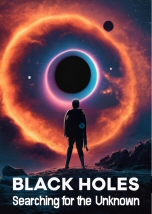
Black Holes: Searching for the Unknown

   2023    Science
The film explores the science of black holes and delves into the incredible techniques used to uncover their secrets. Researchers reveal the fundamental role of black holes in the evolution of our universe and galaxies, with new findings from James Webb Space Telescope (JWST), Laser Interferometer Gravitational-Wave Observatory (LIGO), and analogue experiments. The documentary also features experiments on Earth that mimic black hole physics, offering insights into their behaviors. Although we may never directly observe the inside of a black hole, these experiments allow us to test theoretical physics and gain a deeper understanding of these enigmatic cosmic phenomena.
Series: The Sky at Night

Gravity

   2008    Science
Gravity is the most powerful and exacting force in the universe. It is pervasive and penetrating. Gravity binds us together, its reach hangs stars in the sky and its grip crushes light. Gravity holds planets together, and leashes them to their suns. Without gravity, stars, comets, moons, nebulae, and even the Earth itself would not exist. Explore how science and humanity discovered, overcame and utilized gravity. Learn what it takes to propel objects into the heavens, to ride a wave or to ski down a slope. Take a front row seat as an astronaut subjects himself to the weightless wonders of the specially modified aircraft used to train astronauts known as the "Vomit Comet."
Series: The Universe

Coronavirus Special Part 2

   2020    Medicine
Dr Chris van Tulleken, Dr Hannah Fry and Michael Mosley examine the latest research and explore some of the big questions about Covid-19 and the pandemic it has created. Michael visits the UK government's high-security laboratory Porton Down, where vaccines are being tested. He also uncovers what the experience of the 2002 SARs epidemic reveals about this one. Both were caused by coronaviruses, but certain key changes to today's virus have allowed it to infect the world, where SARs was contained.
Series: Coronavirus Special

Mars: the New Evidence

   2010    Science
In the last few years, the Red Planet has yielded up many new clues that life may have once existed there...and may even exist there today. There is now have proof that water once flowed on the surface, that Mars once had lakes, and that the frozen poles are mostly water, not carbon dioxide as previously thought. Mars has snow--an aurora--and lightning generated by dust storms. Most intriguing of all are the seasonal plumes of methane that just may point to bacteria living below the surface.
Series: The Universe