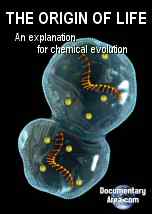
The film, marking our first own production, embarks on an awe-inspiring journey, shedding light on one of science's most profound questions: How did life emerge from the non-living? With a focus on the intricate mechanisms that may have transformed simple molecules into the first microorganisms, this film explores the concept of a chemical evolution that meticulously selected increasingly complex molecules, eventually leading to the genesis of life. By delving into the pivotal role of RNA, viewers are invited to contemplate the plausibility of life spontaneously arising from the basic elements of the universe. The documentary meticulously illustrates a potential pathway for the emergence of life, emphasizing the significance of ribozymes—RNA molecules with catalytic abilities—and their role in a prebiotic chemical evolution. The film posits a compelling argument for the natural processes that might have led to the formation of the first complex lipid vesicles, a critical step towards cellular life. By presenting a theory that bridges gaps in our understanding with scientific ingenuity, ‘The Origin of Life’ invites viewers on an intellectual adventure to discover the origins of existence itself. More information on https://www.javier-serrano.blog/Evolucion/el_origen_de_la_vida_parteI.php
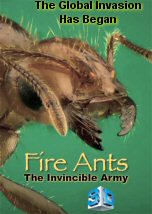
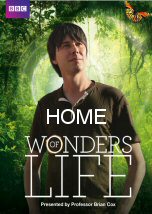
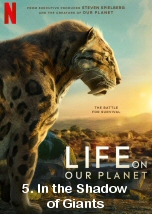
The fifth episode of the series is a fascinating exploration of the dinosaur era and its impact on the evolution of life on Earth. Through a journey of 200 million years, we discover how the breakup of Pangea and tectonic changes shaped biodiversity and created environments for dinosaurs and other forms of life to flourish. From the majestic Diplodocus to the formidable Allosaurus, the documentary brings to life the giants that once dominated our planet. Additionally, it shows the evolution of plants, highlighting the emergence of flowers and their symbiotic relationship with insects, such as termites and ants, whose social and evolutionary dynamics are explored in depth. The narrative also addresses the rise of mammals and their coexistence with dinosaurs, highlighting species such as the Numbat and their struggle for survival. With stunning imagery and a captivating narrative, this episode is an invitation to learn, marvel, and reflect on the extraordinary history of life on Earth.
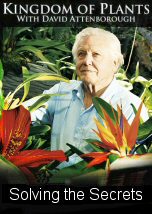
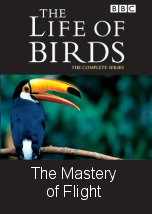
The second programme deals with the mechanics of flight. Getting into the air is by far the most exhausting of a bird's activities, and Sir Attenborough observes shearwaters in Japan that have taken to climbing trees to give them a good jumping-off point. The albatross is so large that it can only launch itself after a run-up to create a flow of air over its wings. A combination of aerodynamics and upward air currents (or thermals), together with the act of flapping or gliding is what keeps a bird aloft. Landing requires less energy but a greater degree of skill, particularly for a big bird, such as a swan. Weight is kept to a minimum by having a beak made of keratin instead of bone, a light frame, and a coat of feathers, which is maintained fastidiously. The peregrine falcon holds the record for being fastest in the air, diving at speeds of over 300 km/h. Conversely, the barn owl owes its predatory success to flying slowly, while the kestrel spots its quarry by hovering. However, the true specialists in this regard are the hummingbirds, whose wings beat at the rate of 25 times a second. The habits of migratory birds are explored. After stocking up with food during the brief summer of the north, such species will set off on huge journeys southwards. Some, such as snow geese, travel continuously, using both the stars and the sun for navigation. They are contrasted with hawks and vultures, which glide overland on warm air, and therefore have to stop overnight.
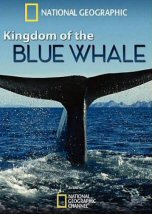
Blue whales are the largest animals to ever live on earth, yet they are difficult to find or track. Even some of the locations where they birth their young are great secrets. Join some of the world's eminent blue whale scientists as they embark on a revolutionary mission to identify and tag California blue whales as they migrate to a spot known as the Costa Rica Dome. This incredible voyage yields unforgettable new footage and insight into these amazing creatures' lives. Scientists use DNA analysis, recordings of whale songs, homing devices, and sea dives to shed light on the blue whale's breeding and birthing habits
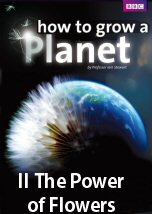
In the second episode, Professor Iain Stewart discovers how flowers have transformed our planet. He journeys to the remote islands of the South Pacific to track down the earliest flowers. In the deserts of Africa and rainforests of Vietnam, he sees how they brought brilliant colour to the most barren landscapes and sculpted the earth itself. And he learns how they drove the evolution of all animals - kick-starting our human story.
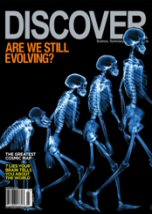
Dr Alice Roberts asks one of the great questions about our species: are we still evolving? There's no doubt that we're a product of millions of years of evolution. But thanks to modern technology and medicine, did we escape Darwin's law of the survival of the fittest? Alice follows a trail of clues from ancient human bones to studies of remarkable people living in the most inhospitable parts of the planet and the frontiers of genetic research, to discover if we are still evolving - and where we might be heading.














The documentary meticulously illustrates a potential pathway for the emergence of life, emphasizing the significance of ribozymes—RNA molecules with catalytic abilities—and their role in a prebiotic chemical evolution. The film posits a compelling argument for the natural processes that might have led to the formation of the first complex lipid vesicles, a critical step towards cellular life. By presenting a theory that bridges gaps in our understanding with scientific ingenuity, ‘The Origin of Life’ invites viewers on an intellectual adventure to discover the origins of existence itself.
More information on https://www.javier-serrano.blog/Evolucion/el_origen_de_la_vida_parteI.php