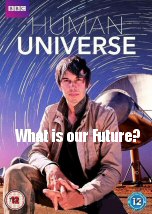
Professor Brian Cox concludes his exploration of our place in the universe by asking what next for the ape that went to space. Our future is far from certain. In Florida, Brian joins the latest efforts to protect Earth from potential catastrophic events. He joins a team of Nasa astronauts who are training for a future mission to an asteroid - should we ever discover one coming our way - under 30 feet of water in a submerged laboratory that simulates space. It is just one example of how, for our long-term survival, space exploration may well be vital. It is a view shared by Apollo 16 astronaut Charlie Duke, who tells Brian what it was like to escape the confines of the planet. It is a dream that both Nasa and now commercial companies share as they race to get humans back into deep space. But space travel, like every leap our civilisation has ever made, requires energy. Here too, scientists are hard at work attempting to safeguard our future. At the National Ignition Facility in California, Brian witnesses the world's most successful fusion experiment in action. He believes that if their mission succeeds, our civilisation will have unlocked a way to the stars that will not destroy the planet in the process. Brian concludes by returning to the top of the world in Svalbard, where he gains access to our civilisation's greatest treasure, locked away in a vault buried deep in the permafrost.
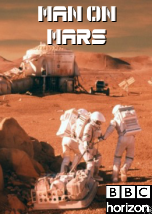
Let's go behind the scenes at NASA to discover how it is preparing for its most ambitious and daring mission: to land men - and possibly women - on the surface of Mars. It's over 40 years since Neil Armstrong made the first human footprint on the moon. But getting to the red planet would involve a journey of at least three years. Meet the scientists and engineers who are designing new rockets, new space suits and finding ways to help astronauts survive the perils of this long voyage. And it turns out that having the 'right stuff' for a mission to mars might not be quite what you expect.
Over the last years, the world has experienced an energy revolution, driven by an urgent need to green the grid and save life on Earth as we know it. 50 years ago, a devastating oil crisis kicked off an energy revolution. The world set course to cut the costly habit of burning fossil fuels. With the urgent new threat of a changing climate, the drive to unleash the power of the sun, earth and wind has accelerated into a race for humanity's survival. Change is taken place but, is it happening fast enough to secure our future? Technologies are right here, right now, and they will enable the transition to 100% renewables, because winning the energy race means a win for the entire world.
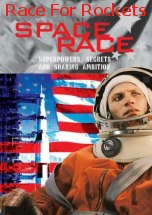
Space Race is a docu-drama chronicling the major events and characters in the American/Soviet space race. It focusses on Sergei Korolev, the Soviets' chief rocket designer, and Wernher von Braun, his American counterpart. The series was a joint effort between British, German, American and Russian production teams." In the first episode, 1944-1949, we see Wernher von Braun's work on the V-2 for the Nazis during the last years of the Second World War, his surrender to American troops and his move to the USA. We see Sergei Korolev's release from the Gulag, and how he is set to work on Soviet rockets, first attempting to copy the V-2, then building a more efficient rocket of his own.
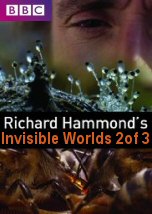
The human eye is a remarkable piece of precision engineering, but it is also extremely limited. Beyond the narrow range of light that makes up the familiar colours of the rainbow is a vast spectrum of light, entirely unseen. Richard Hammond does just that, using ground-breaking new imaging technologies to take the viewer on a breath-taking journey of discovery beyond the visible spectrum, seeing the world, quite literally, in a whole new light. From death-defying aerial repairmen in the United States using ultraviolet cameras to seek out an invisible force that lurks unseen on power lines, to German scientists unlocking the secrets of animal locomotion with the world's most powerful moving x-ray camera, to infrared cameras that can finally reveal the secrets within a humble beehive, he shows how new technologies are letting us see our world anew.
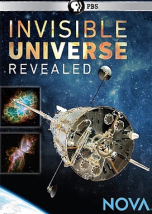
25 years ago, NASA launched one of the most ambitious experiments in the history of astronomy: the Hubble Space Telescope. In honor of Hubble's landmark anniversary, know the remarkable story of the telescope that forever changed our understanding of the cosmos and our place in it". But amazingly, when the telescope first sent images back to earth, it seemed that the entire project was a massive failure; a one-millimeter engineering blunder had turned the billion-dollar telescope into an object of ridicule. It fell to five heroic astronauts in a daring mission to return Hubble to the cutting edge of science. Hear from the scientists and engineers on the front line who tell the amazing Hubble story as never before. This single telescope has helped astronomers pinpoint the age of the universe, revealed the birthplace of stars and planets, advanced our understanding of dark energy and cosmic expansion, and uncovered black holes lurking at the heart of galaxies. For more than a generation, Hubble's stunning images have brought the beauty of the heavens to millions, revealing a cosmos richer and more wondrous than we ever imagined. Join us for the story of this magnificent machine and its astonishing discoveries.










But space travel, like every leap our civilisation has ever made, requires energy. Here too, scientists are hard at work attempting to safeguard our future. At the National Ignition Facility in California, Brian witnesses the world's most successful fusion experiment in action. He believes that if their mission succeeds, our civilisation will have unlocked a way to the stars that will not destroy the planet in the process. Brian concludes by returning to the top of the world in Svalbard, where he gains access to our civilisation's greatest treasure, locked away in a vault buried deep in the permafrost.