Julian Assange, the WikiLeaks founder, was arrested at Ecuador's embassy in London on April 11, 2019. He was cornered in a tiny building for seven years, with threatens to undermine the organization he leads and fracture the movement he inspired. Filmed over six years, Risk is a character study capturing his confinement. Director Laura Poitras finds herself caught between the motives and contradictions of Assange and his inner circle.
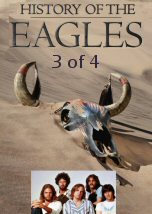
Fights within Eagles were common long before Hotel California. They started as four equal partners. Gradually the power shifted toward Henley and Frey, which Meisner and Leadon resented. Leadon left first because the band progressed from country to rock. He also wanted to live a healthy life in a band that lived extremely unhealthy. Even though they made many wonderful songs, things were far from smooth in the studio.
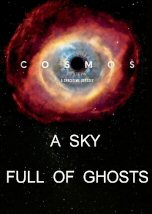
Tyson begins the episode by explaining the nature of the speed of light and how much of what is seen of the observable universe is from light emanated from billions of years in the past. Tyson further explains how modern astronomy has used such analyzes via deep time to identify the Big Bang event and the age of the universe. Tyson proceeds to describe how the work of Isaac Newton, William Herschel, and James Clerk Maxwell contributed to understanding the nature of electromagnetic waves and gravitational force, and how this work led towards Albert Einstein's Theory of Relativity, that the speed of light is a fundamental constant of the universe and gravity can be seen as distortion of the fabric of space-time. Tyson describes the concept of dark stars as postulated by John Michell which are not visible but detectable by tracking other stars trapped within their gravity wells, an idea Herschel used to discover binary stars. Tyson then describes the nature of black holes, their enormous gravitational forces that can even capture light, and their discovery via X-ray sources such as Cygnus X-1. Tyson uses the Ship of Imagination to provide a postulate of the warping of spacetime and time dilation as one enters the event horizon of the black hole, and the possibility that these may lead to other points within our universe or others, or even time travel. Tyson ends on noting that Herschel's son, John would be inspired by his father to continue to document the known stars as well as contributions towards photography that play on the same nature of deep time used by astronomers.
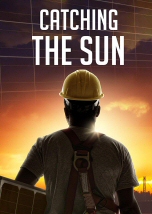
The film captures the global challenge to lead the clean energy future by profiling U.S. and Chinese workers and business leaders who are racing to make crucial breakthroughs in the field. Catching the Sun debunks a false dilemma that clean energy requires sacrificing economic prosperity. Through the stories of an unemployed American worker, a Tea Party activist, and a Chinese solar entrepreneur, we will explore the global energy transition from the perspective of workers and entrepreneurs building solutions to income inequality and climate change with their own hands. Their successes and failures speak to one of the biggest questions of our time: will the countries actually be able to build a clean energy economy?
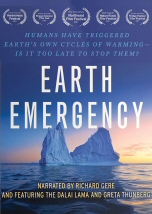
This revealing film examines how human activity is setting off dangerous warming loops that are pushing the climate to a point of no return - and what we need to do to stop them. With captivating illustrations, stunning footage and interviews with leading climate scientists as well as support from Greta Thunberg and the Dalai Lama, 'Earth Emergency' adds the missing piece of the climate puzzle. Narrated by Richard Gere, the film examines four of the major warming feedback loops threatening our planet: Forests, Permafrost, Albedo and Atmosphere.
This episode explores the wave theory of light as studied by mankind, noting that light has played an important role in scientific progress, with such early experiments from over 2000 years ago involving the camera obscura by the Chinese philosopher Mozi. Tyson describes the work of the 11th century Arabic scientist Ibn al-Haytham, considered to be one of the first to postulate on the nature of light and optics leading to the concept of the telescope, as well as one of the first researchers to use the scientific method. Tyson proceeds to discuss the nature of light as discovered by mankind. Work by Isaac Newton using diffraction through prisms demonstrated that light was composed of the visible spectrum, while findings of William Herschel in the 19th century showed that light also consisted of infrared rays. Joseph von Fraunhofer would later come to discover that by magnifying the spectrum of visible light, gaps in the spectrum would be observed. These Fraunhofer lines would later be determined to be caused by the absorption of light by electrons in moving between atomic orbitals when it passed through atoms, with each atom having a characteristic signature due to the quantum nature of these orbitals. This since has led to the core of astronomical spectroscopy, allowing astronomers to make observations about the composition of stars, planets, and other stellar features through the spectral lines, as well as observing the motion and expansion of the universe, and the existence of dark matter.



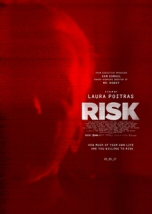


Filmed over six years, Risk is a character study capturing his confinement. Director Laura Poitras finds herself caught between the motives and contradictions of Assange and his inner circle.