When a mysterious cigar-shaped object is spotted tumbling through our solar system, experts race to uncover it's true nature. The object, nicknamed Oumuamua, meaning 'a messenger that reaches out from the distant past' in Hawaiian, was discovered by the Pan-STARRS 1 telescope in Hawaii. Since its discovery, scientists have been at odds to explain its unusual features and precise origins, with researchers first calling it a comet and then an asteroid before finally deeming it the first of its kind: a new class of 'interstellar objects.' A recent paper by researchers at the Harvard Smithsonian Center for Astrophysics raises the possibility that the elongated dark-red object, which is 10 times as long as it is wide and travelling at speeds of 196,000 mph, might have an 'artificial origin.' The theory is based on the object's 'excess acceleration,' or its unexpected boost in speed as it travelled through and ultimately out of our solar system.
This featured series is a gripping examination of the unsolved crimes of the Golden State Killer who terrorized California in the 1970's and 1980's. Sensitively handled at all turns, I’ll Be Gone in the Dark is different from your standard true crime series. Highly emotional in both a restorative cathartic, but also a genuinely upsetting way. In the first episode, the writer Michelle McNamara finds a new obsession in the 'East Area Rapist', who terrorized California in the 1970s and '80s, responsible for 50 home-invasion rapes and 12 murders.
Autistic minds provide windows into how we all think, feel, and behave. A complete brain science should be able to account for all kinds of minds and brains. As long as some minds remain a mystery, so too will all minds. Michael Stevens travels to London to meet a blind, autistic savant with astonishing musical abilities, and volunteers to have his brain's function temporarily disrupted at UCLA's Neuromodulation Lab.
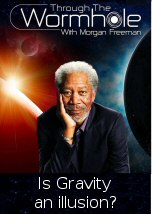
We feel it every moment of our lives but for physicists, gravity is the longest running unsolved mystery of the universe. Why do all objects that have mass pull on one another? Cutting-edge theories are proposing unexpected answers: Gravity could be another force in disguise, a thermodynamic mirage, or even, a shadow of a hidden holographic universe. If so, the force that holds us to the surface of the earth, and holds the earth in orbit around the sun, may be a trick of the mind. We feel it, but it may not be real. Is Gravity an Illusion?
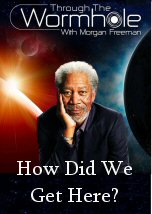
Everywhere we look in the most hospitable of environments and in the most extreme we find life. On Earth, life exists everywhere we look. Yet we have only ever found life on our planet. How did the stuff of stars come together to create life as we know it? What do we really mean by 'life'? And will unlocking this mystery help us find life elsewhere?
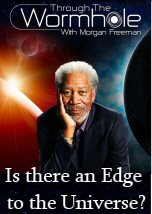
It's a mystery mankind has struggled to solve since the beginning of history - is space infinite or might there be great cosmic border where everything ends? Groundbreaking cosmology and state of the art space telescopes, now suggest the Universe has a finite size and a unique shape. If this is true, there must be an edge to the Universe, and beyond that edge, there could exist a world beyond our wildest dreams.
















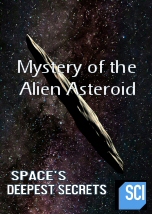









A recent paper by researchers at the Harvard Smithsonian Center for Astrophysics raises the possibility that the elongated dark-red object, which is 10 times as long as it is wide and travelling at speeds of 196,000 mph, might have an 'artificial origin.' The theory is based on the object's 'excess acceleration,' or its unexpected boost in speed as it travelled through and ultimately out of our solar system.