









Last Watched

"NeXT"  Sort by

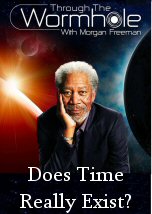
Does Time Really Exist

   2011    Science
Time is woven into the fabric of the universe as one of the dimensions in which we live our daily lives. But maybe it is only a brain state that we use to piece together events. Could it exist only in our minds? Your sense of time can be totally different than the person next to you. This and other theories illustrate that time is an illusion and does not really exist. The world's top physicists tackle this fundamental question, does time exist, and offer new ways to perceive the physical world.
Series: Through the Wormhole
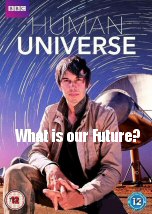
What is our future

   2014    Technology
Professor Brian Cox concludes his exploration of our place in the universe by asking what next for the ape that went to space. Our future is far from certain. In Florida, Brian joins the latest efforts to protect Earth from potential catastrophic events. He joins a team of Nasa astronauts who are training for a future mission to an asteroid - should we ever discover one coming our way - under 30 feet of water in a submerged laboratory that simulates space. It is just one example of how, for our long-term survival, space exploration may well be vital. It is a view shared by Apollo 16 astronaut Charlie Duke, who tells Brian what it was like to escape the confines of the planet. It is a dream that both Nasa and now commercial companies share as they race to get humans back into deep space.
But space travel, like every leap our civilisation has ever made, requires energy. Here too, scientists are hard at work attempting to safeguard our future. At the National Ignition Facility in California, Brian witnesses the world's most successful fusion experiment in action. He believes that if their mission succeeds, our civilisation will have unlocked a way to the stars that will not destroy the planet in the process. Brian concludes by returning to the top of the world in Svalbard, where he gains access to our civilisation's greatest treasure, locked away in a vault buried deep in the permafrost.
Series: Human universe

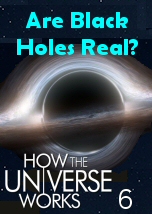
Are Black Holes Real

   2018    Science    HD
Various eminent scientists explain the current knowledge of Black Holes and try to answer the question, do they really exist? New discoveries are challenging everything we know about black holes -- astronomers are beginning to question if they even exist. The latest science tries to explain how they work & what they look like, despite the fact we've never actually seen one.
The two great theories of Einstein's General Relativity and Quantum Mechanics don't work together to explain Black Holes which is a big problem. Other theoretical constructs such as Gravastars and Planck stars have been postulated but proving their existence is just as difficult as that of Black Holes. So where next?
Series: How the Universe Works Season 6

Alien Planets

   2020    Science
Our universe reveals itself in ways we’ve never seen before, thanks to new discoveries in astrobiology. Today, the advent of cutting-edge observational instruments is shedding light on amazing facts about life and the universe. NASA's next-generation space telescope TESS (Exoplanet Survey Satellite) has begun its search for Earth-like planets belonging to other star systems. How many of these 'exoplanets' can host life, and what kind of life forms can evolve in these environments?
Series: Space Phenomena

The Planet Hunters

   2018    Technology    HD
The next great voyage of human exploration has already begun: the search for life on planets orbiting distant stars. With extraordinary CGI, the world's most inspiring scientists, via extreme environments on Earth and around the solar system, the film takes viewers aboard the next generation of space ships, across the cosmos and beneath the clouds of the exo-planets to discover The Living Universe.
Part 1: 'The Planet Hunters' For as long as we’ve had eyes to see and minds to wonder we’ve marveled at the stars. Since the discovery of the first so-called exoplanet in 1994, the Planet Hunters have transformed the way we see the universe. It is the year 2157, and spacecraft Artemis enters the final phase of construction.
Series: Living Universe

Who Will We Be

   2015    Medicine
In ‘Who will we be?’ Dr. David Eagleman journeys into the future, and asks what’s next for the human brain, and for our species. We stand at a major turning point, one where we might take control of our own development. We face a future of uncharted possibilities in which our relationship with our own body, our relationship with the world, the very basic nature of who we are is set to be transformed. For thousands of generations, humans have lived the same life cycle over and over. We are born, we control a fragile body, we experience a limited reality, and we die. But science and technology are giving us tools to transcend that evolutionary story. Our brains don't have to remain as we have inherited them. We are capable of extending our reality, of inhabiting new bodies, and possibly shedding our physical forms altogether. And we are discovering the tools to shape our own destiny. Who we become is up to us.
Series: The Brain with David Eagleman