The film documents the English heavy metal band Black Sabbath's final show of their farewell concert tour, The End Tour. The performance was held at the Genting Arena in Birmingham, England, hometown of the band's founding members: vocalist Ozzy Osbourne, guitarist Tony Iommi, bassist Geezer Butler, and drummer Bill Ward. Osbourne, Iommi, and Butler performed this final concert with session drummer Tommy Clufetos in place of Ward, as well as Adam Wakeman on keyboards and guitar. The concert opens with a performance of the song 'Black Sabbath'. The film goes on to show the band performing 'Fairies Wear Boots', 'Under the Sun/Every Day Comes and Goes', 'Into the Void', 'Snowblind', 'War Pigs', 'Hand of Doom', 'Iron Man', and 'Children of the Grave'; at the end of the setlist, the band performs the song 'Paranoid' as an encore. Interspersed with the final concert are interviews with Osbourne, Iommi, and Butler, in which they talk about their careers and past drug addictions. Additionally, Iommi's 2012 lymphoma diagnosis, which impacted the band's 2012–14 reunion tour and the recording of their 2013 album 13, is discussed. The film also features footage of 'The Angelic Sessions'—the band's final studio recordings, which took place in the days following the final show. Of these recordings, the film shows Osbourne, Iommi, and Butler performing 'The Wizard', 'Wicked World', and 'Changes'.
Profile of the billionaire entrepreneur, one of a tiny group of powerful, uber-rich men with global reach exceeding governments. The programme features contributions from those who know Musk, who have worked with him, and who have made millions investing in his businesses, as well as those who have gone to war with his companies.
There is a tendency to deny German culture the equal reverence of Italy or Spain, and this enlightening new series provides a wonderful opportunity to explore a great, yet often neglected, artistic tradition whose influence has been just as profound. Andrew Graham-Dixon concludes his exploration of German art by investigating the dark and difficult times of the 20th century. Dominating the landscape is the figure of Adolf Hitler, failed artist, would-be architect and obsessed with the aesthetics of his 1,000-year Reich". In a series of extraordinary building projects and exhibitions, Hitler waged a propaganda war against every form of modern art as a prelude to unleashing total war on the whole of Europe. After the war the shadow of the Third Reich persisted, Germany remained divided and traumatised. How would artists deal with a past that everybody wanted to forget? Journeying through the work of Otto Dix and George Grosz and the age of the Bauhaus to the post-war painters Georg Baselitz, Hilla Becher and the conceptual artist Joseph Beuys is a long and strange journey, but the signs that art has a place at the heart of the new reunited Germany are clearly visible.
Thought-provoking documentary on war propaganda: how governments manipulate the facts and how most media let them get away with it. WWI, Vietnam War, post-2001 Afghanistan, post-2003 Iraq, Palestine: a historical account of PR, embedded journalism, lies and cover-ups, but also of courageous journalists who disclose the truth.
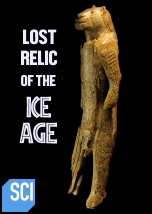
An Ice Age relic found in a mysterious cave is evidence of prehistoric humans' connection to the supernatural. Using cutting-edge tech, experts investigate this 40,000-year-old treasure to reveal why it was made and the long-lost myths it represents. In the summer of 1939, a team of explorers unearthed hundred of mammoth ivory fragments within a cave in Germany. Due to the start of World War II, the explorers were forced to abandon their findings, and the fragments laid forgotten in a museum. Decades later, as archeologists began piecing the fragments together, an extraordinary artifact emerged -- a figure with both animal and human features, now known as the 'Lion man.'
What was the Wehrmacht? A group of obedient yeasayers? A murdering band of thugs? An army of millions of abused young men? This series in 5 parts provides differentiated and conclusive answers based on the latest historical and comprehensive investigative research, bringing many new facts to light – among them documents proving for the first time ever, what many among the officers actually thought. Blitzkrieg, the lightning war, in German incorporate modern weapons and vehicles as a method to help avoid the stalemate of trench warfare and linear warfare in future conflicts. The first practical implementations of these concepts coupled with modern technology were instituted by the Wehrmacht in the opening theatres of World War II. The strategy was particularly effective to Germany in the invasions of Western Europe and initial operations in the Soviet Union. These operations were dependent on surprise penetrations, general enemy unpreparedness and an inability to react swiftly enough to German offensive operations.
















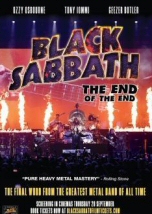











The concert opens with a performance of the song 'Black Sabbath'. The film goes on to show the band performing 'Fairies Wear Boots', 'Under the Sun/Every Day Comes and Goes', 'Into the Void', 'Snowblind', 'War Pigs', 'Hand of Doom', 'Iron Man', and 'Children of the Grave'; at the end of the setlist, the band performs the song 'Paranoid' as an encore.
Interspersed with the final concert are interviews with Osbourne, Iommi, and Butler, in which they talk about their careers and past drug addictions. Additionally, Iommi's 2012 lymphoma diagnosis, which impacted the band's 2012–14 reunion tour and the recording of their 2013 album 13, is discussed. The film also features footage of 'The Angelic Sessions'—the band's final studio recordings, which took place in the days following the final show. Of these recordings, the film shows Osbourne, Iommi, and Butler performing 'The Wizard', 'Wicked World', and 'Changes'.