Can skyscrapers be made safer, more efficient, and livable in our rapidly growing cities? Skyscrapers are gleaming symbols of prestige, and an ingenious way to save space in dense urban areas. But as buildings rise ever higher, what are the risks of these architectural behemoths? Do we truly know how they will hold up in earthquakes, fires and wind? What have--or haven’t—we learned from past tragedies? But even as we devise ways to defend them against potential disasters, can we also make them more livable, interactive, and eco-friendly?
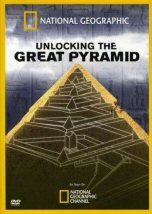
When ancient architects completed construction on the Great Pyramid at Giza, they left behind the greatest riddle of the engineering world—how did builders lift limestone blocks weighing an average of two and a half tons 480 feet up onto the top of the Pyramid? For centuries, adventurers and Egyptologists have crawled through every passageway and chamber of the Pyramid, measuring and collecting data in an attempt to determine how it was built. For the first time, a revolutionary theory argues that the answer may be inside the Pyramid. Architect Jean-Pierre Houdin and Egyptologist Bob Brier use 3-D software to unlock the secret.
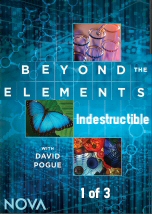
In this series, David Pogue explores the fantastic chemistry behind the everyday and sets out on a worldwide quest to find the key molecules and chemical reactions that have paved the way for human civilization, life, and even the universe as we know it. In the first episode, glass so strong you can jump on it, rubber so tough it protects a clay pot dropped from 50 feet, endless varieties of plastic. Scientists and engineers have created virtually indestructible versions of common materials by manipulating the chains of interlocking atoms that give them strength—but have they made them too tough?
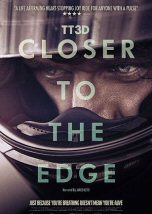
By vividly recounting the TT's legendary rivalries and the Isle of Man's unique road racing history, this 3D feature documentary will discover why modern TT riders still risk their lives to win the world's most dangerous race. The Isle of Man Tourist Trophy is the greatest motorcycle road race in the world, the ultimate challenge for rider and machine. It has always called for a commitment far beyond any other racing event, and many have made the ultimate sacrifice in their quest for victory. A story about freedom of choice, the strength of human spirit and the will to win. It's also an examination of what motivates those rare few, this elite band of brothers who risk everything to win.
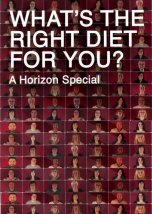
Horizon investigates the idea that the best way to lose weight successfully is a personalised approach, diets tailored to our individual biology and psychology. In a groundbreaking experiment, Dr Chris van Tulleken and Tanya Byron join a team of experts to put 75 overweight volunteers on diets designed to tackle the specific reasons why they eat too much. The volunteers are put through a series of tests at a residential clinic to understand how their genes, hormones and psychology influence their eating behaviour. They are then put on the diets the experts believe are best suited to them. Can science succeed where other diets have failed?
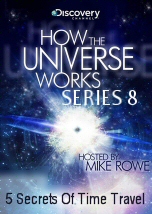
Could time travel ever be science fact? Time itself may be something you can bend and stretch. Trying to understand if time travel can be possible teach us a lot about the universe. It forces us to take on some of the toughest unanswered questions in all of physics and will ultimately probably lead to deeper understanding of the very nature of the cosmos.


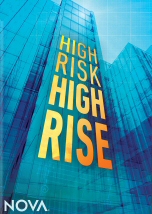


Do we truly know how they will hold up in earthquakes, fires and wind? What have--or haven’t—we learned from past tragedies? But even as we devise ways to defend them against potential disasters, can we also make them more livable, interactive, and eco-friendly?