Waldemar Januszczak sets out to uncover the secret meanings hidden in four famous paintings by Van Gogh, Gauguin, Cezanne and Seurat. Everyone knows the pictures. They are among the most celebrated masterpieces of art. And yet, hidden inside them are codes and puzzles that no one has been able to decipher. Van Gogh’s Self-Portrait with Bandaged Ear was painted soon after he cut off his ear with a razor. But how much do we really know about it? In a far-ranging investigation, Waldemar Januszczak delves into the clues hidden in the painting. The result is a tale of geishas, brothels, bullfights, love affairs, suffering and a fiery relationship with Gauguin. The work has a powerful secret message, if you know what to look for.
This episode explores the palaeogeography of Earth over millions of years, and its impact on the development of life on the planet. Tyson starts by explaining that the lignin-rich trees evolved in the Carboniferous era about 300 million ago, then explains on the nature of plate tectonics that would shape the landmasses of the world and the asteroid impact that initiated the Cretaceous–Paleogene extinction event, leaving small mammals as the dominate species on earth. Earth's landmasses are expected to change in the future and postulates what may be the next great extinction event.
Travel back 66 million years to when majestic dinosaurs and extraordinary creatures roamed the lands, seas, and skies in the second season of this acclaimed series narrated by David Attenborough. After a tropical storm, two Zalmoxes find themselves in a rafting event. On a small island, a monumental display takes place as several Hatzegopteryx ambush a herd of Tethyshadros. A female Majungasaurus hunts a group of Simosuchus. A mother Adalatherium raises her offspring in a burrow, hoping to keep them safe from predators like Masiakasaurus and Madtsoia. A pack of Imperobator pursue a Morrosaurus onto a frozen lake. A male Hatzegopteryx attempts to attract a mate.
Since the birth of their trademark toy in 1958, The LEGO Group has produced over 400 billion bricks. But more and more, LEGO bricks aren't just for kids, and some take them very seriously. Adult Fans of LEGO around the globe are unashamedly declaring their love of the brick, brick artists are creating stunning and surprising creations, and LEGO master builders are building human scale and larger structures. LEGO bricks are being used educationally, therapeutically, and have provided a universal system for human creativity and our innate desire "to build." This documentary playfully delves into the extraordinary impact of the LEGO brick, its massive global fan base, and the innovative uses for it that has sprung up around the world.
Imagine being in jail. Now imagine living in a foreign country. Scary? Raphael Rowe served 12 years in prison for a crime he was eventually acquitted. He takes you inside these jails. Rowe shows what living conditions are for the inmates, as well as the guards. You'll never look at prison the same. In the first episode, Raphael Rowe spends a week behind bars at Tacumbu prison in Paraguay, where inmates scrounge in the trash in order to pay their own way.
Is God worshipped in other worlds, across the cosmos? How might alien deities differ from our own? The answer may lie buried on Earth. Animal behaviorists are testing elephants and finding them capable of having spiritual thoughts. Artificial intelligence researchers are building enlightened robots that contemplate the divine. Meanwhile, cosmologists are looking for universal equations that could replace God. Have advanced aliens discovered everything there is to know about the universe? Or are they looking to a higher power for answers?








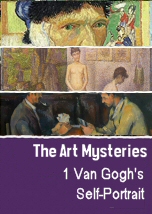






Van Gogh’s Self-Portrait with Bandaged Ear was painted soon after he cut off his ear with a razor. But how much do we really know about it? In a far-ranging investigation, Waldemar Januszczak delves into the clues hidden in the painting. The result is a tale of geishas, brothels, bullfights, love affairs, suffering and a fiery relationship with Gauguin. The work has a powerful secret message, if you know what to look for.