Mind reading might sound like pseudoscientific, but its scientific counterpart, thought identification, is very much a real thing. It's based in neuroimaging and machine learning, and what's really cool is that experiments in mind reading aren't just about spying on what someone is thinking. They're about figuring out what thoughts are even made of. When you think of something, what does that mental picture actually look like? What resolution is it in? How high fidelity is a memory, and how do they change over time? In this episode, we are going to look at how
reading people's minds can help us answer these questions.
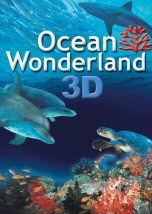
The mission of the film is to underline the crucial ecological role of coral reefs play in maintaining the well being of our planet, and to point out and warn against the dangers that are destroying the world's coral reefs. Entirely filmed using digital technology, thanks to it, the film was shot almost entirely with natural light, thus showing the underwater world as it exactly is. This is the closest you can get to dive without being there. Shot on the Great Barrier Reef in Australia and in the Bahamas, it brings to you the amazing beauty of the many varieties of coral and the immense diversity of the marine life thriving there.
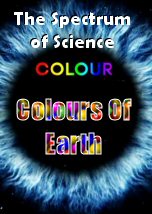
In this episode, Helen seeks out the colours that turned planet Earth multicoloured. To investigate the essence of sunlight Helen travels to California to visit the largest solar telescope in the world. She discovers how the most vivid blue is formed from sulfur atoms deep within the Earth's crust and why the presence of red ochre is a key sign of life. In gold, she discovers why this most precious of metals shouldn't even exist on the surface of the planet and in white, Helen travels to one of the hottest places on Earth to explore the role salt and water played in shaping planet Earth.
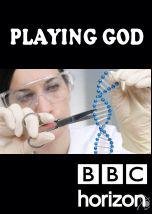
Adam Rutherford meets a new creature created by American scientists, the spider-goat. It is part goat, part spider, and its milk can be used to create artificial spider's web. It is part of a new field of research, synthetic biology, with a radical aim: to break down nature into spare parts so that we can rebuild it however we please. This technology is already being used to make bio-diesel to power cars. Other researchers are looking at how we might, one day, control human emotions by sending 'biological machines' into our brains.
The Joker, Lex Luthor, Catwoman, Doomsday, Bane. What makes them so thrillingly watchable? So terribly wonderful? So extremely vital to our super heroes and their worlds? This feature-length documentary explores these questions across seven decades of DC Comics’ hallowed Rogues’ Gallery of infamous evildoers. Narrated by esteemed film villain Christopher Lee,examines the tortured psyches of your favorite animation, comic book, game, TV and feature film baddies – both from the past and into the future – against the backdrop of culture, history and society. Insights from famed creators and storytellers, including Zack Snyder, Guillermo del Toro, Jim Lee, Geoff Johns and Richard Donner, shine a fascinating light on those malevolent, charismatic characters who thrive in the dark.
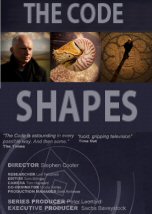
Marcus du Sautoy uncovers the patterns that explain the shape of the world around us. Starting at the hexagonal columns of Northern Ireland's Giant's Causeway, he discovers the code underpinning the extraordinary order found in nature - from rock formations to honeycomb and from salt crystals to soap bubbles. Marcus also reveals the mysterious code that governs the apparent randomness of mountains, clouds and trees and explores how this not only could be the key to Jackson Pollock's success, but has also helped breathe life into hugely successful movie animations.






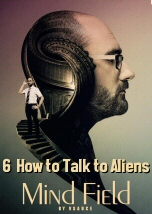







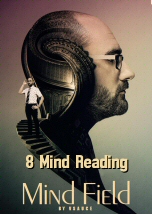



When you think of something, what does that mental picture actually look like? What resolution is it in? How high fidelity is a memory, and how do they change over time? In this episode, we are going to look at how reading people's minds can help us answer these questions.