











Last Watched

Life and Death of a Star

   2007    Science
Ignited by the power of the atom, burning with light, heat and wrath, stars are anything but peaceful. They collide, devour each other, and explode in enormous supernovas--the biggest explosions in the Universe.
Series: The Universe

Mind Reading

   2019    Medicine
Mind reading might sound like pseudoscientific, but its scientific counterpart, thought identification, is very much a real thing. It's based in neuroimaging and machine learning, and what's really cool is that experiments in mind reading aren't just about spying on what someone is thinking. They're about figuring out what thoughts are even made of.
When you think of something, what does that mental picture actually look like? What resolution is it in? How high fidelity is a memory, and how do they change over time? In this episode, we are going to look at how reading people's minds can help us answer these questions.
Series: Mind Field

Michael Moore in TrumpLand

   2016    Culture
Oscar-winner Michael Moore dives deep in the heart of hostile TrumpLand territory with his daring, profound, and uproarious one-man show. When the show gets banned from the first town they tried, Mike moves on to an even bigger community of Trump supporters in the ironically-named Clinton County, Ohio. Performed, shot, and edited just weeks before the 2016 election, this heartfelt, honest, and hilarious concert film is essential election viewing for a divided America. With a title like Michael Moore in TrumpLand, you may think you know what's in store, but the film is sure to surprise. Entertaining, outraging, and informing in equal measure, no matter who you're voting for, this movie has something for everybody.

The Search for a New Earth

   2017    Technology
Planet Earth has been home to humankind for over 200,000 years, but with a population of 7.3 billion and counting and limited resources, this planet might not support us forever. Professor Stephen Hawking thinks the human species will have to populate a new planet within 100 years if it is to survive. With climate change, pollution, deforestation, pandemics and population growth, our own planet is becoming increasingly precarious. In this landmark film Professor Hawking, alongside engineer and radio astronomy expert Professor Danielle George and a former student, Christophe Galfard, join forces to find out if, and how, humans can reach for the stars and relocate to different planets. Travelling the globe, they meet top scientists, technologists and engineers who are working to answer our biggest questions: is there another planet out there that we could call home? How will we travel across the vast distances of space to get there? How will we survive the journey? And how will we set up a new human civilization on an alien world? Travelling the globe, they meet top scientists, technologists and engineers who are working to answer our biggest questions: is there another planet out there that we could call home? How will we travel across the vast distances of space to get there? How will we survive the journey? And how will we set up a new human civilization on an alien world? Taking in the latest advances in astronomy, biology and rocket technology from the Atacama Desert to the wilds of the Arctic, viewers will discover a whole world of cutting edge research. This programme shows that Professor Hawking’s ambition isn’t as fantastical as it sounds - and that science fiction is closer to science fact than we ever thought.

Dynamic Salt

   2016    Technology
Could we get all our energy needs from sea water and the salt it contains? Are we to witness a time when salt will power our engines and factories, and light up our cities? Could this be the final curtain not only for shale gas and oil, but also the burning of fossil fuels and the beginning of a gentler form of energy that is definitely renewable? This documentary explores the latest research on sea water and the way scientists all over the world are working on 'Blue Energy'. This research could bring about a major change in our time.

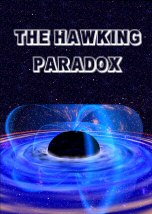
The Hawking Paradox

   2005    Science
Stephen Hawking is the most famous scientist on the planet. But behind the public face lies an argument that has been raging for almost 30 years. Has he been wrong for the last 30 years? Hawking shot to fame in the world of physics when he provided a mathematical proof for the Big Bang theory. This theory showed that the entire universe exploded from a singularity, an infinitely small point with infinite density and infinite gravity. Hawking was able to come to his proof using mathematical techniques that had been developed by Roger Penrose. These techniques were however developed to deal not with the beginning of the Universe but with black holes". Science had long predicted that if a sufficiently large star collapsed at the end of its life, all the matter left in the star would be crushed into an infinitely small point with infinite gravity and infinite density – a singularity. Hawking realised that the Universe was, in effect, a black hole in reverse. Instead of matter being crushed into a singularity, the Universe began when a singularity expanded to form everything we see around us today, from stars to planets to people. Hawking realised that to come to a complete understanding of the Universe he would have to unravel the mysteries of the black hole and its paradoxes
Get Gotti

Get Gotti

2023  History
Dark Net

Dark Net

2016  Technology
The Human Body

The Human Body

1998  Medicine
The Rehearsal

The Rehearsal

2022  Culture
The Americas

The Americas

2025  Nature
Super/Natural

Super/Natural

2022  Nature