How can we cope with the tricky coronavirus now rampant worldwide? As the pandemic tightens its grip on the world, there are important unanswered questions about this novel virus: Why does this infection spread so rapidly from people with no symptoms? Why do some people become critical while others don't? Will a definitive treatment be found? The underlying key to these questions lie in our immune system. Immune cells are microscopic warriors, combating viruses and another pathogens. Through the high-tech 'eyes' of next-generation microscopes and computer-generated imagery, we will see how our immune defense corps combat against microbes and what mechanism is expected to help develop treatment.
Lucy Worsley travels to Russia to tell the extraordinary story of the dynasty that ruled the country for more than three centuries. It's an epic tale that includes giant figures such as Peter the Great and Catherine the Great, the devastating struggle against Napoleon in 1812, and the political murders of Nicholas II and his family in 1918 which brought the dynasty to a brutal end. In this first episode, Lucy investigates the beginning of the Romanovs' 300-year reign in Russia. In 1613, when Russia was leaderless, 16-year-old Mikhail Romanov was plucked from obscurity and offered the crown of Russia. Lucy also charts the story of Peter the Great, the ruthless and ambitious tsar who was determined to modernise Russia at the end of the 17th century.
Ferdinand Magellan and Juan Sebastian Elcano set sail to gain control of the global spice trade, but end up becoming the first expedition to circumnavigate the earth. The yearslong voyage—along with the suffering, the violence and the loss of life and property—were all in pursuit of a shorter route to the so-called Spice Islands (now the Maluku Islands) and their much-coveted aromatics. The film puts in perspective the 16th century—the Age of Exploration, the Age of Discovery and the Age, problematically, of Colonialism. It also was an age of heroes. As the documentary insists, the journeys undertaken by the men whose names we learned in grade school and whose exploits straddled the 1400s and 1500s—including Ponce de Leon, Vasco da Gama, Lope de Aguirre and even Columbus—were about money, sometimes trade, sometimes plunder. But just as advances in medicine have often been propelled by war, knowledge about the world has been a byproduct of profit-seeking. Likewise, heroism.
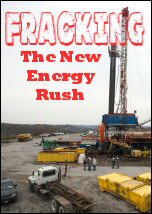
Iain Stewart investigates a new and controversial energy rush for the natural gas found deep underground. Getting it out of the ground involves hydraulic fracturing - or fracking. We travel to America to find to find out what it is, why it is a potential game changer and what we can learn from the US experience". Sometimes, this is right under the places people live in. He meets some of the people who have become rich from fracking as well as the communities worried about the risks. Director Jeff Wilkinson
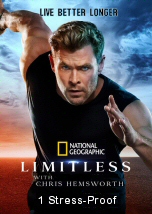
What if you could combat aging and discover the full potential of the human body? Global movie star Chris Hemsworth, despite being in peak superhero-condition, is on a personal mission to learn how to stay young, healthy, strong, and resilient. Undergoing a series of epic trials and extraordinary challenges in order to understand the limits of the human body, he'll learn firsthand how we can live better for longer by discovering ways to regenerate damage, maximize strength, build resilience, supercharge memory and confront mortality. Ever since his teenage years, stress has been part of Chris’s life, and he wants to learn how to deal with it better. Psychologist Modupe Akinola challenges him to stay calm during a terrifying walk along a crane that’s projecting out from the roof of a skyscraper. Modupe will train Chris in powerful physical and psychological techniques we can use to control the stress in our lives and combat the risk it poses to long-term health.
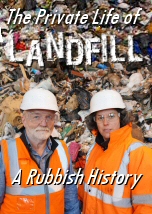
Their quest is to discover whether the items we throw away today have any value for tomorrow's world. In a unique science experiment, Dr George McGavin and Dr Zoe Laughlin chronicle the history of rubbish and explore how what we throw away tells us about the way we live our lives. With unprecedented access to one of the UK's largest landfill sites, the team of experts spend three days carrying out tests all over the site, revealing the secret world of rubbish. They also carry out three other 'archaeological' digs into historic landfills to chart the evolution of our throwaway society. Is mining trash for something valuable really viable? McGavin concluded: 'The idea of landfill mining is a pretty compelling vision of the future.'




Through the high-tech 'eyes' of next-generation microscopes and computer-generated imagery, we will see how our immune defense corps combat against microbes and what mechanism is expected to help develop treatment.