Ludo Lefebvre apprenticed under – and learned from – some of France’s most esteemed chefs, but it took a move to Los Angeles, starting a family and a rough restaurant review for him to figure out what he really wanted to do with his culinary future. This episode examines the ties between artists and their education, and how childlike wonder can, in fact, translate into a career. The question Ludo poses is whether an artist follows instinct, training or intuition… or perhaps all three.
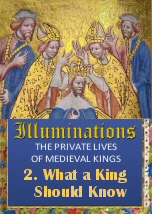
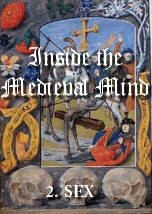
Dr Janina Ramirez shows how medieval manuscripts gave power to the king and united the kingdom in an age of plague, warfare and rebellion, discovers that Edward III used the manuscripts he read as a boy to prepare him for his great victory at the battle of Crecy and reveals how a vigorous new national identity bloomed during the 100 Years War with France. In the British Library's Royal Manuscripts collection Dr Ramirez finds out that magnificent manuscripts like the Bedford Hours, taken as war booty from the French royal family, were adapted for the education of English princes. She also explores how knowledge spread through a new form of book - the encyclopaedia.
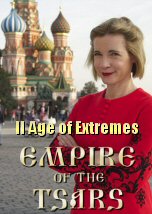
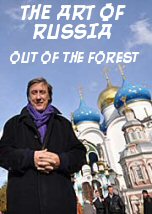
Lucy Worsley continues her journey through Russia in the footsteps of the Romanovs, the most powerful royal dynasty in modern European history. In this episode she examines the extraordinary reign of Catherine the Great, and the traumatic conflict with napoleonic France that provides the setting for the novel War and Peace. At the magnificent palace of Peterhof near St Petersburg, Lucy charts the meteoric rise of Catherine the Great, who seized the Russian throne from her husband Peter III in 1762 and became the most powerful woman in the world. Catherine was a woman of huge passions - for art, for her adopted country (she was German by birth) and for her many lovers. Catherine expanded her empire through military victories overseas, while at home she encouraged education and introduced smallpox inoculation to Russia. But Catherine struggled to introduce deeper reforms, and the institution of serfdom remained largely unchanged. Lucy explains how this injustice fuelled a violent rebellion. Nevertheless, Catherine left Russia more powerful on the world stage than ever. But all she had achieved looked set to be undone when Napoleon invaded Russia in 1812. Lucy relives the pivotal battle of Borodino, when the Russian army finally confronted the French forces; the traumatic destruction of Moscow; and, under Catherine's grandson Alexander, the eventual victory over the French that provided the Romanov dynasty with its most glorious hour.
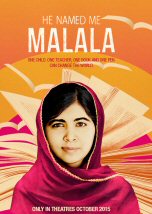
An intimate portrait of Malala Yousafzai, who was wounded when Taliban gunmen opened fire on her and her friends' school bus in Pakistan's Swat Valley. The then 15-year-old teenager, who had been targeted for speaking out on behalf of girls' education in her region of Swat Valley in Pakistan, was shot in the head, sparking international media outrage. An educational activist in Pakistan, Yousafzai has since emerged as a leading campaigner for the rights of children worldwide and in December 2014, became the youngest-ever Nobel Peace Prize Laureate.
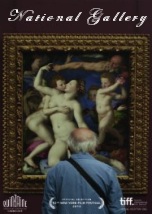
The National Gallery in London is one of the great museums of the world with 2400 paintings from the 13th to the end of the 19th century. Almost every human experience is represented in one or the other of the paintings. The sequences of the film show the public in various galleries; the education programs, and the scholars, scientists and curators, studying, restoring and planning the exhibitions. The relation between painting and storytelling is explored.
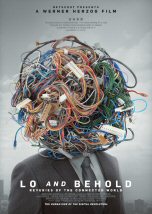
Legendary master filmmaker Werner Herzog chronicles the virtual world from its origins to its outermost reaches, exploring the digital landscape with the same curiosity and imagination he previously trained on earthly destinations. Herzog leads viewers on a journey through a series of provocative conversations with cyberspace pioneers and prophets such as PayPal and Tesla co-founder Elon Musk, Internet protocol inventor Bob Kahn, and famed hacker Kevin Mitnick, that reveal the ways in which the online world has transformed how virtually everything in the real world works - from business to education, space travel to healthcare, and the very heart of how we conduct our personal relationships.




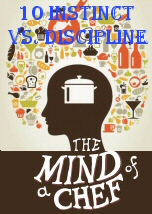



This episode examines the ties between artists and their education, and how childlike wonder can, in fact, translate into a career. The question Ludo poses is whether an artist follows instinct, training or intuition… or perhaps all three.