
Last Watched

"The Fall"  Sort by

Last Days of the USSR

       History
Moscow, 31 December 1991: the Red Flag of the Kremlin is pulled down and replaced by the three-coloured banner of Russia, marking the end of the Soviet Union and of its ideologies. Illustrated with testimonies of top protagonists and Mikhail Gorbachev himself, the documentary recounts, day by day, the critical last two years that led to the fall of the largest and one of the most totalitarian empires of the 20th century.
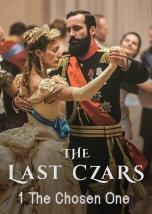
The Chosen One

   2019    History
This acclaimed docudrama is a chronicled look at the fall of the Romanov dynasty in Russia. When social upheaval sweeps Russia in the early 20th century, Czar Nicholas II resists change, sparking a revolution and ending his reign.
In the first episode, Czar Nicholas II takes the Russian throne in 1894 and rejects modern ideas to embrace a pure autocracy. Tragedy marks his coronation day.
Series: The Last Czars

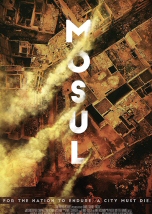
Mosul

   2019    Historia
In the fall of 2016, an army of over 100,000 Iraqi soldiers and militiamen mobilize to liberate Mosul, Iraq's second largest city, from the clutches of the Islamic State. Ali Mula, an Iraqi journalist, joins this army of uneasy allies--including Sunnis, Shiites, Christians and Kurds--to find out if they can put aside their sectarian differences and finally free their country from the scourge of ISIS.
Along the way to Mosul, Ali encounters an unforgettable group of characters including a Sunni tribal leader who calls himself 'the Crocodile', a female militia leader avenging the death of her husband, a canny, Iranian-backed militia leader, a lawyer-turned-warrior, an elite band of ISIS killers, and refugees who survived the brutality of ISIS occupation. As he nears the end of his journey, Ali meets face-to-face with a die-hard ISIS prisoner who reveals the truth behind his nefarious organization.

Rolling Thunder Revue: A Bob Dylan Story by Martin Scorsese

   2019    Art
Master filmmaker Martin Scorsese captures the troubled spirit of America in 1975 along with the joyous music that Bob Dylan performed during the fall of that year. Part documentary, part concert film, part fever dream, 'Rolling Thunder Revue' is a one of a kind experience.

Words on a Page

   2020    History
Writing itself is 5,000 years old, and for most of that time words were written by hand using a variety of tools. The Romans were able to run an empire thanks to documents written on papyrus. Scroll books could be made quite cheaply and, as a result, ancient Rome had a thriving written culture. With the fall of the Roman Empire, papyrus became more difficult to obtain. Europeans were forced to turn to a much more expensive surface on which to write: Parchment. Medieval handwritten books could cost as much as a house, they also represent a limitation on literacy and scholarship.
No such limitations were felt in China, where paper had been invented in the second century. Paper was the foundation of Chinese culture and power, and for centuries how to make it was kept secret. When the secret was out, paper mills soon sprang up across central Asia. The result was an intellectual flourishing known as the Islamic Golden Age. Muslim scholars made discoveries in biology, geology, astronomy and mathematics. By contrast, Europe was an intellectual backwater.
That changed with Gutenberg’s development of movable type printing. The letters of the Latin alphabet have very simple block-like shapes, which made it relatively simple to turn them into type pieces. When printers tried to use movable type to print Arabic texts, they found themselves hampered by the cursive nature of Arabic writing. The success of movable type printing in Europe led to a thousand-fold increase in the availability of information, which produced an explosion of ideas that led directly to the European Scientific Revolution and the Industrial Revolution that followed.
Series: The Secret History of Writing

The Ming

   2016    History
The tale of one of China's most famous dynasties begins with the amazing story of Hongwu, a peasant rebel who founded one of greatest eras in Chinese history. The film takes us to his great capital Nanjing, with its 21 miles of walls, each brick stamped with the name of the village that made it. Following the trail, we go to the Bao family village and see the villagers act a Ming murder story.
Like many authoritarian states, the Ming were obsessive about architecture. We see the giant fortifications of the Great Wall, the ritual enclaves of the Forbidden City in Beijing and travel with bargeman Mr Hu down the Grand Canal, China's great artery of commerce right up to the present day. We then hear about Admiral Zheng He's voyages to Africa and the Gulf decades before Columbus, watch the construction of an ocean-going wooden boat 250ft long, and hitch a ride on a replica Ming junk in the South China Sea.
As state prosperity grew, so did a rising middle class. Wood looks at Ming culture in Suzhou, the 'Venice of China'. Staying in a merchant's house, he discovers the silk, ceramic and lacquer-making industries, and visits one of the most beautiful gardens in the city. Then on to Macao and the arrival of Jesuit missionary Matteo Ricci, who hoped to convert China to Christianity. In the cathedral in Beijing, we learn more about these fateful exchanges with the west. Finally in Shaoxing, we visit the house of the 'Ming Proust' and at grassroots the Zhao family in Fujian where the film ends in an elegiac mood with the fall of the Ming in 1644.
Series: The Story of China
Ancient Apocalypse

Ancient Apocalypse

2024  History
Dark Net

Dark Net

2016  Technology
The Crime of the Century

The Crime of the Century

2021  Medicine
Breakthrough

Breakthrough

2019  Medicine
Human Planet

Human Planet

2011  Culture