The film documents the English heavy metal band Black Sabbath's final show of their farewell concert tour, The End Tour. The performance was held at the Genting Arena in Birmingham, England, hometown of the band's founding members: vocalist Ozzy Osbourne, guitarist Tony Iommi, bassist Geezer Butler, and drummer Bill Ward. Osbourne, Iommi, and Butler performed this final concert with session drummer Tommy Clufetos in place of Ward, as well as Adam Wakeman on keyboards and guitar. The concert opens with a performance of the song 'Black Sabbath'. The film goes on to show the band performing 'Fairies Wear Boots', 'Under the Sun/Every Day Comes and Goes', 'Into the Void', 'Snowblind', 'War Pigs', 'Hand of Doom', 'Iron Man', and 'Children of the Grave'; at the end of the setlist, the band performs the song 'Paranoid' as an encore. Interspersed with the final concert are interviews with Osbourne, Iommi, and Butler, in which they talk about their careers and past drug addictions. Additionally, Iommi's 2012 lymphoma diagnosis, which impacted the band's 2012–14 reunion tour and the recording of their 2013 album 13, is discussed. The film also features footage of 'The Angelic Sessions'—the band's final studio recordings, which took place in the days following the final show. Of these recordings, the film shows Osbourne, Iommi, and Butler performing 'The Wizard', 'Wicked World', and 'Changes'.
The meteoric rise of renewable energy has consequences for our electricity supply. While coal and gas fired power stations can generate electricity whenever you need it, renewables are intermittent by nature. So we need a backup plan for when the wind stops or the sun goes down. All over the world, engineers and scientists are racing to solve one key problem; how to safely and efficiently store electricity at a huge scale but at a low cost. The quest is producing some truly remarkable ideas and this episode details three of them.
The centre of our galaxy is home to an invisible monster of unimaginable power – a supermassive black hole named Sagittarius A star, with four million times the mass of the Sun. Recent astronomical breakthroughs have confirmed not only that black holes like Sagittarius A star exist, but that these bizarre invisible objects may be the ultimate galactic protagonists. Stunning CGI takes us back to witness the fiery origins of our galaxy’s black hole 13.6 billion years ago, when the early universe was home to colossal blue stars, and when they ran out of fuel, they collapsed under their own enormous mass, crushing down into an object so small and so dense it punched a hole in the fabric of the universe. Over billions of years, Sagittarius A star feasted on nearby gas, stars, and through cataclysmic mergers with other black holes. A breakthrough discovery by Nasa’s Fermi gamma-ray telescope has shown that our black hole had the power to sculpt the entire galaxy, creating vast bubbles of gas above and below our galaxy and even protecting stars systems as ours. In a mind-bending conclusion, Brian Cox reveals how our modern understanding of black holes is challenging our concepts of reality to the breaking point. In trying to understand the fate of objects that fall into Sagittarius A star, scientists have come to a stunning conclusion: space and time, concepts so foundational to how we experience the world around us, are not as fundamental as we once thought.
Professor Brian Cox continues his epic exploration of the cosmos by looking at the faint band of light that sweeps across the night sky - our own galaxy, the Milky Way. The Sun is just one of almost 400 billion stars that form this vast, majestic disk of light, our own home in the universe. Thanks to a cutting-edge space we’re finally able to reveal the Milky Way’s dramatic history and predict its cataclysmic future. Our galaxy started out a fraction of the size it is today, and Gaia telescope has revealed how it grew over the eons. Beautifully rendered VFX based on the very latest Gaia data has uncovered the remarkable story of our galaxy’s evolution. As our young galaxy encountered rival galaxies, it experienced a series of violent growth spurts and intense periods of cataclysmic change while battling to survive. Each time our galaxy feeds, a new era of star formation begins, fuelled by incoming torrents of fresh gas and energy. And there is another collision to come. Another, larger galaxy is coming our way. Andromeda is heading straight for us at a quarter of a million miles per hour. The Milky Way’s long-term fate is in the balance.
Professor Brian Cox journeys across the vastness of time and space revealing epic moments of sheer drama that changed the universe forever. The series begins this epic exploration of the cosmos with a hymn to the great luminous bodies that bring light and warmth to the universe: the stars. It is estimated that there are two hundred trillion stars in the universe, each playing their part in an epic story of creation- a great saga that stretches from the dawn of time, with the arrival of the first star, through diverse generations until the arrival of our own star, the sun, and a civilization that has grown up in its light.
There's a killer lurking in our galaxy, a star ready to explode into a supernova. Seen from Earth, a supernova in the Milky Wave would have a terrible beauty. But for us, it could be fatal. In a few seconds, it can release as much energy as the sun will over its entire lifetime. It could be anywhere. It is nearly impossible to predict where and when the next supernova will happen. The hunt is on to find the next supernova before it finds us.














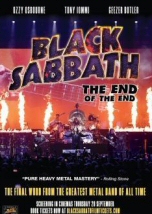




The concert opens with a performance of the song 'Black Sabbath'. The film goes on to show the band performing 'Fairies Wear Boots', 'Under the Sun/Every Day Comes and Goes', 'Into the Void', 'Snowblind', 'War Pigs', 'Hand of Doom', 'Iron Man', and 'Children of the Grave'; at the end of the setlist, the band performs the song 'Paranoid' as an encore.
Interspersed with the final concert are interviews with Osbourne, Iommi, and Butler, in which they talk about their careers and past drug addictions. Additionally, Iommi's 2012 lymphoma diagnosis, which impacted the band's 2012–14 reunion tour and the recording of their 2013 album 13, is discussed. The film also features footage of 'The Angelic Sessions'—the band's final studio recordings, which took place in the days following the final show. Of these recordings, the film shows Osbourne, Iommi, and Butler performing 'The Wizard', 'Wicked World', and 'Changes'.