










Last Watched

" Fish"  Sort by

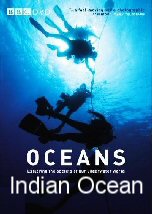
The Indian Ocean

   2009    Nature
The Indian Ocean is the third largest body of water on Earth at more than 6,000 miles wide and covering 13% of the world's surface. It is home to 5,000 species of fish, many of which only exist in the Indian Ocean. But it is also an ocean under threat from global issues such as over-fishing and climate change, which make this an ocean on the edge.
Series: Oceans
Bhutan to the Bay of Bengal

   2004    Culture
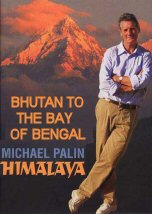
In Bhutan, Palin finds himself back in the land of yaks for a last look at the high Himalaya. Trekking to Chomolhari base camp he meets a nomad with a penchant for yak songs before heading down to Paro to witness the Buddhist festival or Tsechu. In a bar in Thimphu, he discusses reincarnation and the pursuit of happiness with Benji and Khendum, two of the king's cousins, and en route to Bangladesh is taken by Benji to see the rare black-neck cranes. On his journey south through Bangladesh, Michael visits the ship-breaking beaches of Chittagong and grid-locked Dhaka. He meets a man who made a fortune in Birmingham in the poultry business, and a woman who lends money only to women. On a 1920s paddle steamer he is serenaded with the words of Bengal's Shakespeare, and he completes his epic Himalayan journey aboard a fishing boat that carries him out into the Bay of Bengal and a westering sun.
Series: Himalaya with Michael Palin

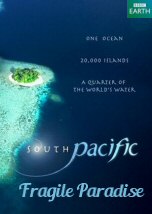
South Pacific Fragile Paradise

   2009    Nature
The extraordinary wildlife, culture and history of this immense, fascinating ocean and its myriad islands are revealed in stunning detail. With its coral reefs, turquoise lagoons and dramatic oceanic atolls, the South Pacific is the archetypal paradise. It is still relatively healthy and teeming with fish, but it is a fragile paradise. International fishing fleets are taking a serious toll on the sharks, albatross and tuna, and there are other insidious threats to these bountiful seas. We look at what is being done to preserve the ocean and its wildlife.

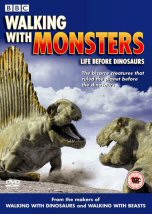
Walking with Monsters

   2005    Science
From the makers of Walking With Dinosaurs comes an epic and entertaining new exploration of early life on Earth, revealing that before the age dinosaurs, a succession of fantastical animals and plants ruled the planet. A time when a two-ton predatory fish came on land to hunt, when four-metre sea scorpions sliced sushi in the shallows and when just one species of lumbering reptile represented 80 per cent of all life. For the first time, this special two-hour presentation uncovers and recreates these creatures and the bizarre world they inhabited.

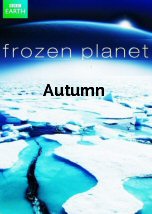
Frozen Planet: Autumn

   2011    Nature
For the animals in the polar regions, autumn means dramatic battles and epic journeys. Time is running out - the Arctic Ocean is freezing over and the sea ice is advancing at 2.5 miles per day around Antarctica. Polar bears gather in large numbers on the Arctic coast as they wait for the return of the ice. Soon, tempers fray and violent sparring contests break out. Meanwhile 2,000 beluga whales head for one special estuary, a gigantic 'whale spa' where they will thrash their snow-white bodies against the gravel and exfoliate. Inland, the tundra undergoes a dramatic transformation from green to fiery red. Here, musk ox males slam head-first into each other with the force of a 30mph car crash as they struggle to defend their harems. Frisky young caribou males play a game of 'grandma's footsteps' as they try to steal the boss's female. Down in Antarctica, Adelie penguin chicks huddle together in creches. When a parent returns from fishing, it leads its twins on a comical steeplechase - sadly there's only enough for one, so the winner gets the meal. Two months later and the chicks are fully feathered apart from downy Mohican hairdos - they're ready to take their first swim - reluctantly though, as it seems penguins are not born with a love of water! And with good reason - a leopard seal explodes from the sea and pulls one from an ice floe, a hunting manoeuvre that has never been filmed before. As winter approaches and everyone has left, the giant emperor penguin arrives and makes an epic trek inland to breed. The mothers soon return to the sea leaving the fathers to hold the eggs and endure the coldest winter on earth.
Series: Frozen Planet

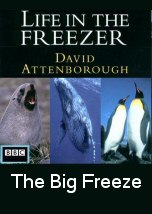
The Big Freeze

   1993    Nature
As almost all animal inhabitants of Antarctica are forced to migrate north, the sea underneath the frozen ice still provides a home to many specially adapted fish whose cells are protected from freezing through an 'antifreeze' liquid. Many of them feed on the faeces of other animals. The most notable larger animal that does not migrate north is perhaps the Weddell Seal, which can be found as close as 1300 kilometres to the pole. Groups of seals tear holes into the ice to dive for food and come up to breathe. The females come back to the ice to give birth. This episode also describes primitive plant life such as lichen, which can still be found on the continent in winter, even in the extremely dry and permanently frozen valleys conditions under which dead animals can lie frozen for many centuries without decomposing. It details the life of the Emperor Penguin, 'the only birds to lay their eggs directly on ice'. While other animals retreat, Emperors migrate not just to the ice, but into the Antarctic continent. The females lay eggs which are incubated by the males under the harshest conditions on Earth (huddling closely together for warmth), while the females return to the sea.
Series: Life in the Freezer
Cooked

Cooked

2016  Culture
Five Came Back

Five Came Back

2017  Art
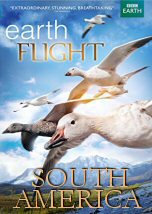
Earthflight

Earthflight

2012  Nature
Earth from Space

Earth from Space

2019  Nature
Black Hole Apocalypse

Black Hole Apocalypse

2018  Science
Earth at Night in Color

Earth at Night in Color

2020  Nature