





Last Watched

"The Sun"  Sort by

Frozen Planet: Spring

   2011    Nature
Spring arrives in the polar regions, and the sun appears after an absence of five months; warmth and life return to these magical ice worlds - the greatest seasonal transformation on our planet is underway. Male Adelie penguins arrive in Antarctica to build their nests - it takes a good property to attract the best mates and the males will stop at nothing to better their rivals! But these early birds face the fiercest storms on the planet. In the Arctic, a polar bear mother is hunting with her cubs. Inland, the frozen rivers start to break up and billions of tons of ice are swept downstream in the greatest of polar spectacles. This melt-water fertilizes the Arctic Ocean, feeding vast shoals of Arctic cod and narwhal. The influx of freshwater accelerates the breakup of the sea-ice - an area of ice the size of Australia will soon vanish from the Arctic. On land, a woolly bear caterpillar emerges from the snow having spent the winter frozen solid. Caterpillars normally become moths within months of hatching, but life is so harsh here that the woolly bear takes 14 years to reach adulthood. Once mature it has only days to find a mate before it dies! Alongside the caterpillars white Arctic wolves race to raise their adorable cubs before the cold returns.
Series: Frozen Planet
January to March

   2014    Nature
In this second episode we travel from January to the March equinox. Kate Humble gets closer to the Sun than she has ever been before, whilst Helen Czerski visits a place that gets some of the biggest and fastest snowstorms on Earth.
Series: Orbit: Earth Extraordinary Journey

Orbit: Earth Extraordinary Journey July to December

   2012    Nature
Right now, you're hurtling around the Sun at 64,000 miles an hour. In the next year, you'll travel 584 million miles, to end up back where you started. In this spectacular series, presenters Kate Humble and Dr Helen Czerski follow the Earth's voyage around the Sun for one complete orbit, to witness the astonishing consequences this journey has for us all. From seasonal extremes to destructive weather, they travel the world to experience the great events that are shaped by our journey around the Sun." They venture back in time to show how the Earths orbit has changed, and the astounding effect this has had on the planet. For the first time ever, this astonishing series charts the progress of the Earth as it undertakes its incredible annual orbit around the Sun. From stunning space imagery to in-your-face storm chasing, this series showcases the incredible power of our planets epic journey around the Sun. In this first episode they travel from July to the December solstice, experiencing spectacular weather and the largest tides on Earth. To show how the Earth's orbit affects our lives, Helen jumps out of an aeroplane and Kate briefly becomes the fastest driver on Earth.
Series: Orbit: Earth Extraordinary Journey

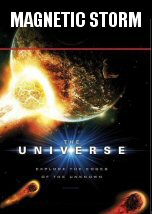
Magnetic Storm

   2010    Science
It bursts from the Sun with the power of ten thousand nuclear weapons... and when it hits our planet, it could create the largest disaster in recorded history. A magnetic storm from the Sun could wipe out electrical power, television, radio, military communication, and nearly every piece of electronics in the Northern Hemisphere. It's a "Solar Katrina" -- a planet-wide "hurricane" of magnetic forces that scramble all 21st Century technology, possibly for good. What causes this magnetic superstorm? Why is magnetism so powerful -- and yet so poorly understood? And is there anything we can do to prevent the Magnetic Storm?
Series: The Universe

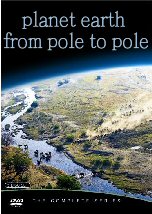
From Pole to Pole

   2007    Nature
Planet Earth is quite simply the greatest nature/wildlife series ever produced. The ultimate portrait of our planet looks at the key factors that shape our natural history. The sun and fresh water dominate the lives of all animals and plants on Earth and trigger seasonal migrations, small and large.
Series: Planet Earth

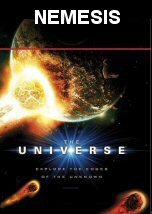
Nemesis The Sun Evil Twin

   2011    Science
The theory of Némesis, a star that orbits the Sun and causes catastrophic events is explored. Nemesis is a hypothetical red dwarf or brown dwarf, originally postulated in 1984 to be orbiting the Sun at a distance of about 95,000 AU (1.5 light-years) somewhat beyond the Oort cloud, to explain a perceived cycle of mass extinctions in the geological record, which seem to occur more often at intervals of 26 million years.
Series: The Universe
How the Universe Works

How the Universe Works

2014  Science
Nature Great Events

Nature Great Events

2009  Nature
Leaving Neverland

Leaving Neverland

2019  Culture
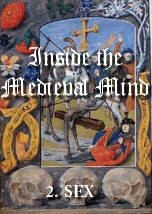
Inside the Medieval Mind

Inside the Medieval Mind

2008  History
Ancient Rome

Ancient Rome

2006  History
Ancient Apocalypse

Ancient Apocalypse

2024  History
Zeitgeist

Zeitgeist

2007  Culture