







Last Watched

"food "  Sort by

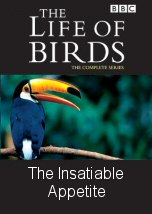
The Insatiable Appetite

   1998    Nature
The next instalment focuses on dietary needs and how different species have evolved beaks to suit their individual requirements. The latter come in a multitude of forms. Blue tits and goldfinches have beaks akin to tweezers, with which to extract seeds, while the hawfinch's razor-like bill can deal with a cherry-stone. However, the crossbill is the only finch that can twist its mandibles in opposite directions. Jays store acorns for winter by burying them in the ground, whereas woodpeckers can keep up to 60,000 of them in one tree trunk. Sap is also desirable, and there are a variety of methods used to obtain it. The hoatzin is the only specialised leaf-eater, and accordingly has a digestive system more akin to that of cattle. Plants recruit birds to aid pollination, and offer nectar as a reward. Hummingbirds eat little else, and the sword-bill's beak is the longest of any bird in relation to its body. Insects are also highly prized, and Galapagos finches are shown to possess some ingenuity as they not only strip bark, but also use 'tools' to reach their prey. Crows are hailed as being among the most intelligent birds, and one is shown using a twig to spear a grub within a fallen log. The robin is an opportunist, and Sir Attenborough observes one seizing morsels as he digs a patch of earth. In South America, a cattle tyrant sits atop an obliging capybara and uses its vantage point to spot passing food that may be dislodged by its grazing partner.
Series: The Life of Birds
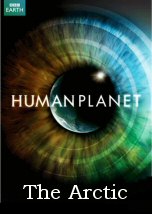
The Arctic

   2011    Culture
The Arctic is the harshest environment on Earth: little food grows, it's dark for months on end, and temperatures stay well below freezing for much of the year. Yet four million people manage to survive here. Human Planet tells remarkable stories of extraordinary people who make their homes in nature's deep freeze. In springtime, Amos and Karl-Frederik set out across the sea ice with their dogs to catch a real-life sea monster: a Greenland shark! Inuit mussel-gatherers venture underneath the sea ice at low tide for a perilous race against time as they gather their food. And the children of Churchill, Manitoba, set out on the most dangerous trick or treating Halloween in the world: they risk coming face-to-face with deadly polar bears on the streets of their town. Who'll get the tastiest snack?
Series: Human Planet

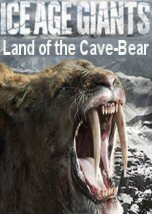
Land of the Cave-Bear

       Science
In the Land of the Cave Bear, Alice ventures to the parts of the northern hemisphere, hit hardest by the cold - Europe and Siberia. High in the mountains of Transylvania, a cave sealed for thousands of years reveals grisly evidence for a fight to the death between two staving giants, a cave bear and a cave lion. Yet Alice discovers that for woolly rhinos and woolly mammoths, the Ice Age created a bounty. The Mammoth Steppe, a vast tract of land which went half way round the world, provided food all year round, for those that liked the cold. It was these mammoths that Europe's most dangerous predators hunted for their survival.
Series: Ice Age Giants

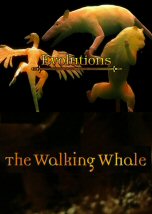
Evolutions: The Walking Whale

   2008    Science
This series illuminates unique and bizarre evolutionary journeys that have brought forth some of the world’s most impressive animals. We unearth a 50-million-year-old mystery mammal sought out a new source of food in the water, starting a spectacular evolutionary journey so that today it looks like a fish. How did a creature built for land become master of the ocean?
Series: Evolutions

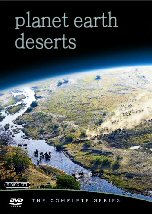
Deserts

   2007    Nature
Around 30% of the land's surface is desert, the most varied of our ecosystems despite the lack of rain. Unravel the secrets of desert survival and experience the ephemeral nature of this dynamic environment. Watch Saharan sandstorms nearly a mile high and desert rivers that run for a single day. In the Gobi Desert, rare Bactrian camels get moisture from the snow. In the Atacama, guanacos survive by licking dew off cactus spines. In the USA, the brief blooming of Death Valley triggers a plague of locusts 65km wide and 160km long. A unique aerial voyage over the Namibian desert reveals elephants on a long trek for food and desert lions searching for wandering oryx.
Series: Planet Earth

Escaping ISIS

   2015    Culture
In August 2014, ISIS militants raided a Yazidi village in Syria, kidnapping thousands of men, women and children. Hundreds of the kidnapped men were killed or forced to convert to Islam; the women and children were sold as sex slaves or to marry ISIS fighters. Many were raped or became victims of other forms of sexual violence. Escaping ISIS depicts 34 of those captured by militants last year — mostly women and young children — reuniting with their families as they escape to freedom". Some victims were brought to freedom through underground networks, guides inside ISIS and resistance fighters. Women contacted the resistance fighters, begging for rescue; some said the alternative is committing suicide. Many escapees walk for several days with little food and water, often barefoot, risking getting recaptured and killed. One resistance fighter was shot in the back of the head in ISIS territory after they found out that he was working against them. The documentary shows parts of this treacherous journey to freedom.
Meltdown: Three Mile Island

Meltdown: Three Mile Island

2022  Technology
Minimalism

Minimalism

2015  Culture
Tiger

Tiger

2020  History
All or Nothing: Arsenal

All or Nothing: Arsenal

2022  Culture
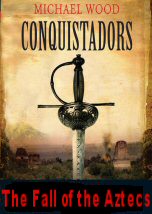
Conquistadors

Conquistadors

2002  History
Frozen Planet

Frozen Planet

2011  Nature
Cooked

Cooked

2016  Culture