
Last Watched

"Modern"  Sort by

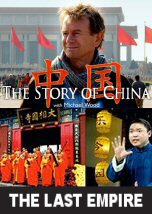
The Last Empire

   2016    History
China's last empire, the Qing, lasted from 1644 to 1912. It began in violence and war as the Manchus swept down from the north, but invaders became emperors, with three generations of one family ruling the country. Among them, Michael Wood argues, was China's greatest emperor - Kangxi. Under the Qing, China doubled in size to include Xinjiang in the far west, as well as Mongolia and Tibet, creating the essential shape of China today. The new dynasty tolerated a diversity of cultures and religions, including Islam. In Kaifeng, Michael visits a women's mosque with a female imam, a delightful scene that ends with laughter and selfies! The Qing also undertook huge cultural enterprises. At a traditional printing house where the wood blocks are hand-carved, we see how the Complete Tang Poems were reproduced - all 48,000 of them. We travel through the wintry countryside to a remote village where a hardy audience watch open-air opera in the snow and visit a painter's studio, and 'storytelling' houses in Yangzhou. In the 18th century, China was arguably the greatest economy in the world, and we get a fabulous sense of the rich culture that came with prosperity. But then came the clash with the British, in the first Opium War, when a British expedition destroyed the Qing navy and extracted territory and trading rights. We leave with a glimpse of the future. 'Every dynasty has risen and declined,' says Michael, 'and has needed new life to regenerate, and this time the catalyst was the British.' Among the ports China ceded was an almost uninhabited island, Hong Kong, one of today's greatest financial centres, and Shanghai, a small town then but now one of the greatest cities in world.
Series: The Story of China
Sea Monsters

   2011    Science
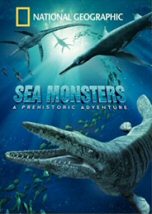
The setting alternates between prehistory and modern day times in which scientists study the fossilized remains of the creatures in the film. In 2009, a group of paleontologists discover a rare fossil in Kansas. The fossil was previously exposed by a summer rain, and it appears to be a marine reptile, tracing back over 70 million years. It was a female Dolichorhynchops and will be the inspiration for telling the story of Dolly, who travels the Kansas Inland Sea, 80 million years ago during the late Cretaceous period with her family.
The film brings to life some of the most bizarre, ferocious and fascinating creatures to ever inhabit the ocean, incluing Tylosaurus, Xiphactinus, Cretoxyrhina, and Ammonite. It combines animation with recreations in a 3D prehistoric adventure. A journey to the bottom of the ancient oceans dramatizes awe-inspiring creatures.

Across Continents

   2019    Technology    HD
'Speed' investigates mankind's insatiable necessity to move faster and further; for pleasure, for work, to explore, to survive. From ancient outriggers, to modern bullet trains, to the interplanetary travel of tomorrow; This series is a thrilling joyride through the Science and History of travel.
'Across Continents:' Never in the history of humanity have so many of us been mobile, never has our demand for fast, efficient and safe transportation been so high, and never have we relied so heavily on technology to deliver. New innovations propel us into the world of self-driving cars and ultra high-speed trains.
Series: Speed

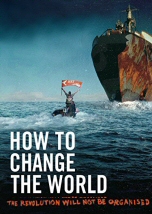
How to Change the World

   2015    Culture
In 1971, a group of friends sail into a nuclear test zone, and their protest captures the world's imagination. It was from these humble but courageous beginnings that the global organisation that we now know as Greenpeace was born. Chronicling the fascinating untold story behind the modern environmental movement, this gripping new film tells the story of eco-hero Robert Hunter and how he, alongside a group of like-minded and idealistic young friends in the '70s, would be instrumental in altering the way we now look at the world and our place within it.
Using never before seen archive that brings their extraordinary world to life, How To Change The World is the story of the pioneers who founded Greenpeace and defined the modern green movement.

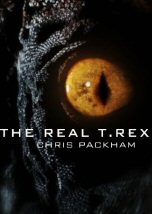
The Real T Rex

   2018    Science
Chris Packham goes on an investigative journey into the mysteries of planet Earth's super predator - Tyrannosaurus rex. The latest groundbreaking paleontological discoveries combined with studies of modern animals are redefining this iconic dinosaur.
Tackling everything from the way he looked, moved, socialized - even down to his terrifying roar - Chris strips away Hollywood myths to uncover the amazing truth, and utilizing the latest CGI wizardry, he rebuilds the most authentic T rex ever seen from the bones up.

Vladimir Mukhin

   2017    Art
A powerful depiction of Vladimir Mukhin's struggle to resuscitate an almost forgotten russian cuisine, going against the established tradition. Be prepared for stunning images of culinary creations at White Rabbit, some will leave you uneased.
A fifth-generation chef, Mukhin worked in his father’s kitchen as a young man, preparing Soviet-era classics. So, like generations of youths before him, Mukhin had to rebel against the old man. He left his small hometown of Essentuki for Moscow and became obsessed with modern techniques and food from across Europe. It wasn’t until he worked as a sous chef in France, when he collaborated on a menu with chef Christian Etienne, that Mukhin realized Russian cuisine could exist within modern cooking. 'His French clients who ate it were amazed,' he says. ¡They loved his Russian cooking.'
Series: Chef's Table
Hiroshima

Hiroshima

2005  History
Minimalism

Minimalism

2015  Culture
The Last Dance

The Last Dance

2020  Culture
Prehistoric Planet

Prehistoric Planet

2022  Science
Prehistoric Planet II

Prehistoric Planet II

2023  Science
Leaving Neverland

Leaving Neverland

2019  Culture
Human universe

Human universe

2014  Technology
Eden: Untamed Planet

Eden: Untamed Planet

2021  Nature