



Last Watched

"Science"  Sort by

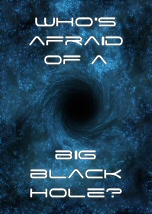
Who Is Afraid of a Big Black Hole

   2009    Science
Black Holes are one of the most destructive forces in the universe, capable of tearing a planet apart and swallowing an entire star. Yet scientists now believe they could hold the key to answering the ultimate question - what was there before the Big Bang? The trouble is that researching them is next to impossible. Black holes are by definition invisible and there's no scientific theory able to explain them. Meet the astronomers attempting to image a black hole for the very first time and the theoretical physicists getting ever closer to unlocking their mysteries. It's a story that takes us into the heart of a black hole and to the very edge of what we think we know about the universe.
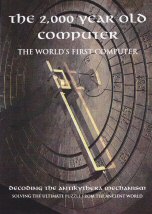
The Two Thousand Year Old Computer

   2012    History
In 1901, a group of divers excavating an ancient Roman shipwreck near the island of Antikythera, off the southern coast of Greece, found a mysterious object - a lump of calcified stone that contained within it several gearwheels welded together after years under the sea. The 2,000-year-old object, no bigger than a modern laptop, is now regarded as the world's oldest computer, devised to predict solar eclipses and, according to recent findings, calculate the timing of the ancient Olympics. Following the efforts of an international team of scientists, the mysteries of the Antikythera Mechanism are uncovered, revealing surprising and awe-inspiring details of the object that continues to mystify

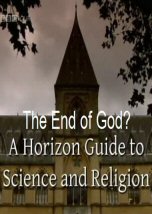
The End of God

   2010    Culture
Dr Thomas Dixon delves into the BBC's archive to explore the troubled relationship between religion and science. From the creationists of America to the physicists of the Large Hadron Collider, he traces the expansion of scientific knowledge and asks whether there is still room for God in the modern world. He looks at what happens when new scientific discoveries start to explain events that were once seen as the workings of God, and explains how some of our most famous scientists have seen God in the grandest laws of the universe. Finally, he finds intriguing evidence from brain science which hints that belief in God is here to stay.

Project Nim

   2011    Science
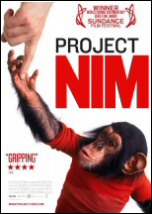
The film tells the tale of Nim Chimpsky, a chimpanzee who was the subject of a landmark experiment to see if an ape could learn to communicate with language if raised and nurtured like a human child. This study was the brainchild of Dr. Herbert Terrace, a Columbia University behavioral psychologist who hoped to teach Nim enough language that he could eventually express what he was thinking and feeling. This would refute Noam Chomsky's thesis that language is inherent only in humans, hence his moniker, a direct pun on the famous linguists' name. The doc was a smash when it played at Sundance with this entirely different incredible but true story

Colours Of Earth

   2015    Science
In this episode, Helen seeks out the colours that turned planet Earth multicoloured. To investigate the essence of sunlight Helen travels to California to visit the largest solar telescope in the world. She discovers how the most vivid blue is formed from sulfur atoms deep within the Earth's crust and why the presence of red ochre is a key sign of life. In gold, she discovers why this most precious of metals shouldn't even exist on the surface of the planet and in white, Helen travels to one of the hottest places on Earth to explore the role salt and water played in shaping planet Earth.
Series: Colour The Spectrum of Science

Childbirth: All or Nothing

   2015    Medicine
What's your idea of the perfect birth? Do you want every medical intervention known to science or do you want to go it alone, without the help of a doctor or midwife? And what about after birth? Perhaps you'll hang on to your baby's placenta and carry it around with your newborn until it dries and drops off naturally? Or maybe you'll decide to eat it by whizzing it up into a smoothie? This film follows four pregnant women all making very different choices around their births, all determined to do it their way." 37-year-old Jo plans to deliver her baby completely alone on board her barge, without the assistance of any medical professional. By contrast, 34-year-old Anna is opting to sidestep the pains of labour and book in for a c-section at the Portland Hospital in London. Anna wants all the medication available and she doesn't want to feel a thing. There are plenty of unusual plans for after the birth too. In Devon, 33-year-old Lisa plans to lotus birth - she'll leave her baby's umbilical cord attached to its placenta and she'll keep it fresh by dusting it with salt, rose petals and lavender oil. 35-year-old Kati from Manchester is going to whizz her afterbirth into a smoothie and consume it over a number of days. She hopes it will help her stave off post-natal baby blues and bounce back as quickly as possible. Fending off bewildered looks and concerns from friends, family and medical professionals, each woman is going against convention to have the birth she wants. There are free and frank discussions between mums and daughters and decisions to go against medical advice. So does breaking with the norm and sticking to your guns pay off? And what really is the perfect birth?
Modern Masters

Modern Masters

2024  Art
Unknown

Unknown

2023  Technology
The Art of Russia

The Art of Russia

2009  Art
Dark Net

Dark Net

2016  Technology
Inside the Medieval Mind

Inside the Medieval Mind

2008  History