





Last Watched

"Rat"  Sort by

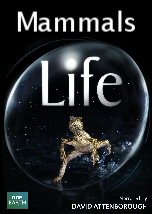
Life: Mammals

   2009    Nature
Mammals dominate the planet. They do it through having warm blood and by the care they lavish on their young. Weeks of filming in the bitter Antarctic winter reveal how a mother Weddell seal wears her teeth down keeping open a hole in the ice so she can catch fish for her pup. A powered hot air balloon produces stunning images of millions of migrating bats as they converge on fruiting trees in Zambia, and slow-motion cameras reveal how a mother rufous sengi exhausts a chasing lizard. A gyroscopically stabilised camera moves alongside migrating caribou, and a diving team swim among the planet's biggest fight as male humpback whales battle for a female.
Series: Life
Intimate Relations

   2005    Nature
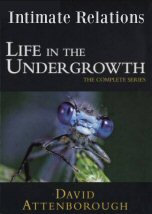
The world of invertebrates exists in a web of relationships with plants and other animals. Unique footage of the world's smallest insect (a fairy wasp only quarter of a millimetre long) shows it flying underwater to find the eggs of water beetles in which to lay its own brood. Some ants 'farm' the trees that give them shelter, creating areas known as 'Devil's gardens'. To make sure these grow without competition, they kill off other seedlings in the surrounding vegetation. The blister beetle's larvae huddle together on the end of a piece of grass and mimic a female bee. When a male bee tries to mate with the 'female', the larvae grab on to his belly. Confused, he flies away and searches for a real female. When he eventually finds her and mates with her, the beetle larvae hurriedly swap from his front on to her back, and hence get carried back to her nest where they eat her pollen supplies.
Series: Life in the Undergrowth

Why are We Here

   2014    Science
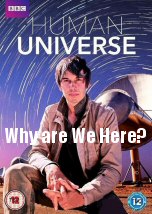
In episode two, Professor Brian Cox is off to India, where he assesses arguably the first evidence of rational thought in literature, the poetry of the Vedic monks. They pondered mankind's origins, realising there must have been a day with no yesterday - a day of creation - prompting the age-old question of where did the universe come from? Brian marvels that the universe seems to follow a set of rules, the laws of physics, allowing space to be considered on the grandest scale, travelling to the most distant, farthest reaches of the cosmos just by using our minds. Brian also visits Japan, and offers viewers the idea that man lives in just one of an infinite number of universes that are being made all the time.
Series: Human Universe

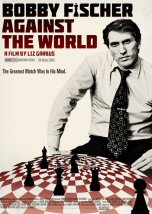
Bobby Fischer Against the World

   2011    History
Bobby Fischer Against the World is a documentary feature film that explores the life of chess Grandmaster and 11th World Champion Bobby Fischer. It incorporates interviews with chess players Anthony Saidy, Larry Evans, Sam Sloan, Susan Polgar, Gary Kasparov, Asa Hoffmann, Friðrik Ólafsson, Lothar Schmid and others. It includes never-before-seen footage from the World Chess Championship 1972. The drama of Bobby Fischer's career was undeniable, from his troubled childhood, to his rock star status as World Champion and Cold War icon, to his life as a fugitive on the run.

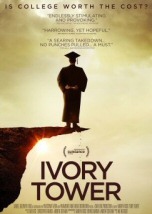
Ivory Tower

   2014    Culture
As tuition rates spiral beyond reach and student loan debt passes $1 trillion (more than credit card debt), IVORY TOWER asks: Is college worth the cost? From the halls of Harvard, to public colleges in financial crisis, to Silicon Valley, filmmaker Andrew Rossi assembles an urgent portrait of a great American institution at the breaking point. Through interviews profiled at Arizona State, Cooper Union, and Sebastian Thrun's Udacity-among several others-IVORY TOWER reveals how colleges in the United States, long regarded as leaders in higher education, came to embrace a business model that often promotes expansion over quality learning. Along the way we also find unique programs, from Stanford to the free desert school Deep Springs to the historically black all women's college Spelman, where the potential for life-changing college experiences endure.

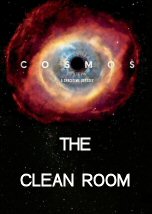
The Clean Room

   2014    Science
This episode is centered around how science, in particular the work of Clair Patterson (voiced in animated sequences by Richard Gere[33]) in the middle of the 20th century, has been able to determine the age of the Earth. Tyson first describes how the Earth was formed from the coalescence of matter some millions of years after the formation of the Sun, and while scientists can examine the formations in rock stratum to date some geological events, these can only trace back millions of years. Instead, scientists have used the debris from meteor impacts, such as the Meteor Crater in Arizona, knowing that the material from such meteors coming from the asteroid belt would have been made at the same time as the Earth. Patterson also examined the levels of lead in the common environment and in deeper parts of the oceans and Antarctic ice, showing that lead had only been brought to the surface in recent times. He would discover that the higher levels of lead were from the use of tetraethyllead in leaded gasoline resulting in government-mandated restrictions on the use of lead.
Series: Cosmos: A Spacetime Odyssey
Top Gear

Top Gear

2012  Technology
Dangerous knowledge

Dangerous knowledge

2007  Science
The Crusades

The Crusades

2012  History
Out of the Cradle

Out of the Cradle

2019  History
Unknown

Unknown

2023  Science
Leaving Neverland

Leaving Neverland

2019  Culture