From a primate that’s no bigger than a mouse, to a chameleon that can fit on your fingertip, the natural world is full of fantastically small animals. Biologist Patrick Aryee explores the fascinating secrets behind these miniature marvels and shows that they’re not the underdogs you might think they are. Super Small Animals follows him as he meets the leading experts on these pint sized superstars, and finds out what makes them some of the most successful on the planet. First up, he reveals the huge benefits that being small can bring. There’s the little lemur whose diminutive frame helps it to exploit a unique gap in the eco-system, the tiny hummingbird that uses its size to out-maneuver the competition, and the world’s smallest seahorse that never has to leave home. He also explores why small animals are proportionally the strongest in the world, and introduces a peanut-sized beetle that can pull over a thousand times its own weight. Next he explores the challenges that animals face when they shrink in size, and the ingenious ways they overcome them. We find out how the smallest armadillo in the world manages to control its temperature in the searing desert sun, and the how the world’s smallest fish can survive in nothing more than a puddle, because it never really grows up. Patrick meets a secretive hippo that lives in the dense jungle, and looks like it’s been shrunk in the wash, and some of the world’s smallest snakes that give birth to enormous babies. He also meets a scientist that studies how really tiny spiders have a surprising trick that enables them to travel an incredible 40 miles per day, using almost no energy. Then there are the animals that refuse to be pigeon holed as small, and manage to punch way above their weight. He puts some astonishing invertebrates to the test, to see how they work together to become much bigger than the sum of their parts and meets a pint-sized predator that takes on some of the largest and most dangerous creatures on the planet, getting hands on to discover how its build helps it to be brave. Finally he uncovers the incredible lengths that deep sea anglerfish go to in order to be big and small at the same time, and has an endearing encounter with a tiny carnivore that manages to be small in just one direction. Whether their size helps them to hunt, hide or survive, all these remarkable animals prove that good things really do come in small packages.
Nathan stages a ninth birthday party for Adam, but faces a problem when Remy, one of the child actors who played Adam at age six, becomes attached to Nathan, calling him 'daddy' even after his scenes are over. Remy's mother explains that her son might have trouble understanding the difference between acting and reality. To discover what went wrong, Nathan repeats Remy's scenes with different actors including Liam (a nine-year-old Adam actor), an adult actor, and a mannequin. He then explores what might have happened if Angela had stayed with him and meets with the real Angela, who urges him to forgive himself, as her religious beliefs state. In an attempt to truly understand the connection between parent and child, Nathan stages a new scenario in which he is Remy's mother Amber and Liam portrays Remy. They re-create the experience of appearing on The Rehearsal and becoming attached to 'pretend daddy' Nathan. After coming to the emotional realization that they should not have done the show, Nathan as Amber seemingly breaks character and tells the fake Remy, 'I'm your daddy.'
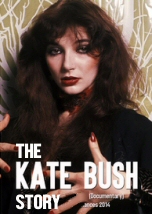
This documentary explores Kate Bush's career and music, from January 1978's Wuthering Heights to her 2011 album 50 Words for Snow, through the testimony of some of her key collaborators and those she has inspired. Contributors include the guitarist who discovered her (Pink Floyd's David Gilmour), the choreographer who taught her to dance (Lindsay Kemp) and the musician who she said 'opened her doors' (Peter Gabriel), as well as her engineer and ex-partner (Del Palmer) and several other collaborators (Elton John, Stephen Fry and Nigel Kennedy). Also exploring their abiding fascination with Kate are fans (John Lydon, Sidi Larbi Cherkaoui) and musicians who have been influenced by her (St Vincent's Annie Clark, Natasha Khan of Bat for Lashes, Tori Amos, Outkast's Big Boi, Guy Garvey and Tricky), as well as writers and comedians who admire her (Jo Brand, Steve Coogan and Neil Gaiman).
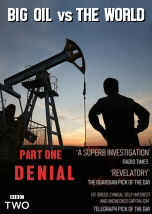
The most important story of our time. 2022 is set to be a year of unprecedented climate chaos across the planet. As the world’s leading climate scientists issue new warnings about climate change and the soaring cost of fuel highlights the world’s ongoing dependence on fossil fuels – how did we get here? The first part tells The story of what the fossil fuel industry knew about climate change more than four decades ago. Scientists who worked for the biggest oil company in the world, Exxon, reveal the warnings they sounded in the 1970s and early 1980s about how fossil fuels would cause climate change – with potentially catastrophic effects. Drawing on thousands of newly discovered documents, the film goes on to chart in revelatory and forensic detail how the oil industry went on to mount a campaign to sow doubt about the science of climate change, the consequences of which we are living through today
It's the question you're not allowed to ask. The documentary they don't want you to see. Are gender roles just a 'social construct'? Can a woman be 'trapped in a man’s body'? Does being a woman mean anything at all? We used to think being a woman had something to do with biology, but the nation’s top experts keep assuring us that is definitely not the case. So Matt Walsh sat down with the experts and asked them directly. He discovers that no one—not doctors, therapists, psychiatrists, or politicians—can actually define the word 'woman'. Walsh uncovers the shocking and horrifying roots of radical gender ideology and learns exactly how activists and ideologues are trying to brainwash our kids. He also reveals a strategy to defeat the collective insanity that has taken over our society. Join Matt on his often comical, yet deeply disturbing, journey as he answers the question generations before us never knew they needed to ask: What is a woman?
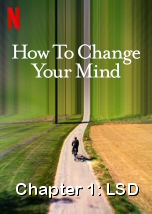
This highly anticipated psychedelic docuseries showcases what these substances teaches people about consciousness, dying, addiction, depression and transcendence. Filmmaker Alex Gibney and best-selling author Michael Pollan present it in four parts, each focused on a different mind-altering substance: LSD, psilocybin, MDMA, and mescaline. With Pollan as our guide, we journey to the frontiers of the new psychedelic renaissance -- and look back at almost-forgotten historical context -- to explore the potential of these substances to heal and change minds as well as culture. The first chapter is a great introduction to the topic of LSD, from its 1943 origins to today's microdosing trend, for those who don’t already know a lot about the subject, and a fun and entertaining refresher on LSD for even experts in the field. The show takes us on a journey through the history of the powerful compound, from its discovery and its early medical use, to secret CIA mind-control studies, the counterculture and its banning, and finally to our current renaissance. It includes amazing clips of LSD’s inventor Albert Hofmann and powerful personal testimonies of individuals who have healed their suffering through LSD.




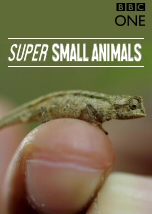




First up, he reveals the huge benefits that being small can bring. There’s the little lemur whose diminutive frame helps it to exploit a unique gap in the eco-system, the tiny hummingbird that uses its size to out-maneuver the competition, and the world’s smallest seahorse that never has to leave home. He also explores why small animals are proportionally the strongest in the world, and introduces a peanut-sized beetle that can pull over a thousand times its own weight.
Next he explores the challenges that animals face when they shrink in size, and the ingenious ways they overcome them. We find out how the smallest armadillo in the world manages to control its temperature in the searing desert sun, and the how the world’s smallest fish can survive in nothing more than a puddle, because it never really grows up. Patrick meets a secretive hippo that lives in the dense jungle, and looks like it’s been shrunk in the wash, and some of the world’s smallest snakes that give birth to enormous babies. He also meets a scientist that studies how really tiny spiders have a surprising trick that enables them to travel an incredible 40 miles per day, using almost no energy.
Then there are the animals that refuse to be pigeon holed as small, and manage to punch way above their weight. He puts some astonishing invertebrates to the test, to see how they work together to become much bigger than the sum of their parts and meets a pint-sized predator that takes on some of the largest and most dangerous creatures on the planet, getting hands on to discover how its build helps it to be brave. Finally he uncovers the incredible lengths that deep sea anglerfish go to in order to be big and small at the same time, and has an endearing encounter with a tiny carnivore that manages to be small in just one direction.
Whether their size helps them to hunt, hide or survive, all these remarkable animals prove that good things really do come in small packages.