









Last Watched

"Island"  Sort by

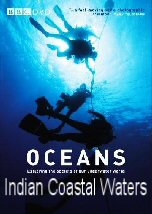
The Indian Ocean Coastal Waters

   2009    Nature
The tropical Indian Ocean is home to the Spice Islands. Characterised by beautiful sandy beaches, fringing coral reefs and coastal mangrove forests, this is a vibrant nursery area for marine life, such as whale sharks, crabs, seahorses and a great variety of fish. The coastal areas are where humans have the most direct impact on the ocean's resources.
Series: Oceans
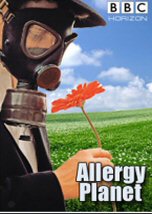
Allergy Planet

   2008    Medicine
We are in the grip of an allergy epidemic. 50 years ago one in 30 were affected, but in Britain today it is closer to one in three. Why this should be is one of modern medicine's greatest puzzles. In search of answers, Horizon travels round the globe, from the remotest inhabited island to the polluted centres of California and the UK. We meet sufferers and the scientists who have dedicated their lives trying to answer the mystery of why we are becoming allergic to our world.

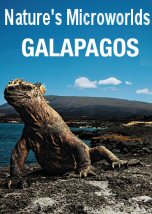
Nature Microworlds: Galapagos

   2012    Nature
A visit to arguably the most famous archipelago on Earth, the Galapagos. It's home to a myriad of bizarre and unique creatures, endemic to these islands - but how did they get here and what is the key to these extraordinary islands that allows them to thrive? The programme reveals that this key holds not just the secret to life here, but also to how Darwin was able to leave with the ideas that would revolutionise biology.

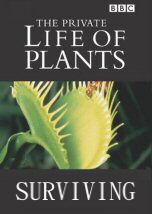
Surviving

   1995    Nature
the final episode deals with plants that live in hostile environments. Attenborough visits Ellesmere Island, north of the Arctic Circle, to demonstrate that even in a place that is unconducive to life, it can be found. Algae and lichens grow in or on rock, and during summer, when the ice melts, flowers are much more apparent. However, they must remain close to the ground to stay out of the chilling wind. In the Tasmanian mountains, plants conserve heat by growing into 'cushions' that act as solar panels, with as many as a million individual shoots grouped together as one. Others, such as the lobelia in Mount Kenya, have a 'fur coat' of dense hairs on their leaves. The saguaro cactus in the Sonoran Desert flourishes because of its ability to retain vast amounts of water, which can't be lost through leaves because it has none. Many desert dwellers benefit from an accelerated life cycle, blooming rapidly within weeks after rainfall. Conversely, Mount Roraima is one of the wettest places on Earth. It is a huge sandstone plateau with high waterfalls and nutrients are continuously washed away, so plants have to adapt their diet if they are to survive. A bladderwort is shown invading a bromeliad. Inhabitants of lakes have other problems to contend with: those that dominate the surface will proliferate, and the Amazon water lily provides an apt illustration. Attenborough ends the series with an entreaty for the conservation of plant species.
Series: The Private Life of Plants

Last Stand

   2015    History
The Roman army turns its attention to an island of rich resources, powerful tribes and druids, and advanced military equipment - Britain. This episode tells the story of the Celts' last stand against the Roman army - a revolt led by another great leader, the warrior queen Boudicca.
Series: The Celts: Blood, Iron, and Sacrifice

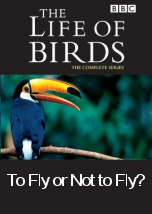
To Fly or Not to Fly

   1998    Nature
The first episode looks at how birds first took to the skies in the wake of the insects. It begins in Mexico, where Sir Attenborough observes bats being outmanoeuvred by a red-tailed hawk. Pterosaurs were the birds' forerunners, some 150 million years after dragonflies developed the means of flight, but eventually went extinct together with the dinosaurs. Birds had by then already evolved from early forms like archaeopteryx, the first creature to possess feathers. Its ancestry can be traced through reptiles, and some current species, such as the flying lizard, possibly show paths this evolution may have taken." One of the biggest birds to have ever existed was the terror bird, which proliferated after dinosaurs vanished and stood up to 2.5 metres tall. By comparison, the ostrich, while not closely related, is the largest and heaviest living bird. It was probably the evasion of predators that drove most birds into the air, so their flightless cousins evolved because they had few enemies. Accordingly, such species are more likely to be found on islands, and Sir Attenborough visits New Zealand to observe its great variety, most especially the kiwi. Also depicted is the moa, another huge creature that is now gone. The takahē is extremely rare, and high in the mountains of New Zealand, Sir Attenborough discovers one from a population of only 40 pairs. Finally, another example on the brink of extinction is the kakapo, which at one point numbered only 61 individuals. A male is heard calling — an immensely amplified deep note that can be heard at great distances from its nest.
Series: The Life of Birds
P.U.L.S.E

P.U.L.S.E

2006  Art
A Perfect Planet

A Perfect Planet

2021  Nature
Mind Field Season 2

Mind Field Season 2

2018  Technology
The Making of the Mob

The Making of the Mob

2016  History
Long Way Home

Long Way Home

2025  Culture