The film examines the profound claim that most, if not all, of the degenerative diseases that afflict us can be controlled, or even reversed, by rejecting our present menu of animal-based and processed foods. Despite the most advanced medical technology in the world, we are sicker than ever by nearly every measure. Cases of diabetes are exploding, especially amongst our younger population. About half of us are taking at least one prescription drug and major medical operations have become routine. Heart disease, cancer and stroke are the country's three leading causes of death, even though billions are spent each year to 'battle' these very conditions. Millions suffer from a host of other degenerative diseases. Could it be there's a single solution to all of these problems?
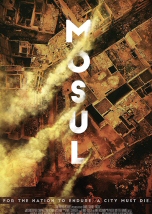
In the fall of 2016, an army of over 100,000 Iraqi soldiers and militiamen mobilize to liberate Mosul, Iraq's second largest city, from the clutches of the Islamic State. Ali Mula, an Iraqi journalist, joins this army of uneasy allies--including Sunnis, Shiites, Christians and Kurds--to find out if they can put aside their sectarian differences and finally free their country from the scourge of ISIS. Along the way to Mosul, Ali encounters an unforgettable group of characters including a Sunni tribal leader who calls himself 'the Crocodile', a female militia leader avenging the death of her husband, a canny, Iranian-backed militia leader, a lawyer-turned-warrior, an elite band of ISIS killers, and refugees who survived the brutality of ISIS occupation. As he nears the end of his journey, Ali meets face-to-face with a die-hard ISIS prisoner who reveals the truth behind his nefarious organization.
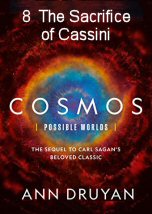
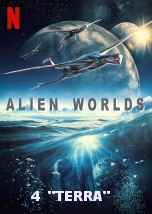
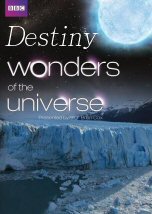
What sort of alien civilizations might exist in the vastness of space? Terra is the fictional world imagined in Episode 4, a planet nine billion years old, twice as old as Earth. Old enough that a truly advanced intelligence could evolve. It was once a fertile world, now it is barren. But life can still thrive here in artificial domes. Over time, they've evolved not to need their bodies. They exist only as neural tissue. They never age, they never die. They're monitored and maintained by robots. If alien civilizations are statistically so likely, why haven't astronomers found any sign of them? Where is everyone? Every time we look at an individual star, that's like dropping a bucket in the ocean. We're going to have to look at a lot of stars and to search through a lot of data until we find the clue that leads us to another civilization.
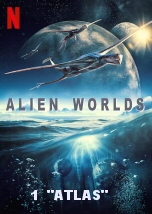
The series, depicted by state of the art CGI techniques, and applying the laws of life on Earth to the rest of the galaxy, blends fact with science fiction and conceptualizes what alien life might be like on other planets. In the prologue, astronomer Didier Queloz makes an appearance to discuss the discoveries of exoplanets and how they are analyzed in the real world. In Episode 1, the fictional world imagined is Atlas, a world with higher gravity than Earth and a thicker atmosphere leading to airborne creatures. In explaining the aliens of Atlas, the episode also explores the handicap principle in insects, and shows a rehabilitative form of falconry as captive falcons are trained to live in the wild.
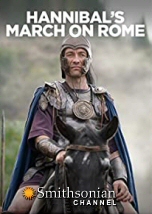
Even 2,000 years after his death, General Hannibal's battle strategies are still studied today. But of all his military feats, perhaps his greatest was leading his massive Carthaginian army of men and three-dozen elephants across the Alps and into the heartland of Rome in 218 B.C. Until now, the route they took has been a matter of dispute, but thanks to modern-day technology, geomorphologist Bill Mahaney and microbiologist Chris Allen believe they've accurately traced this ancient journey.
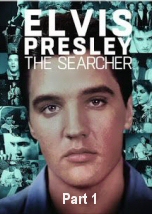
Elvis Presley grew up to become the biggest star in music, thanks to a staggering range of influences that created a revolutionary sound in his lifelong search for self-expression. This two-part documentary reveals his creative journey from childhood through his final recording sessions in 1976. It features more than 20 new, primary source interviews with session players, producers, engineers, directors and other artists who knew him or who were profoundly influenced by him. It also features never-before-seen photos and footage from private collections worldwide, and an original score by Pearl Jam lead guitarist Mike McCready. The first part begins with his early life in Tupelo, Mississippi, and his unprecedented rise to fame over a single year.















Despite the most advanced medical technology in the world, we are sicker than ever by nearly every measure. Cases of diabetes are exploding, especially amongst our younger population. About half of us are taking at least one prescription drug and major medical operations have become routine. Heart disease, cancer and stroke are the country's three leading causes of death, even though billions are spent each year to 'battle' these very conditions. Millions suffer from a host of other degenerative diseases. Could it be there's a single solution to all of these problems?