





Last Watched

"Life"  Sort by

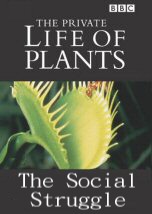
The Social Struggle

   1995    Nature
Fourth episode examines how plants either share environments harmoniously or compete for dominance within them. Attenborough highlights the 1987 hurricane and the devastation it caused. However, for some species, it was that opportunity for which they had lain dormant for many years. The space left by uprooted trees is soon filled by others who move relatively swiftly towards the light. The oak is one of the strongest and longest-lived, and other, lesser plants nearby must wait until the spring to flourish before the light above is extinguished by leaves. Tropical forests are green throughout the year, so brute force is needed for a successful climb to the top of the canopy: the rattan is an example that has the longest stem of any plant. As its name suggests, the strangler fig 'throttles' its host by growing around it and cutting off essential water and light. Some can take advantage of a fallen tree by setting down roots on the now horizontal trunk and getting nutriment from the surrounding moss and the fungi on the dead bark. The mountain ash (eucalyptus regnans) grows so tall, that regeneration becomes a considerable problem. It is easily flammable, so its solution is to shed its seeds during a forest fire and sacrifice itself. It therefore relies on the periodic near-destruction of its surroundings in order to survive. Attenborough observes that catastrophes such as fire and drought, while initially detrimental to wildlife, eventually allow for deserted habitats to be reborn.
Series: The Private Life of Plants
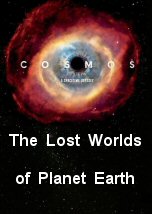

The Lost Worlds of Planet Earth

   2014    Science
This episode explores the palaeogeography of Earth over millions of years, and its impact on the development of life on the planet. Tyson starts by explaining that the lignin-rich trees evolved in the Carboniferous era about 300 million ago, then explains on the nature of plate tectonics that would shape the landmasses of the world and the asteroid impact that initiated the Cretaceous–Paleogene extinction event, leaving small mammals as the dominate species on earth. Earth's landmasses are expected to change in the future and postulates what may be the next great extinction event.
Series: Cosmos: A Spacetime Odyssey

David Attenborough Meets President Obama

   2015    Nature
In a far cry from the steamy jungles of Rwanda or the icy waters of the Arctic, British naturalist Sir David Attenborough has donned a necktie and met with US president Barack Obama to discuss climate change and the future of the planet. The two met at the White House — a place the naturalist had never yet explored — on Sir David's 89th birthday in May to film the interview". It was the first time the respected wildlife filmmaker had met an American president and he seemed a little awed by the experience. Mr Obama, who grew up watching Sir David's programs, seemed equally thrilled. The president has the environment and climate change on his radar and is anxious to see progress made as his presidency comes to a close. He faces stiff opposition from Republicans in Congress on his plans to tackle climate change, but remains determined to make changes before leaving office. "I don't have much patience for anyone who denies that this challenge is real," he said. "We don't have time for a meeting of the Flat Earth Society." Sir David, who has been called "the godfather of natural history TV" by the BBC, brought to the meeting six decades dedicated to sharing the wonders of the natural world with television audiences. After initially being rejected for television because his teeth were deemed "too big", Sir David went on to make his Life on Earth television series, which has been watched by more than 500 million people worldwide. His name is now synonymous with nature, conservation and wildlife. During the television interview, the men discussed global warming, renewable energy and how children and young people hold the key to reversing the damage.

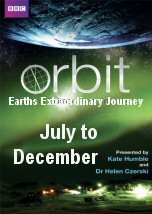
Orbit: Earth Extraordinary Journey July to December

   2012    Nature
Right now, you're hurtling around the Sun at 64,000 miles an hour. In the next year, you'll travel 584 million miles, to end up back where you started. In this spectacular series, presenters Kate Humble and Dr Helen Czerski follow the Earth's voyage around the Sun for one complete orbit, to witness the astonishing consequences this journey has for us all. From seasonal extremes to destructive weather, they travel the world to experience the great events that are shaped by our journey around the Sun." They venture back in time to show how the Earths orbit has changed, and the astounding effect this has had on the planet. For the first time ever, this astonishing series charts the progress of the Earth as it undertakes its incredible annual orbit around the Sun. From stunning space imagery to in-your-face storm chasing, this series showcases the incredible power of our planets epic journey around the Sun. In this first episode they travel from July to the December solstice, experiencing spectacular weather and the largest tides on Earth. To show how the Earth's orbit affects our lives, Helen jumps out of an aeroplane and Kate briefly becomes the fastest driver on Earth.
Series: Orbit: Earth Extraordinary Journey

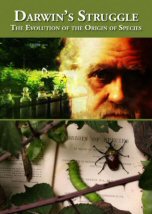
Darwin Struggle - The Evolution of the Origin of Species

   2009    Science
Documentary telling the little-known story of how Darwin came to write his great masterpiece, On the Origin of Species, a book which explains the wonderful variety of the natural world as emerging out of death and the struggle of life. In the twenty years he took to develop a brilliant idea into a revolutionary book, Darwin went through a personal struggle every bit as turbulent as that of the natural world he observed. Fortunately, he left us an extraordinary record of his brilliant insights, observations of nature, and touching expressions of love and affection for those around him. He also wrote frank accounts of family tragedies, physical illnesses and moments of self-doubt, as he laboured towards publication of the book that would change the way we see the world.

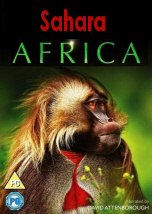
Sahara

   2012    Nature
Northern Africa is home to the greatest desert on Earth, the Sahara. On the fringes, huge zebras battle over dwindling resources and naked mole rats avoid the heat by living a bizarre underground existence. Within the desert, where the sand dunes 'sing', camels seek out water with the help of their herders and tiny swallows navigate across thousands of square miles to find a solitary oasis. This is a story of an apocalypse and how, when nature is overrun, some are forced to flee, some endure, but a few seize the opportunity to establish a new order.
Series: Africa with David Attenborough
Earth at Night in Color

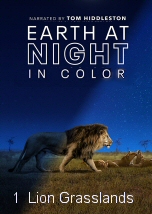
Earth at Night in Color

2020  Nature
The Last Dance

The Last Dance

2020  Culture
Human

Human

2025  History
Leaving Neverland

Leaving Neverland

2019  Culture
Life of a Universe

Life of a Universe

2017  Science
Dirty Money

Dirty Money

2018  Culture
Walking with Dinosaurs

Walking with Dinosaurs

2025  Science
Reel Rock

Reel Rock

2014  Culture