



Last Watched

"Man"  Sort by

Cosmic Holes

   2007    Science
Today, we know black holes exist, and now scientists are trying to confirm that other holes lurk in hyperspace. Our infinite cosmos could contain a variety of "holes" such as black, white, "mini" and wormholes. White holes are the reverse of black holes; instead of matter being sucked into it, matter is ejected out. Wormholes are gateways in the fabric of space and time. They are included in Einstein's field equations as possibilities for their existence. Neither white holes nor wormholes have ever been found. Learn about new discoveries including, colliding binary black holes, intermediate black holes and manufacturing mini black holes.
Series: The Universe
Judgment Day

   2016    History
In 1927, Prohibition agent Eliot Ness narrowly escapes a hit ordered by Al Capone. Determined to prove to Capone that he's not intimidated, Ness and his team of Untouchables execute a series of high-profile raids on Capone's breweries. Over the course of a few months, they destroy more than 200,000 gallons of beer, worth a modern-day equivalent of $134 million - and the newspapers cover it all. Capone lashes out against Ness in the press. What Capone doesn't realize is that Ness and the Prohibition agents aren't the only ones trying to take him down. For the past four years, another government agency with more manpower and resources than Ness has been going after the infamous kingpin: the Internal Revenue Service.
Series: The Making of the Mob

Stardust

   2011    Science
In the second stop in his exploration of the wonders of the universe, Professor Brian Cox goes in search of humanity's very essence to answer the biggest questions of all: what are we? And where do we come from? This film is the story of matter - the stuff of which we are all made. Brian reveals how our origins are entwined with the life cycle of the stars. But he begins his journey here on Earth. In Nepal, he observes a Hindu cremation. Hindu philosophy is based on an eternal cycle of creation and destruction, where the physical elements of the body are recycled on to the next stage. Brian draws a parallel with the life cycle of the stars that led to our own creation. Next, he explains how the Earth's resources have been recycled through the ages. How every atom that makes up everything we see, was at some time a part of something else. Our world is made up of just 92 elements, and these same 92 elements are found throughout the entire universe. We are part of the universe because we are made of the same stuff as the universe.
Series: Wonders of the Universe

Orders and Initiatives

   2005    History
Originally a Prisoner of War camp for Soviet soldiers, SS Commander Rudolf Hoss oversaw the transition of Auschwitz from a political camp to a place to murder thousands of people. In the Autumn of 1941,the Nazis were about to embark on the most crucial few months in the planning of what they called 'The Final Solution' - the extermination of the Jews.
Series: Auschwitz The Nazis and the Final Solution

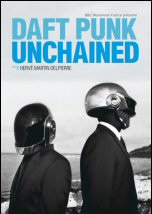
Daft Punk Unchained

   2015    Art
An exploration of the mysterious music duo Daft Punk, the French musicians who are famed for performing in robot attire that hides their faces. The Documentary will review the entire career of Daft Punk, from their start in early 90's with their first group called Darlin', until their Grammy awards in 2014. We learn how the artists have built their music, their image and all aspects of their inspiration. Includes radio interviews, rare footage and exclusive interviews with their close friends and collaborators.

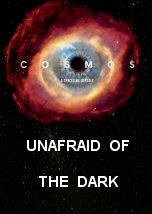
Unafraid of the Dark

   2014    Science
Tyson describes the discovery of cosmic rays by Victor Hess through high-altitude balloon trips. Swiss Astronomer Fritz Zwicky, in studying supernovae, postulated that these cosmic rays originated from these events instead of electromagnetic radiation. Also tells how Vera Rubin observed that the rotation of stars at the edges of observable galaxies did not follow expected rotational behavior leading to consider the existence of dark matter. This further led to the discovery of dark energy to account for the increasing rate of expansion of the universe. Tyson then describes the interstellar travel of the two Voyager probes. Tyson tells the Carl Sagan's role in the Voyager program, including creating the Voyager Golden Record to encapsulate humanity and Earth's position in the universe. Tyson concludes the series by emphasizing Sagan's message on the human condition in the vastness of the cosmos, and to encourage viewers to continue to explore and discover what else the universe has to offer.
Series: Cosmos: A Spacetime Odyssey