The series Warrior Graveyard uncovers some extraordinary warrior skeletons from history. Archaeologists and forensic scientists use remains to tell the story of famous warriors of the past and unleash the full force of modern forensics upon them: battle scars, bone deformations and recoverable scraps of DNA will all be tested and explored. CGI and drama will then bring them dramatically to life, revealing a revolutionary new picture of how these warriors lived - and died. An archaeological and forensic examination of six crusaders' bones brings to life the 1179 Battle of Jacob's Ford, revealing the wounds that killed the warriors in the Holy Land. With every sword slash comes an insight into an historic day. Excavations along the Israel/ Jordan border are unearthing skeletons and rewriting the history of the First Crusade. The site at Jacob's Ford is the only known Crusader battle site with complete skeletons. To secure the road between Akkon and Damascus, King Baldwin IV of Jerusalem had a mighty castle built at the Jacob's Ford of the Jordan River in October 1178. The fortress was a thorn in the side of Sultan Saladin, so he had it stormed a year later, before it was completed. Excavations have been taking place on the site of the legendary crusader castle since the early 1990s. Archaeologists and forensic experts have examined the remains of six fallen crusaders and uncovered fascinating details about the Battle of Chastellet. The programme has secured access to the excavation and remains of some of the 80 Crusader Knights and 750 foot soldiers stationed at the fort when it was attacked and its Crusaders massacred by Saladin's army in 1179, in the battle that changed the course of history in the Middle East.
The series 'All or Nothing: Arsenal' shows the behind the curtain during a crucial season at one of the world's biggest football clubs, as Arsenal focus their efforts on challenging for domestic success and returning to elite European competition. In the first episode, it's the start of a pivotal season for Arsenal Football Club and pressure is mounting on manager Mikel Arteta, to get the club back into the top 4 in the Premier League. Despite a string of new signings over the summer, the team suffer three defeats in a row, leaving them bottom of the table. Expectations are then high as the squad face Norwich City at the Emirates.
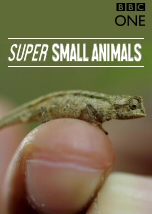
From a primate that’s no bigger than a mouse, to a chameleon that can fit on your fingertip, the natural world is full of fantastically small animals. Biologist Patrick Aryee explores the fascinating secrets behind these miniature marvels and shows that they’re not the underdogs you might think they are. Super Small Animals follows him as he meets the leading experts on these pint sized superstars, and finds out what makes them some of the most successful on the planet. First up, he reveals the huge benefits that being small can bring. There’s the little lemur whose diminutive frame helps it to exploit a unique gap in the eco-system, the tiny hummingbird that uses its size to out-maneuver the competition, and the world’s smallest seahorse that never has to leave home. He also explores why small animals are proportionally the strongest in the world, and introduces a peanut-sized beetle that can pull over a thousand times its own weight. Next he explores the challenges that animals face when they shrink in size, and the ingenious ways they overcome them. We find out how the smallest armadillo in the world manages to control its temperature in the searing desert sun, and the how the world’s smallest fish can survive in nothing more than a puddle, because it never really grows up. Patrick meets a secretive hippo that lives in the dense jungle, and looks like it’s been shrunk in the wash, and some of the world’s smallest snakes that give birth to enormous babies. He also meets a scientist that studies how really tiny spiders have a surprising trick that enables them to travel an incredible 40 miles per day, using almost no energy. Then there are the animals that refuse to be pigeon holed as small, and manage to punch way above their weight. He puts some astonishing invertebrates to the test, to see how they work together to become much bigger than the sum of their parts and meets a pint-sized predator that takes on some of the largest and most dangerous creatures on the planet, getting hands on to discover how its build helps it to be brave. Finally he uncovers the incredible lengths that deep sea anglerfish go to in order to be big and small at the same time, and has an endearing encounter with a tiny carnivore that manages to be small in just one direction. Whether their size helps them to hunt, hide or survive, all these remarkable animals prove that good things really do come in small packages.
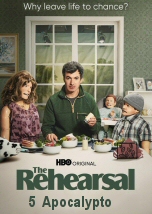
Nathan decides to practice his own assertiveness in relationships by challenging Angela over their son's religious upbringing. Angela, a fervent Christian, refuses to allow Adam to be raised in Nathan's Jewish faith, so Nathan secretly brings his son to lessons with a tutor in Judaism under the pretense of swimming lessons. Seeking solace outside the house, Nathan opens his replica Alligator Lounge to the public under the name Nate's Lizard Lounge. The co-parents argue over a comedy skit featuring six-year-old Adam as 'Dr. Fart' and a joke about eating faeces, which Angela claims is a Satanic practice. Nathan rehearses the confrontations with a fake Angela, and in one scenario, she harshly criticizes Nathan's emotional detachment and questions the ethics of the entire production. However, in their real final confrontation, Angela simply decides to quit the rehearsal. Nathan continues to raise Adam, now as a single parent.
As NASA releases the first images from the James Webb Space Telescope, this film tells the inside story of the telescope's construction and the astronomers taking its first picture of distant stars and galaxies. Will it be the deepest image of our universe ever taken? The successor to Hubble, and 100 times more powerful, the James Webb is the most technically advanced telescope ever built. It will look further back in time than Hubble to an era around 200 million years after the Big Bang, when the first stars and galaxies appeared. Webb's primary mission is to capture the faint light from these objects on the edge of our visible universe so that scientists can learn how they formed, but its instruments are so sensitive it could also be the first telescope to detect signs of life on a distant planet. The James Webb Telescope is an £8 billion gamble on the skills of its engineering team. It’s the first telescope designed to unfold in space – a complicated two-week operation in which 178 release devices must all work - 107 of them on the telescope's sun shield alone. If just one fails, the expensive telescope could become a giant piece of space junk. From its conception in the late 1980s, the construction of Webb has posed a huge technical challenge. The team must build a mirror six times larger than Hubble’s and construct a vast sun shield the size of a tennis court, fold them up so they fit into an Ariane 5 rocket, then find a way to unfold them in space. This film tells the inside story of the James Webb Space Telescope in the words of the engineers who built it and the astronomers who will use it.
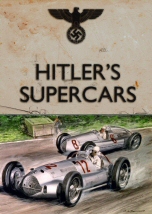
The film tells the story of the ill-fated Nazi Land Speed record attempts. This is a story of engineering excellence, Grand Prix racing, Nazi propaganda, celebrity, and an intense rivalry which would leave a speed record unbroken for 79 years and one of Nazi Germany's best racing drivers dead. During the rise of the Third Reich two German car manufacturers were ordered to build the most high performance vehicles the world had ever seen. What followed was a rivalry that would reap Grand Prix victories, international domination that was a propaganda coup, and provide world fame to its drivers who risked their lives smashing speed records that would stand for 79 years. All under the direct orders of the Fuhrer himself. Bugatti and Alfa Romeo dominated racing before 1934. But the years from 1934 to 1939 were six tumultuous years in which Grand Prix racing was dominated by the German Auto Union, the arranged marriage of Audi, Horch, Wanderer, and DKW, and Mercedes-Benz teams and provided a spectacle of speed, sound and fury never previously attained and never since matched. There are few periods of racing that have excited as much interest, event attendance and sophistication of equipment as the era of the Silver Cars. They were so far ahead of their time that many of their accomplishments were not duplicated until Mercedes went racing again in the early 1950s. There is also something about men who faced the challenges of staying in a cockpit of a highly sophisticated machine capable of 200 mph with no safety systems. They were giants and among them were Italian Tazio Nuvolari and two greatest German pilots of the thirties, Rudolf Caracciola of Mercedes and Auto Union's Bernd Rosemeyer who duelled with faster, more innovative and sleeker machines, developed in wind tunnels. This special documentary charts the rise of Nazi Germany's dominate 'Silver Arrow' Grand Prix and Speed Record cars of the 1930's. Leading motor racing and World War 2 experts James Holland, Richard Williams, Eberhard Reuss and Chris Routledge tell the story of the Nazi funded Auto Union and Mercedes Benz 'National Racing Cars'. Hitler's Supercars interweaves the rise of the Third Reich with the racing exploits it funded and what propaganda messages these racing cars where sending.








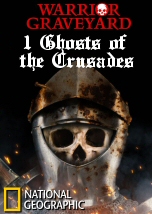




An archaeological and forensic examination of six crusaders' bones brings to life the 1179 Battle of Jacob's Ford, revealing the wounds that killed the warriors in the Holy Land. With every sword slash comes an insight into an historic day. Excavations along the Israel/ Jordan border are unearthing skeletons and rewriting the history of the First Crusade. The site at Jacob's Ford is the only known Crusader battle site with complete skeletons. To secure the road between Akkon and Damascus, King Baldwin IV of Jerusalem had a mighty castle built at the Jacob's Ford of the Jordan River in October 1178. The fortress was a thorn in the side of Sultan Saladin, so he had it stormed a year later, before it was completed.
Excavations have been taking place on the site of the legendary crusader castle since the early 1990s. Archaeologists and forensic experts have examined the remains of six fallen crusaders and uncovered fascinating details about the Battle of Chastellet. The programme has secured access to the excavation and remains of some of the 80 Crusader Knights and 750 foot soldiers stationed at the fort when it was attacked and its Crusaders massacred by Saladin's army in 1179, in the battle that changed the course of history in the Middle East.