



Last Watched

"Europe"  Sort by

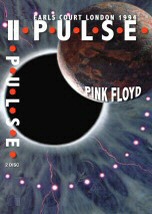
Pink Floyd: P. U. L. S. E. Live at Earls Court (II)

   2006    Art    HD
P.U.L.S.E is a Pink Floyd concert video taken from the 20 October 1994 concert at Earls Court, London. PULSE records the great psychedelic band Pink Floyd rocking out like only they can. Renowned for their hallucinatory special effects and lighting schemes, Pink Floyd goes all out at this spectacular (and very long) concert. Twenty-one of their classics are performed, including classic rock radio staples 'Dark Side of The Moon' and 'Wish You were Here". There was considerable delay in the release of the video edition of Pulse. The cause of the delays was reputed to be the continued modifications and additions to produce a high-quality release. The previous planned release date of 22 September 2005 for the two-disc DVD set was changed to 10 July 2006 for the UK and Europe, and 11 July 2006 everywhere else.
Series: P.U.L.S.E
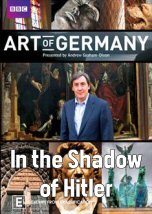

In the Shadow of Hitler

   2010    Art
There is a tendency to deny German culture the equal reverence of Italy or Spain, and this enlightening new series provides a wonderful opportunity to explore a great, yet often neglected, artistic tradition whose influence has been just as profound. Andrew Graham-Dixon concludes his exploration of German art by investigating the dark and difficult times of the 20th century. Dominating the landscape is the figure of Adolf Hitler, failed artist, would-be architect and obsessed with the aesthetics of his 1,000-year Reich". In a series of extraordinary building projects and exhibitions, Hitler waged a propaganda war against every form of modern art as a prelude to unleashing total war on the whole of Europe. After the war the shadow of the Third Reich persisted, Germany remained divided and traumatised. How would artists deal with a past that everybody wanted to forget? Journeying through the work of Otto Dix and George Grosz and the age of the Bauhaus to the post-war painters Georg Baselitz, Hilla Becher and the conceptual artist Joseph Beuys is a long and strange journey, but the signs that art has a place at the heart of the new reunited Germany are clearly visible.
Series: The Art of Germany

The Wehrmacht The Blitzkrieg

   2007    History
What was the Wehrmacht? A group of obedient yeasayers? A murdering band of thugs? An army of millions of abused young men? This series in 5 parts provides differentiated and conclusive answers based on the latest historical and comprehensive investigative research, bringing many new facts to light – among them documents proving for the first time ever, what many among the officers actually thought. Blitzkrieg, the lightning war, in German incorporate modern weapons and vehicles as a method to help avoid the stalemate of trench warfare and linear warfare in future conflicts. The first practical implementations of these concepts coupled with modern technology were instituted by the Wehrmacht in the opening theatres of World War II. The strategy was particularly effective to Germany in the invasions of Western Europe and initial operations in the Soviet Union. These operations were dependent on surprise penetrations, general enemy unpreparedness and an inability to react swiftly enough to German offensive operations.
Series: The Wehrmacht

The Great European Disaster Movie

   2015    Science
Annalisa Piras and former editor of The Economist Bill Emmott, which explores the crisis facing Europe. Through case studies of citizens in different countries, the film explores a range of factors that have led to the present crisis, economic and identity challenges across Europe. High-level experts analyse how and why things are going so wrong. The film includes fictional scenes, set in a post-EU future, which feature archaeologist Charles Granda (played by Angus Deayton) travelling on a flight through a menacing storm, explaining to a child passenger what the EU was. Sombre, thought-provoking and witty, the film frames Europe through the eyes of those who have most at stake - the Europeans themselves.

Last Human Standing

   2010    History
xamines the fate of the Neanderthals, our European cousins who died out as modern humans spread from Africa into Europe during the Ice Age. Did modern humans interbreed with Neanderthals or exterminate them? The program explores crucial evidence from the recent decoding of the Neanderthal genome. How did modern humans take over the world? New evidence suggests that they left Africa and colonized the rest of the globe far earlier, and for different reasons, than previously thought. As for Homo sapiens, we have planet Earth to ourselves today, but that's a very recent and unusual situation. For millions of years, many kinds of hominids co-existed. At one time Homo sapiens shared the planet with Neanderthals, Homo erectus, and the mysterious "Hobbits"–three-foot-high humans who thrived on the Indonesian island of Flores until as recently as 12,000 years ago. "Last Human Standing" examines why "we" survived while those other ancestral cousins died out. And it explores the provocative question: In what ways are we still evolving today?
Series: Becoming Human

Land of the Cave-Bear

       Science
In the Land of the Cave Bear, Alice ventures to the parts of the northern hemisphere, hit hardest by the cold - Europe and Siberia. High in the mountains of Transylvania, a cave sealed for thousands of years reveals grisly evidence for a fight to the death between two staving giants, a cave bear and a cave lion. Yet Alice discovers that for woolly rhinos and woolly mammoths, the Ice Age created a bounty. The Mammoth Steppe, a vast tract of land which went half way round the world, provided food all year round, for those that liked the cold. It was these mammoths that Europe's most dangerous predators hunted for their survival.
Series: Ice Age Giants
Modern Masters

Modern Masters

2024  Art
Unknown

Unknown

2023  Technology
The Art of Russia

The Art of Russia

2009  Art
Dark Net

Dark Net

2016  Technology
Inside the Medieval Mind

Inside the Medieval Mind

2008  History