










Last Watched

"Man"  Sort by

Facing Ali

   2009    Culture
Muhammad Ali was arguably the greatest boxer of the 20th century, and that rare fighter whose presence in the culture of the day was equal to (or perhaps even greater than) his remarkable skills in the ring. Ali was a superb fighter who squared off against a variety of gifted athletes during his career, and filmmaker Pete McCormack offers a new perspective on Ali through this documentary, in which some of his opponents speak about their experiences with the man. Facing Ali includes interviews with Joe Frazier, who speaks of the bitterness that still remains of his rivalry with Ali; George Chuvalo, a Canadian fighter who recalls that while Ali defeated him, he went dancing with his wife afterward while the winner went to the hospital; George Foreman, whose memories include a powerful punch that Ali chose not to land; Leon Spinks, whose 1978 upset victory over Ali thrust him into a level of fame he was not prepared to handle; Ernie Terrell, who discusses the technique and strategy behind Ali's approach; and many more.
Can We Make a Star on Earth

   2009    Technology
Could nuclear fusion hold the answers to the energy crisis? It is the process that has forged all matter in the universe. It lights the stars and it is what transformed the lighter atoms that formed in the Big Bang into heavier atoms. In Can We Make a Star on Earth?, Brian Cox peers beyond the glare of our Sun to reveal the hidden forces that provide its power. He discovers how this fusion energy has kept our closest star burning for five billion years. Brian believes humanity must build a star on Earth to ensure survival. Will scientists be able to harness fusion power and achieve abundant, cheap, clean energy?

Walking with Cavemen: The Survivors

   2003    History
Nearly half a million years ago, the most advanced human yet roams Europe. Strong and powerful, Homo heidelbergensis are fierce hunters, use sophisticated tools and live in close-knit family groups. Over 200,000 years they become split into two populations by extremes of weather and environment and evolve separately into two very different species. In the North are the Neanderthals, whose physical power and resilience is the key to surviving in ice age Northern Europe. About 140,000 years ago, Africa is in the grip of a devastating drought, and something remarkable has happened to the descendants of heidelbergensis who live there. The combination of environment and chance has bred in them a unique ability that will change the course of human history. It will be this small band of southern survivors, perhaps numbering just a few tens of thousands, who will come to dominate the world and be known as Homo sapiens.
Series: Walking with Cavemen

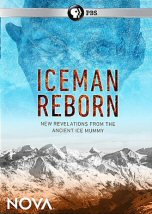
Iceman Reborn

   2016    History
He was stalked, attacked and left to die alone. Murdered more than 5,000 years ago, Ötzi the Iceman is Europe’s oldest known natural mummy. Miraculously preserved in glacial ice, his remarkably intact remains continue to provide scientists, historians, and archeologists with ground-breaking discoveries about a crucial time in human history.

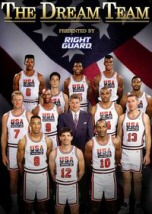
The Dream Team

   2012    Culture
Many consider it the greatest team ever assembled, in any sport. Yet even that description fails to give it proper credit for its impact. The original the Dream Team, the first U.S. Olympic team to include NBA stars was a phenomenon on and off the court. It mattered not that it dominated the Olympic competition. It won the gold medal at the 1992 Olympics in Barcelona, beating its eight opponents by an average of 44 points. What was important was that the Dream Team, gave fans a glimpse of basketball at its finest, and an entire world responded. The film is the definitive documentary of the historic 1992 USA Basketball team, featuring recent interviews with all 12 members, including Michael Jordan, Magic Johnson, Larry Bird, and Charles Barkley. Includes rare footage from USA Basketball's film library, and the untold story behind what has become part of basketball legend. Since 1992, basketball has exploded in popularity around the globe, rising to a place where it truly challenges soccer's status as the world's most popular sport. Much of that is due to the impact of the Dream Team, which attracted fans and followers wherever it went. "It was," said Coach Chuck Daly, "like Elvis and the Beatles put together. Traveling with the Dream Team was like traveling with 12 rock stars. That's all I can compare it to." And what a band it was. Start with three of the game's all-time greats: Michael Jordan, Magic Johnson and Larry Bird. Add the irrepressible Charles Barkley for a little spice, as well as seven more NBA All-Stars: centers David Robinson and Patrick Ewing, power forward Karl Malone, swingmen Scottie Pippen, Chris Mullin and Clyde Drexler and point guard John Stockton. Complete the roster with Christian Laettner, the best college player of 1991-92 and a future NBA All-Star. Opponents didn't have a chance, but they didn't care.

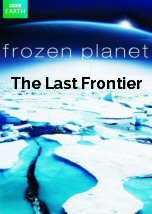
Frozen Planet: The Last Frontier

   2011    Culture
The documentary series reveals the extraordinary riches and wonders of the Polar Regions that have kept people visiting them for thousands of years. Today, their survival relies on a combination of ancient wisdom and cutting-edge science. Most Arctic people live in Siberia, either in cities like Norilsk - the coldest city on earth - or out on the tundra, where tribes like the Dogan survive by herding reindeer, using them to drag their homes behind them. On the coast, traditional people still hunt walrus from open boats - it is dangerous work, but one big walrus will feed a family for weeks. Settlers are drawn to the Arctic by its abundant minerals; the Danish Armed Forces maintain their claim to Greenland's mineral wealth with an epic dog sled patrol, covering 2,000 miles through the winter. Above, the spectacular northern lights can disrupt power supplies so scientists monitor it constantly, firing rockets into it to release a cloud of glowing smoke 100 kilometres high. In contrast, Antarctica is so remote and cold that it was only a century ago that the first people explored the continent. Captain Scott's hut still stands as a memorial to these men. Science is now the only significant human activity allowed; robot submarines are sent deep beneath the ice in search of new life-forms, which may also be found in a labyrinth of ice caves high up on an active volcano. Above, colossal balloons are launched into the purest air on earth to detect cosmic rays. At the South Pole there is a research base designed to withstand the world's most extreme winters. Cut off from the outside world for six months, the base is totally self-sufficient, even boasting a greenhouse.
Series: Frozen Planet