









Last Watched

"Life"  Sort by

Mars: the New Evidence

   2010    Science
In the last few years, the Red Planet has yielded up many new clues that life may have once existed there...and may even exist there today. There is now have proof that water once flowed on the surface, that Mars once had lakes, and that the frozen poles are mostly water, not carbon dioxide as previously thought. Mars has snow--an aurora--and lightning generated by dust storms. Most intriguing of all are the seasonal plumes of methane that just may point to bacteria living below the surface.
Series: The Universe
Deadly Comets and Meteors

   2009    Science
Right now cosmic forces prowl the universe and threaten man's very existence. They're asteroids and comets; they've left their imprint on planet Earth, literally. Initially helping to build planets through violent collisions, during this fiery bombardment period they may have even seeded Earth with water and the building blocks for life. Since the turbulent formation of the solar system, these space rocks have continued to impact Earth. Some have been so violent that they've led to mass extinctions, including one that wiped out the dinosaur. New theories suggest that asteroid and comet dust harbour deadly viruses that may have triggered some of our worst pandemics. The possibility of future collisions remains a legitimate threat yet despite their dangers, asteroids and comets may hold vital natural resources, which could actually preserve
Series: The Universe

Secrets of the Space Probes

   2010    Science
They've discovered water on other planets, and snatched the actual building blocks of life from a comet's tail. But can space probes find a new Earth...and even make contact with alien life? In the 21st century, space probes are photographing, drilling and even sniffing new worlds in the quest for life, and scanning thousands of distant suns trying to detect Earth-like planets. It's only a matter of time before space probes unlock the secrets to extra-terrestrial life and the universe itself.
Series: The Universe

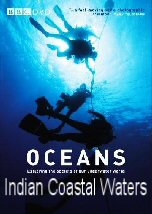
The Indian Ocean Coastal Waters

   2009    Nature
The tropical Indian Ocean is home to the Spice Islands. Characterised by beautiful sandy beaches, fringing coral reefs and coastal mangrove forests, this is a vibrant nursery area for marine life, such as whale sharks, crabs, seahorses and a great variety of fish. The coastal areas are where humans have the most direct impact on the ocean's resources.
Series: Oceans

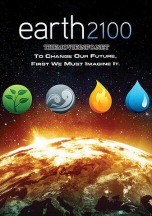
Earth 2100

   2009    Nature
Hosted by ABC journalist Bob Woodruff, this two-hour special explores what a worst-case future might look like if humans do not take action on current or impending problems that could threaten civilization. The problems addressed in the program include climate change, overpopulation, and misuse of energy resources. The events parallel the life of a fictitious storyteller, 'Lucy' as she describes how the events affect her life. The program included predictions of a dystopian Earth in the years 2030, 2050, 2085, and 2100 by scientists, historians, social anthropologists, and economists, including Jared Diamond, Thomas Homer-Dixon, Peter Gleick, James Howard Kunstler, Heidi Cullen, and Joseph Tainter. According to Executive Producer Michael Bicks, "this program was developed to show the worst-case scenario for human civilization. Again, we are not saying that these events will happen — rather, that if we fail to seriously address the complex problems of climate change, resource depletion and overpopulation, they are much more likely to happen.

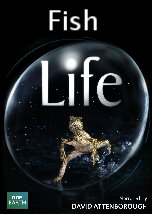
Life: Fish

   2009    Nature
Fish dominate the planet's waters through their astonishing variety of shape and behaviour. The beautiful weedy sea dragon looks like a creature from a fairytale, and the male protects their eggs by carrying them on his tail for months. The sarcastic fringehead, meanwhile, appears to turn its head inside out when it fights. Slow-motion cameras show the flying fish gliding through the air like a flock of birds and capture the world's fastest swimmer, the sailfish, plucking sardines from a shoal at 70 mph. And the tiny Hawaiian goby undertakes one of nature's most daunting journeys, climbing a massive waterfall to find safe pools for breeding.
Series: Life
Wonders Of The Universe

Wonders Of The Universe

2011  Science
Rome

Rome

  History
Universe

Universe

2021  Science
Ancient Rome

Ancient Rome

2006  History
Untold

Untold

2021  Culture