Your brain is like a hungry sponge. It's constantly absorbing information. It thrives when stimulated. Between smartphones and books, and movies, and friends and family, thousands of sensations are constantly going into our heads. But what if it all got cut off?. Imagine being confined to a 10-by-10-foot room in complete isolation. No timekeeping devices, no phones, no books, nothing to write on, no windows. Psychologists say that fewer than three days in a room like this can lead to brain damage. I will be staying in this room for three days. Michael explores the effects of isolation on the human mind by subjecting himself to a very interesting experiment.
In the Youtube video galaxy a new star has been born: the ASMR videos. It stands for Autonomous Sensory Meridian Response, and refers to the pleasant feeling that users associate with this type of digital content. The physical reaction also changes significantly from individual to individual and people reportedly experience a pleasant feeling of tingling in the scalp, which can spread to the shoulders and back, and usually be accompanied by a feeling of relaxation and generalised well-being. The intensity of the response can also be very strong, so much so that some have used the word 'braingasm', literally 'brain orgasm' to express the feeling. It's likely that you've already heard about it, but if not, this is the perfect opportunity to learn more about it. Especially because, for the first time, it seems that the benefits of ASMR videos have been scientifically proven.
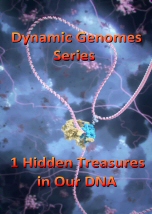
Destiny is beyond our control, our fate already set, perhaps from the onset of disease or being born with a special ability. You may think our lives are determined by the genes we're born with, but that is not the case. In the non-coding 98% of our DNA, we have countless switches to promote or suppress the physiological reactions of our bodies. Interestingly, we can change the states of these switches through our own efforts and even can affect the DNA conditions of our offspring before their birth. Explore the hottest area of bioscience, genomics with stunning live image, quality CGI, the forefront research, and real human stories.
Explore the hottest area of bioscience, genomics with stunning live image, quality CGI, the forefront research, and real human stories. Previously it was thought that only 2% of our DNA is meaningful and the remaining 98% is non-coding 'junk'. But today we are beginning to know how the junk part of our DNA works to decide our personal characteristics and tendencies.
Mind reading might sound like pseudoscientific, but its scientific counterpart, thought identification, is very much a real thing. It's based in neuroimaging and machine learning, and what's really cool is that experiments in mind reading aren't just about spying on what someone is thinking. They're about figuring out what thoughts are even made of. When you think of something, what does that mental picture actually look like? What resolution is it in? How high fidelity is a memory, and how do they change over time? In this episode, we are going to look at how
reading people's minds can help us answer these questions.
Someday, I will die. But should I? If I was offered a longer life, I would take that in a second. But how long is too long? Is death something I should deny forever, or is death and the role it plays in the universe something I am better off accepting?












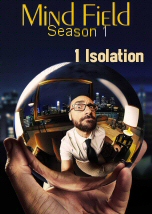










Michael explores the effects of isolation on the human mind by subjecting himself to a very interesting experiment.