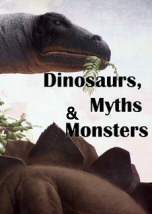
From dinosaurs to mammoths, when our ancient ancestors encountered the fossil bones of extinct prehistoric creatures, what did they think they were? Just like us, ancient peoples were fascinated by the giant bones they found in the ground. Historian Tom Holland goes on a journey of discovery to explore the fascinating ways in which our ancestors sought to explain the remains of dinosaurs and other giant prehistoric creatures, and how bones and fossils have shaped and affected human culture. In Classical Greece, petrified bones were exhibited in temples as the remains of a long-lost race of colossal heroes. Chinese tales of dragons may well have had their origins in the great fossil beds of the Gobi desert. In the Middle Ages, Christians believed that mysterious bones found in rock were the remains of giants drowned in Noah's Flood. Tom encounters a medieval sculpture that is the first known reconstruction of a monster from a fossil, and learns about the Native Americans stories, told for generations, which contained clues that led bone hunters to some of the greatest dinosaur finds of the nineteenth century.
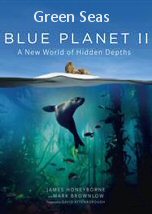
This episode includes footage of wildlife inhabiting underwater kelp forests, thousands of giant cuttlefish spawning along a restricted area of rocky reef off the south coast of Australia. Males outnumber females 11 to one, which leads to fierce competition. Larger males use brute force to drive off competition, while their smaller rivals use deception by mimicking the appearance of females. The programme also features tiger sharks hunting for green turtles in fields of seagrass and spider crabs trying to avoid predators while they shed their shells.
After the success of Florence and the Uffizi, a new film production by Sky 3D and the Vatican Television Centre, taking you on a journey through the four Papal Basilicas in Rome and their treasures: St. Peter’s (one of the 25 destinations most visited by travellers from all over the world), St. John in the Lateran, St. Mary Major and St. Paul Outside the Walls. Four majestic buildings – each with a precious papal altar, each a treasure trove of timeless works of art and a destination for millions of travellers and pilgrims over the centuries – play the leading role in a new film tour that has been recognized as a work of cultural interest by the film board of the Ministry of Culture, Heritage and Tourism.
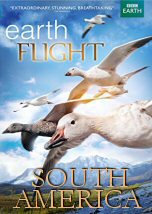
The documentary series gives a bird's-eye view of South America, as condors soar along the Andes, scarlet macaws explore the heart of the Amazon and hummingbirds and vultures see the continent's greatest sights. It is a journey that includes Machu Picchu, the Nasca Lines and the cities of Rio de Janeiro and Santiago. In Patagonia, giant petrels shadow killer whales as they hunt seals by stranding their huge bodies on the beach. At Iguassu Falls, dusky swifts dive through the cascades to huddle in communal roosts while hummingbirds bathe below. In a secret Andean location, condors soar in flocks over 40-strong and scavenge on casualties from herds of fighting guanacos. Elsewhere, a mother condor gently pushes her youngster to the edge of a 200-metre cliff, as flight school begins. Deep in the Amazon, macaws seek medicinal clay. They are joined by a host of secretive jungle animals, including spider monkeys and tapirs, all after the same remedy. In Peru, condors soar over fighting sea lions waiting for causalities and on a mass exodus north, birds converge on the Panama Canal. In Costa Rica, black vultures descend on turtles as they lay their eggs in the sand and pick off the eggs that ping-pong through the air.
After several rogue traders stories made the headlines these last years, revealing the human factor behind the global economy, neuroscientists have started to scrutinize traders' brain and stress management. What stimulates and motivates them? How can their brain cope with such a high level of stress and competition? This film investigates further into Neuroeconomics, showing how traders are being governed by unconscious psychological and biological processes which can trigger borderline behaviours and have disastrous financial consequences on the financial markets.
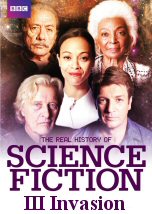
What if aliens landed on Earth? Much of science fiction explores the moment of first contact – what will people do when the aliens land? From H. G. Wells’ pioneering The War of the Worlds to Independence Day, Men in Black, and District 9, Invasion deals with our fears of alien invasions of earth. David Tennant explains the appeal of Doctor Who’s Daleks and Cybermen while John Carpenter and Chris Carter explore the rich appeal of the paranoia fuelled by hidden aliens with The Thing and The X-Files. It also asks, what if the monsters were our own creation? With the aid of rarely seen animation tests, Phil Tippett takes us behind the scenes in the creation of the dinosaurs of Jurassic Park. But not all invasions are hostile. Peter Coyote and Richard Dreyfuss discuss the creation of Spielberg’s spellbinding classics E.T. the Extra-Terrestrial and Close Encounters of the Third Kind. There is more than one kind of invasion.


















In Classical Greece, petrified bones were exhibited in temples as the remains of a long-lost race of colossal heroes. Chinese tales of dragons may well have had their origins in the great fossil beds of the Gobi desert. In the Middle Ages, Christians believed that mysterious bones found in rock were the remains of giants drowned in Noah's Flood.
Tom encounters a medieval sculpture that is the first known reconstruction of a monster from a fossil, and learns about the Native Americans stories, told for generations, which contained clues that led bone hunters to some of the greatest dinosaur finds of the nineteenth century.