Trauma is the invisible force that shapes our lives. It shapes the way we live, the way we love and the way we make sense of the world. It is the root of our deepest wounds. Dr. Maté gives us a new vision: a trauma-informed society in which parents, teachers, physicians, policy-makers and legal personnel are not concerned with fixing behaviors, making diagnoses, suppressing symptoms and judging, but seek instead to understand the sources from which troubling behaviors and diseases spring in the wounded human soul. The interconnected epidemics of anxiety, chronic illness and substance abuse are, according to Dr Gabor Maté, normal. But not in the way you might think.
One in five Americans are diagnosed with mental illness in any given year. Suicide is the second most common cause of death in the US for youth aged 15-24, and kills over 700,000 people a year globally and 48,300 in the USA . Drug overdose kills 81,000 in the USA annually. The autoimmunity epidemic affects 24 million people in the USA. What is going on? “So much of what we call abnormality in this culture is actually normal responses to an abnormal culture. The abnormality does not reside in the pathology of individuals, but in the very culture that drives people into suffering and dysfunction.” — Gabor Maté
A compelling, dramatic and stylish cinematic journey into snowboarding's unique history and the wider cultural forces that shaped it. Featuring interviews and archival footage with Todd Richards, Gigi Rüf, Terje Haakonsen, Jake Burton, Tom Sims, Stale Sandbech and Craig Kelly.
Supertramp's 'Breakfast in America' was the biggest selling album in the world in 1979. Following the album's release Supertramp embarked on a 10 month world tour which arrived in Paris at the end of November. Now, transferred and restored from the original 16mm film, this footage is available to Supertramp's legion of fans worldwide. In July 2006, the original master tapes of the album 'Supertramp: Live In Paris' were rediscovered in the Northern California barn of the band's drummer Bob Siebenberg, along with video footage. The tapes were sent to Cups 'N Strings Studios in Woodland Hills, California, for digital remastering. The tapes were initially in bad technical shape, but were successfully transferred to a digital format. The original idea was to feature heavily footage of Paris, adding a story in The Song Remains the Same. The sound was remixed by Peter Henderson and Supertramp's original sound engineer Russel Pope from the original multi-tracks.
The unearthing of a gruesome grave filled with thousands of skeletons at the beach of Kamakura in Japan could be about to unlock the true extent of the merciless violence and mystery surrounding the true origins of one of the most feared and revered warriors of all time: the Samurai. In the Middle Ages, Kamakura was the capital of Japan. The 'Shogun', a kind of aristocratic military dictator, ruled here. This shogunate ended in 1333 with the Battle of Kamakura. A drastic event in Japanese history, because this resulted in not only political, but also social, philosophical and technical innovations. The remains of the samurai warriors who fell near Kamakura now provide scientists with detailed insights into the time of the Kamakura shogunate and the bloody conflict between the shogun and the emperor. The chilling burial ground dates back to 1333. Kamakura was one of the most heavily fortified regions of Japan. When the Emperor became angered by the growing powers of the ruling Hojo family, he sought to retake control of the region, setting the stage for a war that would change the shape of the nation. Among over 4000 sets of remains, six have a unique story to tell: the husband and wife involved in a sword fight to the death; the warrior monk; a peasant boy soldier; and members of the ruling Hojo family, captured and decapitated, with their heads displayed as trophies of victory. These remains reveal the secrets of the Samurai, their ferocious fighting skills and their merciless killing techniques.
Three years in the making, Francis Whately’s film is a social and musical history of (probably) the world’s greatest music festival, as told by its principal curators, Michael and Emily Eavis, and many of the key artists who’ve appeared there between 1970 and 2019 – Billie Eilish, Thom Yorke, Florence Welch, Dua Lipa, The Levellers, Aswad, Orbital, Fatboy Slim, Linda Lewis, Noel Gallagher, Ed O’Brien, Chris Martin, Stormzy and more. Balancing the driving forces of social conscience and hedonism, Glastonbury has always been both a world apart and a barometer of the state of the nation. Looking at the hippie days, CND, the contribution of the travellers, dance music, Britpop, The Wall, the impact of television and the first black British solo headliner, this film takes viewers backstage and deep into the archive to reveal the forces that have driven this alternative nation between utopia and dystopia, the greatest night of your life and a muddy field in the middle of nowhere. This is not a chronological plod through the festival’s evolution so much as a thematic and story-driven exploration of the peaks and troughs, and the agonies and ecstasies, that have shaped Glastonbury’s 50 years and counting.
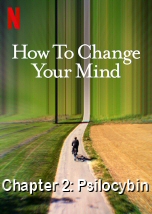
Magic mushrooms, long considered sacred by the Indigenous Mazatec in Mexico, become the subject of scientific studies measuring the intense effects of its Psilocybin and its potential therapeutic use. In the second episode, we are introduced to Ben, who’s battled with crippling Obsessive-Compulsive Disorder (OCD) his entire life. When he had his firstborn, Ben’s life became full of panic attacks regarding his son’s safety, and he knew something had to change. Ben signed up for a psilocybin-assisted therapy clinical trial which was testing whether the psychedelic could help people with severe OCD. In the session under the influence of psilocybin, Ben felt decomposed and eventually grew into a tree. While living as a tree, he saw his human self, playing with his child. Though this sounds scary, from Ben’s perspective, it was beautiful. He was one with the universe, seeing himself in the ultimate third-person perspective. Finally, he saw how it could be different if he didn’t let his OCD control him. And several months out, all the symptoms disappeared. Ben’s story is one of many told in this series, which gives hope that help is right around the corner for the millions who suffer —often in silence— with debilitating mental disorders. But Michael Pollan’s work is showcasing the success stories. Often, even in the most successful trials, psychedelic-assisted therapy only helps up to a third of people enter remission. More frequently, patients are helped —sometimes substantially— but they still suffer with their illnesses and some people aren’t helped at all.














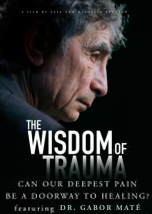










The interconnected epidemics of anxiety, chronic illness and substance abuse are, according to Dr Gabor Maté, normal. But not in the way you might think. One in five Americans are diagnosed with mental illness in any given year. Suicide is the second most common cause of death in the US for youth aged 15-24, and kills over 700,000 people a year globally and 48,300 in the USA . Drug overdose kills 81,000 in the USA annually. The autoimmunity epidemic affects 24 million people in the USA. What is going on?
“So much of what we call abnormality in this culture is actually normal responses to an abnormal culture. The abnormality does not reside in the pathology of individuals, but in the very culture that drives people into suffering and dysfunction.” — Gabor Maté