


Last Watched

"ITER"  Sort by

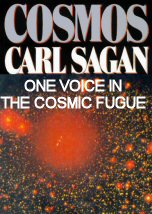
One Voice in the Cosmic Fugue

   1980    Science
Sagan discusses the story of the Heike crab and artificial selection of crabs resembling samurai warriors, as an opening into a larger discussion of evolution through natural selection (and the pitfalls of intelligent design). Among the topics are the development of life on the Cosmic Calendar and the Cambrian explosion; the function of DNA in growth; genetic replication, repairs, and mutation; the common biochemistry of terrestrial organisms; the creation of the molecules of life in the Miller-Urey experiment; and speculation on alien life (such as life in Jupiter's clouds). In the Cosmos Update ten years later, Sagan remarks on RNA also controlling chemical reactions and reproducing itself and the different roles of comets (potentially carrying organic molecules or causing the Cretaceous–Paleogene extinction event).
Series: Cosmos
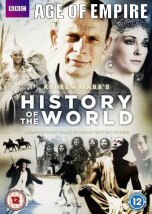
Age of Empire

   2012    History
Andrew Marr tells the story of the first empires which laid the foundations for the modern world. From the Assyrians to Alexander the Great, conquerors rampaged across the Middle East and vicious wars were fought all the way from China to the Mediterranean. But this time of chaos and destruction also brought enormous progress and inspired human development. In the Middle East, the Phoenicians invented the alphabet, and one of the most powerful ideas in world history emerged: the belief in just one God. In India, the Buddha offered a radical alternative to empire building - a way of living that had no place for violence or hierarchy and was open to everyone. Great thinkers from Socrates to Confucius proposed new ideas about how to rule more wisely and live in a better society. And in Greece, democracy was born - the greatest political experiment of all. But within just a few years, its future would be under threat from invasion by an empire in the east...
Series: History of the World

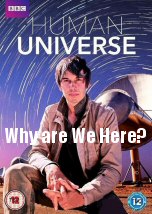
Why are We Here

   2014    Science
In episode two, Professor Brian Cox is off to India, where he assesses arguably the first evidence of rational thought in literature, the poetry of the Vedic monks. They pondered mankind's origins, realising there must have been a day with no yesterday - a day of creation - prompting the age-old question of where did the universe come from? Brian marvels that the universe seems to follow a set of rules, the laws of physics, allowing space to be considered on the grandest scale, travelling to the most distant, farthest reaches of the cosmos just by using our minds. Brian also visits Japan, and offers viewers the idea that man lives in just one of an infinite number of universes that are being made all the time.
Series: Human Universe

Jupiter the Giant Planet

   2007    Science    3D
A look at the solar system's largest planet, Jupiter; its formation and composition and its mini-solar system of over 60 moons – some of which may have the potential to support extra-terrestrial life.
Series: The Universe

London: The Modern Babylon

   2012    Culture
Julien Temple's epic time-travelling voyage to the heart of his hometown. From musicians, writers and artists to dangerous thinkers, political radicals and above all ordinary people, this is the story of London's immigrants, its bohemians and how together they changed the city forever. Reaching back to the dawn of film in London at the start of the 20th century, the story unfolds through film archive, voices of Londoners past and present and the flow of popular music across the century; a stream of urban consciousness, like the river which flows through its heart. It ends now, as London prepares to welcome the world to the 2012 Olympics.

The Universe: 7 Wonders of the Solar System

   2010    Science    3D    HD
Take an exhilarating, unprecedented exploration of the seven most amazing wonders of our solar system. Our virtual tour begins with a trip to Enceladus, one of Saturn's outer moons, where icy geysers spout from its surface. Then venture to Saturn's famous rings, which contain mountain ranges that rival the Alps. Next dive into the eye of the biggest storm in the solar system--Jupiter's Great Red Spot. Soar through the Asteroid Belt, containing millions of leftover rocks from the formation of the solar system. Trek up Mount Olympus, the largest volcano, located on Mars. Have a close encounter with the searing surface of the Sun, and finish the journey by exploring our home planet Earth.
Series: The Universe
The Hunt

The Hunt

2015  Nature
Planet Earth

Planet Earth

2007  Nature
Walking with Cavemen

Walking with Cavemen

2003  History
Cooked

Cooked

2016  Culture
Five Came Back

Five Came Back

2017  Art
Earthflight

Earthflight

2012  Nature
Earth from Space

Earth from Space

2019  Nature