








Last Watched

"The Earth"  Sort by

Frozen Planet: The Last Frontier

   2011    Culture
The documentary series reveals the extraordinary riches and wonders of the Polar Regions that have kept people visiting them for thousands of years. Today, their survival relies on a combination of ancient wisdom and cutting-edge science. Most Arctic people live in Siberia, either in cities like Norilsk - the coldest city on earth - or out on the tundra, where tribes like the Dogan survive by herding reindeer, using them to drag their homes behind them. On the coast, traditional people still hunt walrus from open boats - it is dangerous work, but one big walrus will feed a family for weeks. Settlers are drawn to the Arctic by its abundant minerals; the Danish Armed Forces maintain their claim to Greenland's mineral wealth with an epic dog sled patrol, covering 2,000 miles through the winter. Above, the spectacular northern lights can disrupt power supplies so scientists monitor it constantly, firing rockets into it to release a cloud of glowing smoke 100 kilometres high. In contrast, Antarctica is so remote and cold that it was only a century ago that the first people explored the continent. Captain Scott's hut still stands as a memorial to these men. Science is now the only significant human activity allowed; robot submarines are sent deep beneath the ice in search of new life-forms, which may also be found in a labyrinth of ice caves high up on an active volcano. Above, colossal balloons are launched into the purest air on earth to detect cosmic rays. At the South Pole there is a research base designed to withstand the world's most extreme winters. Cut off from the outside world for six months, the base is totally self-sufficient, even boasting a greenhouse.
Series: Frozen Planet
Place in Space and Time

   2014    Science
On a trip to the fortified Moroccan village of Ait-Ben-Haddou in the Atlas Mountains, Professor Brian Cox reveals how by watching the stars' motion across the night sky, it is quite natural for man to think he is at the centre of everything. That view was held for many ages, but innate human curiosity has eventually led to an understanding of mankind's true place in space and time, and an appreciation that Earth is not a focal point but a mere particle of rock in a possibly infinite expanse of space, 13.8 billion years from the beginning of the universe.
Series: Human Universe

Frozen Planet: Summer

   2011    Nature
It is high summer in the Polar Regions, and the sun never sets. Vast hordes of summer visitors cram a lifetime of drama into one long, magical day; they must feed, fight and rear their young in this brief window of plenty. Summer is a tough time for the polar bear family, as their ice world melts away and the cubs take their first swimming lesson. Some bears save energy by dozing on icy sun beds, while others go egg-collecting in an Arctic tern colony, braving bombardment by sharp beaks. There are even bigger battles on the tundra; a herd of musk oxen gallop to the rescue as a calf is caught in a life and death struggle with a pair of Arctic wolves. But summer also brings surprises, as a huge colony of 400,000 king penguins cope with an unlikely problem - heat. The adults go surfing, while the woolly-coated chicks take a cooling mud bath. Nearby, a bull fur seal is prepared to fight to the death with a rival. Fur flies as the little pups struggle desperately to keep out of the way of the duelling giants. Further south, a minke whale is hunted amongst the ice floes by a family of killer whales. The dramatic chase lasts over 2 hours and has never been filmed before. The killers harry the minke whale, taking it in turns to wear it down. Eventually it succumbs to the relentless battering. Finally, comical adelie penguins waddle back to their half a million strong colony like clockwork toys. The fluffy chicks need constant feeding and protection as piratical skuas patrol the skies. When an unguarded chick is snatched, a dramatic "dogfight" ensues.
Series: Frozen Planet

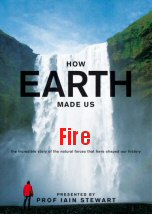
Fire

   2010    Culture
Iain explores man's relationship with fire. He begins by embarking on an extraordinary encounter with this terrifying force of nature - a walk right through the heart of a raging fire. Fire has long been our main source of energy and Iain shows how this meant that the planet played a crucial role in Britain's industrial revolution, whilst holding China's development back. Along the way he dives in a mysterious lake in Oregon, climbs a glacier of salt, crawls through an extraordinary cave in Iran and takes a therapeutic bath in crude oil.
Series: How Earth Made Us

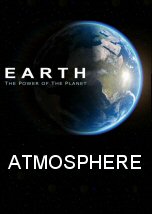
Earth, the Power of the Planet: Atmosphere

   2007    Nature
The series highlights the major events which have shaped the Earth's history and allowed life to flourish. Follow Dr Stewart's personal journey to some of the most remote places on the planet. The atmosphere is Earth’s protective layer, cloaking us in a warm, oxygen-rich embrace and shielding us from the cold hostility of space. It acts as a natural greenhouse, keeping the Earth 51 degrees Fahrenheit warmer than it would otherwise be. Yet the atmosphere is also full of contradictions. It’s immensely powerful but at the same time highly sensitive. It’s destructive, yet it shelters us. It was created in part by the planet’s first organisms, and it continues to be essential for life.
Series: Earth, the Power of the Planet

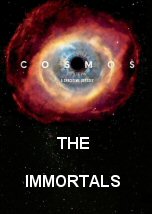
The Immortals

   2014    Science
This episode covers the nature of how life may have developed on Earth and the possibility of life on other planets. Tyson begins by explaining how the human development of writing systems enabled the transfer of information through generations, describing how Princess Enheduanna ca. 2280 BCE would be one of the first to sign her name to her works, and how Gilgamesh collected stories, including that of Utnapishtim documenting a great flood comparable to the story of Noah's Ark. Tyson explains how DNA similarly records information to propagate life, and postulates theories of how DNA originated on Earth, including evolution from a shallow tide pool, or from the ejecta of meteor collisions from other planets. In the latter case, Tyson explains how comparing the composition of the Nakhla meteorite in 1911 to results collected by the Viking program demonstrated that material from Mars could transit to Earth, and the ability of some microbes to survive the harsh conditions of space. With the motions of solar systems through the galaxy over billions of years, life could conceivably propagate from planet to planet in the same manner. Tyson then moves on to consider if life on other planets could exist. He explains how Project Diana performed in the 1960s showed that radio waves are able to travel in space, and that all of humanity's broadcast signals continue to radiate into space from our planet. Tyson notes that projects have since looked for similar signals potentially emanating from other solar systems. Tyson then explains that the development and lifespan of extraterrestrial civilizations must be considered for such detection to be realized. He notes that civilizations can be wiped out by cosmic events like supernovae, natural disasters such as the Toba disaster, or even self-destruct through war or other means, making probability estimates difficult. Tyson describes how elliptical galaxies, in which some of the oldest red dwarf stars exist, would offer the best chance of finding established civilizations. Tyson concludes that human intelligence properly applied should allow our species to avoid such disasters and enable us to migrate beyond the Earth before the Sun's eventual transformation into a red giant.
Series: Cosmos: A Spacetime Odyssey
Arnold

Arnold

2023  History
Asia

Asia

2024  Nature
Living Universe

Living Universe

2018  Technology
The Big Conn

The Big Conn

2022  Culture
Secrets of the Dead

Secrets of the Dead

2017  History
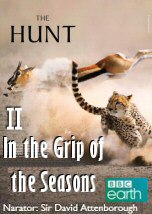
The Hunt

The Hunt

2015  Nature
Leaving Neverland

Leaving Neverland

2019  Culture