

Last Watched

"Travel"  Sort by

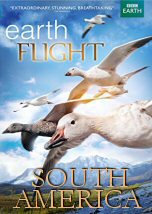
Earthflight South America

   2012    Nature
The documentary series gives a bird's-eye view of South America, as condors soar along the Andes, scarlet macaws explore the heart of the Amazon and hummingbirds and vultures see the continent's greatest sights. It is a journey that includes Machu Picchu, the Nasca Lines and the cities of Rio de Janeiro and Santiago. In Patagonia, giant petrels shadow killer whales as they hunt seals by stranding their huge bodies on the beach. At Iguassu Falls, dusky swifts dive through the cascades to huddle in communal roosts while hummingbirds bathe below. In a secret Andean location, condors soar in flocks over 40-strong and scavenge on casualties from herds of fighting guanacos. Elsewhere, a mother condor gently pushes her youngster to the edge of a 200-metre cliff, as flight school begins. Deep in the Amazon, macaws seek medicinal clay. They are joined by a host of secretive jungle animals, including spider monkeys and tapirs, all after the same remedy. In Peru, condors soar over fighting sea lions waiting for causalities and on a mass exodus north, birds converge on the Panama Canal. In Costa Rica, black vultures descend on turtles as they lay their eggs in the sand and pick off the eggs that ping-pong through the air.
Series: Earthflight
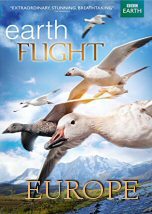
Earthflight Europe

   2012    Nature
Earthflight departs on its grand European tour, using a host of techniques including taking extraordinary footage from microlites as they fly alongside imprinted birds. Among other wonders, cameras soar with cranes and geese over Venice, the white cliffs of Dover and Edinburgh. White storks leave Africa and struggle to reach Istanbul, the gateway to Europe, while cranes take an easier route over the monkey-guarded Rock of Gibraltar. In France, the white horses of the Camargue make a splash around the new arrivals. In Rome, the heat of the city lures 20 million starlings that perform nature's greatest aerial display to outwit peregrines. In Hungary, sand martins grab mayflies from the air; and at Bass Rock, gannets create Britain's greatest natural spectacle as they dive in exquisite slow-motion. The story takes an emotional turn as storks and swallows wait for their partners to return and indulge in a spot of DIY to impress. Finally, geese touch down in Svalbard to raise a family. To protect their young, a squadron of birds assemble to see off polar bears. With views of birds flying over the Loire Valley, London docklands and the bulb fieds of Holland, this is Europe as never before.
Series: Earthflight

The Power of Doubt

   2017    History
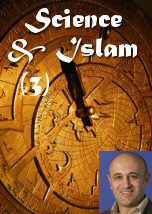
In the last episode, Al-Khalili turns detective, hunting for clues that show how the scientific revolution that took place in the 16th and 17th centuries in Europe had its roots in the earlier world of medieval Islam. He travels across Iran, Syria and Egypt to discover the huge astronomical advances made by Islamic scholars through their obsession with accurate measurement and coherent and rigorous mathematics.He then visits Italy to see how those Islamic ideas permeated into the west and ultimately helped shape the works of the great European astronomer Copernicus, and investigates why science in the Islamic world appeared to go into decline after the 16th and 17th centuries, only for it to re-emerge in the present day. Al-Khalili ends his journey in the Royan Institute in the Iranian capital Tehran, looking at how science is now regarded in the Islamic world
Series: Science and Islam

The Day Pictures Were Born

   2006    Art
Dr Nigel Spivey explores how art influences life by tracing the development of the image from cave paintings to our modern obsession with images. Dr. Spivey begins his investigation by travelling to the Cave of Altamira near the town of Santillana del Mar in Cantabria, Spain, where in 1879 a young girls exclamation of 'Papa, look, oxen!' to her father, local amateur archaeologist Marcelino Sanz de Sautuola, is explained to have meant that Maria had just become the first modern human to set eyes on the first gallery of prehistoric paintings ever to be discovered.
Series: How Art Made the World

More Human Than Human

   2006    Art
Embark on a thrilling journey through time and five continents to the heart of creativity. Fusing social history, politics, science, nature, archaeology and religion, this international landmark series unravels a universal mystery - why the world around us looks like it does. Modern-day mysteries are answered by journeying back to the beginning of civilisation via some of the most amazing man-made creations in the world. In the first episode, one image dominates our contemporary world above all others: the human body. How Art Made the World travels from the modern world of advertising to the temples of classical Greece and the tombs of ancient Egypt to solve the mystery of why humans surround themselves with images of the body that are so unrealistic.
Series: How Art Made the World

The Farthest

   2017    Technology
Is it humankind's greatest achievement? 12 billion miles away a tiny spaceship is leaving our Solar System and entering the void of deep space. It is the first human-made object ever to do so. Slowly dying within its heart is a plutonium generator that will beat for perhaps another decade before the lights on Voyager finally go out. But this little craft will travel on for millions of years, carrying a Golden Record bearing recordings and images of life on Earth. In all likelihood Voyager will outlive humanity and all our creations. It could be the only thing to mark our existence. Perhaps some day an alien will find it and wonder. The story of Voyager is an epic of human achievement, personal drama and almost miraculous success. Launched 16 days apart in Autumn 1977, the twin Voyager space probes have defied all the odds, survived countless near misses and almost 40 years later continue to beam revolutionary information across unimaginable distances.
Galapagos

Galapagos

2006  Nature
The Hunt

The Hunt

2015  Nature
Cooked

Cooked

2016  Culture
Our Planet

Our Planet

2019  Nature
Planet Earth

Planet Earth

2007  Nature
Modern Masters

Modern Masters

2024  Art
Long Way Up

Long Way Up

2020  Culture