







Last Watched

"Man"  Sort by

The Hacker Wars

   2014    Technology
Ripped from international headlines, The Hacker Wars takes you to the front lines of the high-stakes battle over the fate of the Internet, freedom and privacy". Get ready to be shuttled between story lines at lightning speed mirroring the disjointed lives of the protagonists and life on the Internet. The Hacker Wars- a film about the targeting of (h)ac(k)tivists and journalists by the US government. Hacktivists are either terrorists or freedom fighters depending on ones perspective on who should control information. Meet weev, infamous hacker; Barrett Brown, journalist and propagandist for the hacktivist collective, Anonymous; and Jeremy Hammond, aka Anarchaos, number one on the FBI's cyber-criminal list. The fourth character is Sabu, the uber-hacker turned FBI informant who ran the FBI's cyber unit for 9 months and is responsible for many arrests. He is the shadowy protagonist in a high-stakes game of espionage and betrayal in the age of the Internet. Barrett Brown, American journalist, is facing 105 years in prison for publicizing information revealed through Jeremy Hammond's epic hacks. Hammond himself has just begun a 10-year prison term. Andrew Auernheimer, known by his hacker handle weev embarrasses large corporations. He was sentenced to 41 months for hacking AT&T, but his conviction was just overturned. He vows to continue doing what landed him in prison in the first place. These hacktivists are the rock stars of the Internetmodern-day folk heroes. Glenn Greenwald (Snowdon Leaks), Pulitzer Prize-winning journalist and others explain why these anti-heroes exposing the security surveillance state are essential to a functioning democracy.

The God Delusion

   2006    Culture
Atheist and scientist Richard Dawkins visits England, America and Israel interveiwing prominant people of faith; Islamic, Hasidic Jews, and the new Christian sects popping up throughout the world, and expressing his view of the extent to which this fanaticism has degraded our civilisation, and will continue to degrade it. "The God Delusion" explores the unproven beliefs that are treated as factual by many religions and the extremes to which some followers have taken them. Dawkins opens the programme by describing the "would-be murderers ... who want to kill you and me, and themselves, because they're motivated by what they think is the highest ideal." Dawkins argues that "the process of non-thinking called faith" is not a way of understanding the world, but instead stands in fundamental opposition to modern science and the scientific method, and is divisive and dangerous.
Series: The Root of All Evil

The Shock Doctrine

   2009    Economy
The Shock Doctrine is a devastating critique of the free market policies which have come to dominate the world. Using shock therapy as a metaphor, the film investigates Klein's central idea of disaster capitalism. Naomi Klein's explores how both natural and man-made disasters are used to force disadvantageous political and economic changes on unwilling governments is brought to the screen in this documentary. The Shock Doctrine explores how the United States, with the help of the C.I.A., became enamored of Milton Friedman's interpretation of free-market capitalism and attempted to persuade developing nations of its value.

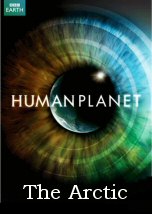
The Arctic

   2011    Culture
The Arctic is the harshest environment on Earth: little food grows, it's dark for months on end, and temperatures stay well below freezing for much of the year. Yet four million people manage to survive here. Human Planet tells remarkable stories of extraordinary people who make their homes in nature's deep freeze. In springtime, Amos and Karl-Frederik set out across the sea ice with their dogs to catch a real-life sea monster: a Greenland shark! Inuit mussel-gatherers venture underneath the sea ice at low tide for a perilous race against time as they gather their food. And the children of Churchill, Manitoba, set out on the most dangerous trick or treating Halloween in the world: they risk coming face-to-face with deadly polar bears on the streets of their town. Who'll get the tastiest snack?
Series: Human Planet

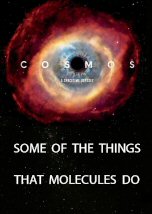
Some of the Things That Molecules Do

   2014    Science    HD
The story begins with Tyson sitting at a campfire, and telling how the wolf changed through artificial selection, and selective breeding into the dog breeds around today. He then enters the Ship of Imagination, and explains natural selection with the process that helped to create the polar bears. Along the way he talks about DNA, genes and mutation. Next he goes to a forest and describes the Tree of life, this leads him to discussing the evolution of the eye. He then discusses extinction, by going to a monument called the Halls of Extinction, dedicated to the broken branches of the tree of life. Explaining the five great Extinction events. He then tells how some life has survived, and then focuses on the tardigrade. From there he talks about what other kinds of life might have been created on other worlds. He then goes to Saturn's moon Titan. From there he speculates about life and how it first began. He then returns to Earth and tells about abiogenesis and how life changed and evolved. The show ends with an animated sequence from the original series of life's evolution from one cell to humans.
Series: Cosmos: A Spacetime Odyssey

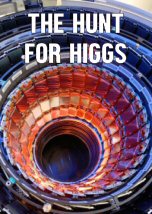
The Hunt For Higgs

   2012    Science
Go with us behind the scenes at CERN to follow one of the most epic and expensive scientific quests of all time: the search for the Higgs particle, believed to give mass to everything in our universe. However, the hunt for Higgs is part of a much grander search for how the universe works. It promises to help answer questions like why we exist and is a vital part of a Grand Unified Theory of nature". At the heart of the pursuit of the elusive particle is the same feature that makes snowflakes beautiful and human faces attractive: the simple and enchanting idea of symmetry. Presenter Jim Al-Khalil