







Last Watched

"Man"  Sort by

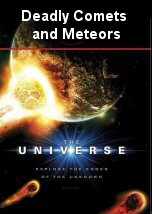
Deadly Comets and Meteors

   2009    Science
Right now cosmic forces prowl the universe and threaten man's very existence. They're asteroids and comets; they've left their imprint on planet Earth, literally. Initially helping to build planets through violent collisions, during this fiery bombardment period they may have even seeded Earth with water and the building blocks for life. Since the turbulent formation of the solar system, these space rocks have continued to impact Earth. Some have been so violent that they've led to mass extinctions, including one that wiped out the dinosaur. New theories suggest that asteroid and comet dust harbour deadly viruses that may have triggered some of our worst pandemics. The possibility of future collisions remains a legitimate threat yet despite their dangers, asteroids and comets may hold vital natural resources, which could actually preserve
Series: The Universe
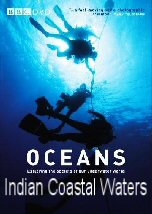
The Indian Ocean Coastal Waters

   2009    Nature
The tropical Indian Ocean is home to the Spice Islands. Characterised by beautiful sandy beaches, fringing coral reefs and coastal mangrove forests, this is a vibrant nursery area for marine life, such as whale sharks, crabs, seahorses and a great variety of fish. The coastal areas are where humans have the most direct impact on the ocean's resources.
Series: Oceans

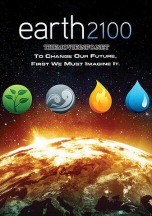
Earth 2100

   2009    Nature
Hosted by ABC journalist Bob Woodruff, this two-hour special explores what a worst-case future might look like if humans do not take action on current or impending problems that could threaten civilization. The problems addressed in the program include climate change, overpopulation, and misuse of energy resources. The events parallel the life of a fictitious storyteller, 'Lucy' as she describes how the events affect her life. The program included predictions of a dystopian Earth in the years 2030, 2050, 2085, and 2100 by scientists, historians, social anthropologists, and economists, including Jared Diamond, Thomas Homer-Dixon, Peter Gleick, James Howard Kunstler, Heidi Cullen, and Joseph Tainter. According to Executive Producer Michael Bicks, "this program was developed to show the worst-case scenario for human civilization. Again, we are not saying that these events will happen — rather, that if we fail to seriously address the complex problems of climate change, resource depletion and overpopulation, they are much more likely to happen.

Peril and Promise

   2013    History
In the 80s the nature of the Latino Diaspora changes again. From Cuba a second wave of refugees to United States – the Mariel exodus – floods Miami . The same decade sees the sudden arrival of hundreds of thousands of Central Americans (Salvadorans, Guatemalans, and Nicaraguans) fleeing death squads and mass murders at home like activist, Carlos Vaquerano. By the early 1990s, a political debate over illegal immigration – has begun. Globalization, empowered by NAFTA, means that as U.S. manufacturers move south, Mexican workers head north in record numbers. A backlash ensues: tightened borders, anti-bilingualism, state laws to declare all illegal immigrants felons. But a sea change is underway: the coalescence of a new phenomenon called Latino American culture-as Latinos spread geographically and make their mark in music, sports, politics, business, and education.
Series: Latino Americans

How Do I Decide

   2015    Medicine
The human brain is the most complex object we’ve discovered in the universe, and every day much of its neural circuitry is taken up with the tens of thousands of decisions we need to make. ‘How do I decide?’ is a journey through the unseen world of decisions, and how they get made. Decisión-making is what allows us to navigate a course through life. Discover how important emotions are in making decissions and, as we learn more about our own brains, we can break away from slavery to our impulses. Neuroscience shows that you're made up of multiple competing drives and by understanding how choices battle it out in the brain, we can learn how to make better decisions.
Series: The Brain with David Eagleman

Why Do I Need You

   2015    Medicine
In ‘Why Do I Need You?’ Dr. David Eagleman explores how the human brain relies on other brains to thrive and survive. Our fundamentally social nature can hold the key to our sucdess as a species. Our brains are so fundamentally wired to interact that we are something more like a single vast super-organism. In this age of digital connection, we desperately need to understand how human brains interact if we want our civilization to have a future, if we want to avoid fanaticism and to embrace cooperation. This neural interdependence begins at birth. Dr. David Eagleman invites a group of babies to a puppet show to showcase their ability to discern who is trustworthy, and who isn’t.
Series: The Brain with David Eagleman