We're going to see if forcing your facial expression can change the way you feel. If you remove the ability to make facial expressions with botox, will it affect how the people perceive emotions in them? How do facial expressions affect emotion, and how does emotion affect facial expressions? Michael Stevens finds out when he explores the face.
Looking back on the major stories of the year - from the New Horizons mission to the most distant world we have ever visited to the release of the first-ever picture of a black hole. The team relive the highlights and uncover the latest developments.
When it comes to illusions, optical illusions get all the attention. But the whole body you have can be fooled and can fool the brain. What is touch? Is it real, or is it just in our heads? Michael Stevens decides to find out.
Frequent security expos feature companies like Megvii and its facial- recognition technology. They show off cameras with A.I. that can track cars, and identify individuals by face, or just by the way they walk. In China it's been projected that over 600 million cameras will be deployed by 2020. Here, they may be used to discourage jaywalking, but they also serve to remind people that the state is watching. Matching with the most advanced artificial intelligence algorithm, they can actually use this data, real-time data, to pick up a face or pick up a action. A.I. is a technology that can be used for good and for evil. So, how do governments limit themselves in, on the one hand, using this A.I. technology and the database to maintain a safe environment for its citizens, but not to encroach on a individual's rights and privacies?
Everyone always wants to be able to choose - but who really makes these choices? And do we really want to have more choices? Michael Stevens finds out as he explores decision-making.
Everywhere you go, you generate a cloud of data. You're trailing data, everything that you do is producing data. And then there are computers looking at that data that are learning, and these computers are essentially trying to serve you better. They're trying to personalize things to you. They're trying to adapt the world to you. So on the one hand, this is great, because the world will get adapted to you without you even having to explicitly adapt it. There's also a danger, because the entities in the companies that are in control of those algorithms don't necessarily have the same goals as you, and this is where I think people need to be aware that, what's going on, so they can have more control over it. We came into this new world thinking that we were users of social media and search engines. It didn't occur to us that social media and search engines were actually using us.















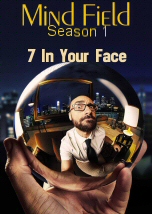







How do facial expressions affect emotion, and how does emotion affect facial expressions? Michael Stevens finds out when he explores the face.