



Last Watched

"Ants"  Sort by

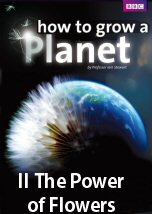
The Power of Flowers

   2012    Science
In the second episode, Professor Iain Stewart discovers how flowers have transformed our planet. He journeys to the remote islands of the South Pacific to track down the earliest flowers. In the deserts of Africa and rainforests of Vietnam, he sees how they brought brilliant colour to the most barren landscapes and sculpted the earth itself. And he learns how they drove the evolution of all animals - kick-starting our human story.
Series: How to Grow a Planet
How to Grow a Planet Life from Light

   2012    Science
In this series Professor Iain Stewart tells a stunning new story about our planet. He reveals how the greatest changes to the Earth have been driven, above all, by plants. In this first episode Iain journeys from the spectacular caves of Vietnam to the remote deserts of Africa. He sees how plants first harnessed light from the sun and created our life-giving atmosphere. He uncovers the epic battle between the dinosaurs and the tallest trees on the planet. And, using remarkable imagery, he shows plants breathing - and for the first time talking to each other.
Series: How to Grow a Planet
Kingdom of Plants Life in the Wet Zone

   2012    Nature
Written and presented by David Attenborough, who said: 'One of the most wonderful things about filming plants is that you can reveal hidden aspects of their lives, you can capture the moment as one plant strangles another, and as they burst into flower. But whilst time-lapse photography allows you to see things that no human being has ever seen before". David begins his journey inside the magnificent Palm House, a unique global rainforest in London. Here, he explores the extraordinary plants that are so well adapted to wet and humid environments and unravels the intimate relationships between wet zone plants and the animals that depend on them. It was in the wet zones of the world that plants first moved on to land and in the Waterlily House David reveals how flowers first evolved some 140 million years ago. Watching a kaleidoscope of breath-taking time-lapses of these most primitive of flowers swelling and blooming in 3D, he is able to piece together the very first evolutionary steps that plants took to employ a wealth of insects to carry their precious pollen for the first time. David discovers clues to answer a question that even had Charles Darwin stumped: how did flowering plants evolve so fast to go on to colonise the entire planet so successfully?
Series: Kingdom of Plants

Clash of the Gods Thor

   2009    Culture
Idolized in ancient Norse mythology as the protector god, Thor battles evil ogres and a giant serpent bent on destroying mankind. It's the quintessential fight for survival that culminates in a final showdown between good and evil. But was the rise and fall of the hero Thor ancient code for something greater? Today, new discoveries unlock the hidden truth behind the Norse god of Thunder. Able to wield thunder from his hammer, Thor was the most revered of the Norse gods, from fending humanity from the giants that brought calamity, to his pursuit of the Midgard Serpent. Though, his fate is told to sealed during Ragnarok, it is actually the invasion of Christianity that proves far more damning to this mighty god.
Series: Clash of the Gods

Hide and Seek. Forests

   2015    Nature
The third episode follows tigers, harpy eagles, chimpanzees, army ants and other predators as they rise to the challenge of hunting within the forest - a dense, confusing, three-dimensional world, one in which even finding prey is a maddening task. The prize for succeeding at nature's great game of hide-and-seek is one worth winning. Forests cover one third of the land surface, and concealed within are over half of the species on Earth.
Series: The Hunt

The Private Life of Plants Living Together

   1995    Nature
The fifth programme explores the alliances formed between the animal and plant worlds. Attenborough dives into Australia's Great Barrier Reef and contrasts the nocturnal feeding of coral, on microscopic creatures, with its daytime diet of algae. Some acacias are protected by ants, which will defend their refuge from any predator. Besides accommodation, the guards are rewarded with nectar and, from certain species, protein for their larvae as well. Fungi feed on plants but can also provide essential nutriment to saplings (Mycorrhiza). The connection is never broken throughout a tree's life and a quarter of the sugars and starches produced in its leaves is channelled back to its fungal partners. Meanwhile, fungi that feed on dead wood leave a hollow trunk, which also benefits the tree. Orchids enjoy a similar affiliation. Lichens are the product of a relationship between fungi and a photosynthetic associate, usually algae. They are extremely slow-growing, and a graveyard is the perfect location to discover their exact longevity. Mistletoe is a hemiparasite that obtains its moisture from a host tree, while using own leaves to manufacture food. Its seeds are deposited on another by the mistletoe tyrannulet, following digestion of the fruit. The dodder (Cuscuta) is also parasitic, generally favouring nettles, and siphons its nourishment through periodic 'plugs' along its stem. The rafflesia has no stem or leaves and only emerges from its host in order to bloom — and it produces the largest single flower: one metre across.
Series: The Private Life of Plants
Wonders Of The Universe

Wonders Of The Universe

2011  Science
The Hunt

The Hunt

2015  Nature
Modern Masters

Modern Masters

2024  Art
Beckham

Beckham

2023  History
Ice Age Giants

Ice Age Giants

2013  Science