The series, depicted by state of the art CGI techniques, and applying the laws of life on Earth to the rest of the galaxy, blends fact with science fiction and conceptualizes what alien life might be like on other planets. In the prologue, astronomer Didier Queloz makes an appearance to discuss the discoveries of exoplanets and how they are analyzed in the real world. In Episode 1, the fictional world imagined is Atlas, a world with higher gravity than Earth and a thicker atmosphere leading to airborne creatures. In explaining the aliens of Atlas, the episode also explores the handicap principle in insects, and shows a rehabilitative form of falconry as captive falcons are trained to live in the wild.
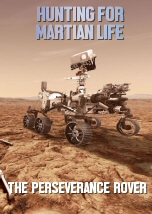
Meet Perseverance, NASA's latest rover, as it heads to Mars to answer one question: did life exist on the red planet? On the way, it will lay the foundation for human exploration of our closest neighbour. Today, Mars is hostile to life. It's too cold for water to stay liquid on the surface, and the thin atmosphere lets through high levels of radiation, potentially sterilizing the upper part of the soil. But it wasn't always like this. Some 3.5 billion years ago or more, water was flowing on the surface. It carved channels still visible today and pooled in impact craters. A thicker carbon dioxide atmosphere would have blocked more of the harmful radiation. The Mars 2020/Perseverance rover is designed to better understand the geology of Mars and seek signs of ancient life. The mission will collect and store a set of rock and soil samples that could be returned to Earth in the future. It will also test new technology to benefit future robotic and human exploration of Mars, as the Ingenuity Helicopter.
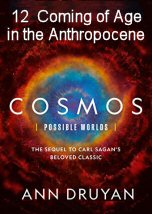
At 11 o'clock on New Year's Eve of the Cosmic Calendar, Homo erectus stood up for the first time, freeing its hands and earning the species its name. They began to move around, to explore, daring to risk everything to get to unknown places. Our Neanderthal relatives lived much as we did and did many of the things we consider to be 'human.' More restless than their cousins the Neanderthals and Denisovans, our Homo sapiens ancestors crossed seas and unforgiving landscapes, changing the land, ocean and atmosphere, leading to mass extinction. The scientific community gave our age a new name, 'Anthropocene.' Since the first civilizations we've wondered if there's something about human nature that contains the seeds of our destruction. Syukuro Manabe was born in rural Japan and took an intense interest in Earth's average global temperature. In the 1960's, he would assemble the evidence he needed to predict the increase of Earth's temperature due to greenhouse gases until it becomes an uninhabitable and toxic environment, leading to our extinction. 'This doesn't have to be,' says Neil deGrasse Tyson, 'it's not too late. There's another hallway, another future we can still have; we'll find a way.'
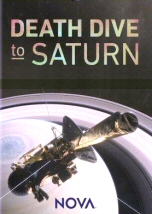
Almost everything we know today about the beautiful giant ringed planet comes from Cassini, the NASA mission that launched in 1997 and arrived at Saturn in 2004. Since then, the space probe has been beaming home miraculous images and scientific data, revealing countless wonders about the planet, its rings and 62 moons - including some that could harbor life. When the mission approached its final days, it attempted one last set of daring maneuvers - diving between the innermost ring and the top of Saturn's atmosphere. Aiming to skim less than 2000 miles above the cloud tops, no spacecraft has ever gone so close to Saturn, and hopes were high for incredible observations that could solve major mysteries about the planet's core. But such a daring maneuver comes with many risks and is no slam dunk. In fact, slamming into rocks in the rings is a real possibility. Join NASA engineers for the tense and triumphant moments as they find out if their bold re-programming has worked, and discover the wonders that Cassini has revealed over the years.
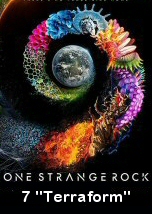
We sure lucked out with Planet Earth. Blue skies, rolling hills, water everywhere. But our home didn't come like this out of the box. Earth was a real fixer-upper, and it took some seriously hard work to build this paradise. Nearly four billion years of renovation. Some tiny, some huge, to make this house a home. Creatures on Earth don't just live and die. They actually change the world around them. The story of how for nearly 4 billion years, microbes, plants and animals have emerged and sculpted the planet's surface and atmosphere in the strangest of ways.
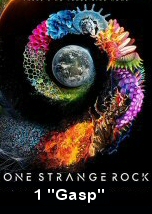
The extraordinary story of Earth and why it is special and uniquely brimming with life among a largely unknown but harsh cosmic arena. It will be told by eight astronauts from their unique perspective of being away from Earth. In the first episode, Astronaut Chris Hadfield reveals the unlikely and unexpectedly interconnected systems that allow life on our planet to breathe.











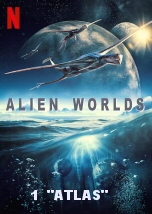






In the prologue, astronomer Didier Queloz makes an appearance to discuss the discoveries of exoplanets and how they are analyzed in the real world. In Episode 1, the fictional world imagined is Atlas, a world with higher gravity than Earth and a thicker atmosphere leading to airborne creatures. In explaining the aliens of Atlas, the episode also explores the handicap principle in insects, and shows a rehabilitative form of falconry as captive falcons are trained to live in the wild.