








Last Watched

"Reef"  Sort by

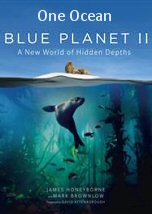
One Ocean

   2017    Nature    HD
Nearly a generation after the acclaimed Blue Planet documentary was released, David Attenborough returns to narrate this groundbreaking sequel/reboot. Blue Planet II focuses more heavily on mankind's influence on the world's oceans through both global pollution and climate change. This series features a variety of revolutionary segments never before seen in a video documentary. One Ocean Footage of marine life in different environments around the north, beginning with a tropical coral reef which has medicinal properties for dolphins, and is used as a tool by tusk fish. In Japan, a shipwreck is home to the Asian sheepshead wrasse, which can change gender, while in the polar north, walruses struggle to find ice floes for their pups to rest on as climate change takes its toll on the environment.
Series: Blue Planet II
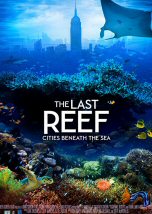
The Last Reef

       Nature    3D    HD
Fly across iridescent tropical reefs, brush through a cloud of a million jellyfish, visit an alien world where the closer you look, the more you see, where the tiniest creatures support the greatest predators... We think of reefs as exotic, distant places with little or no connection to our everyday world. Yet every reef is a living city beneath the sea with a parallel existence to ours, distant yet undeniably connected. Reefs are hotspots of biodiversity as vital to life on earth as the rain-forests. They have been shaping our shorelines, literally forming islands and mountains, for millions of years. The fossil record shows that given time they have recovered from all of earth's major extinction events. Even reefs pulverised by atomic blasts at Bikini Atoll have regenerated. Yet within our lifetime reefs have come to face their greatest threat...

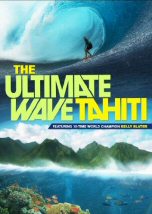
The Ultimate Wave

   2010    Nature    3D    HD
The stunning beauty of an island paradise on a quest to find the perfect wave-riding experience. Nine-time world surfing champion Kelly Slater and Tahitian surfer Raimana Van Bastolaer and a group of friends seek out the best waves breaking on the reef at Tahiti's famed surf site Teahupo'o. As their quest unfolds, the audience is plunged beneath the surface of things, to explore the hidden forces at work shaping ocean waves and the islands that lie in their path. Amidst playful surfing action, we navigate the cosmos and an ocean storm in a search for the source and nature of a wave's energy. Exploring mountainous Tahiti, we are thrust into the turbulent volcanic past of the island and its neighbours and discover the seagoing, wave-riding roots of the islanders themselves -- a culture still rich in the music, dance and lore of the sea. Beneath the ocean, swimming with our surfers, we explore the stunning, fragile beauty of the reef habitat -- a turbulent, wave-shaping interface that envelops the island and nurtures the ocean's multitudes in motion -- fish, dolphins, sharks and whales. When the truly big surf arrives at Teahupo'o, surfing play becomes surfing survival as the riders artfully tackle some of the heaviest surf on the planet -- spectacularly captured for the giant screen in 3D for the first time.

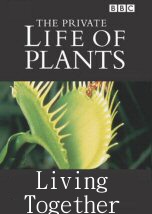
The Private Life of Plants Living Together

   1995    Nature
The fifth programme explores the alliances formed between the animal and plant worlds. Attenborough dives into Australia's Great Barrier Reef and contrasts the nocturnal feeding of coral, on microscopic creatures, with its daytime diet of algae. Some acacias are protected by ants, which will defend their refuge from any predator. Besides accommodation, the guards are rewarded with nectar and, from certain species, protein for their larvae as well. Fungi feed on plants but can also provide essential nutriment to saplings (Mycorrhiza). The connection is never broken throughout a tree's life and a quarter of the sugars and starches produced in its leaves is channelled back to its fungal partners. Meanwhile, fungi that feed on dead wood leave a hollow trunk, which also benefits the tree. Orchids enjoy a similar affiliation. Lichens are the product of a relationship between fungi and a photosynthetic associate, usually algae. They are extremely slow-growing, and a graveyard is the perfect location to discover their exact longevity. Mistletoe is a hemiparasite that obtains its moisture from a host tree, while using own leaves to manufacture food. Its seeds are deposited on another by the mistletoe tyrannulet, following digestion of the fruit. The dodder (Cuscuta) is also parasitic, generally favouring nettles, and siphons its nourishment through periodic 'plugs' along its stem. The rafflesia has no stem or leaves and only emerges from its host in order to bloom — and it produces the largest single flower: one metre across.
Series: The Private Life of Plants

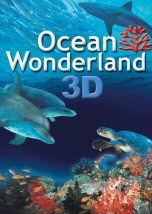
Ocean Wonderland 3D

   2003    Nature    3D    HD
The mission of the film is to underline the crucial ecological role of coral reefs play in maintaining the well being of our planet, and to point out and warn against the dangers that are destroying the world's coral reefs. Entirely filmed using digital technology, thanks to it, the film was shot almost entirely with natural light, thus showing the underwater world as it exactly is. This is the closest you can get to dive without being there. Shot on the Great Barrier Reef in Australia and in the Bahamas, it brings to you the amazing beauty of the many varieties of coral and the immense diversity of the marine life thriving there.

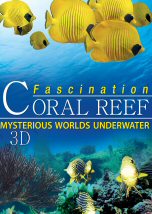
Fascination Coral Reef

   2013    Nature    3D    HD
Enter the fascinating world of the coral reefs and experience breath taking flora and fauna up close. The multitude of marine species, commencing with glassy sweepers, blow and porcupine fish, goliath groupers, giant morays, sea turtles up to the largest shark on earth, the whale shark, as well as the play of colours and the biodiversity of the corals, stony star corals, soft corals, bubble-tip anemones and gorgonian corals. Let yourself fall into a rapture of the deep. All in glorious 3D