







Last Watched

"Computer"  Sort by

Downloaded

   2013    Technology
Alex Winter explores the downloading revolution; the kids that created it, the bands and the businesses that were affected by it, and its impact on the world at large. He focuses on the advent of digital media sharing, including the rise of game-changing company Napster and controversial pioneers Shawn Fanning and Sean Parker. The digital revolution ultimately created a technology paradigm shift and upended the music industry. Audiences will hear insight from well known music artists and figures within the music industry including: The Beastie Boys' Mike D, Noel Gallagher, Henry Rollins, former Sony Music Chairman, Don Ienner, former record producer and Island Records founder Chris Blackwell and Hilary Rosen, former CEO of the Recording Industry Association of America.
Enemy of the State

   2010    Technology
Here, Aleks charts how the Web is forging a new brand of politics, both in democracies and authoritarian regimes. With contributions from Al Gore, Martha Lane Fox, Stephen Fry and Bill Gates, Aleks explores how interactive, unmediated sites like Twitter and YouTube have encouraged direct action and politicised young people in unprecedented numbers. Yet, at the same time, the Web's openness enables hardline states to spy and censor, and extremists to threaten with networks of hate and crippling cyber attacks.
Series: The Virtual Revolution

American Serengeti

   2003    Nature
Journey through the long-vanished corners of prehistoric North America, beginning when man first entered the vast, unspoiled continent some 14,000 years ago, in this appealing BBC documentary. Witness ancient beasts, mammoths, mastodons, giant bears, and sabre-toothed cats, and see the legacies each has passed to their modern successors. Computer animation and digital effects bring to life mammoths, saber-toothed cats, giant ground sloths, short-faced bears, glyptodonts, and a plethora of smaller animals in a lush Ice Age mosaic. Discoveries from sites across America are the basis for the reconstructions.
Series: Prehistoric America

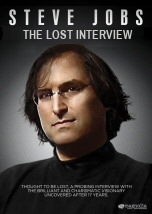
Steve Jobs the Lost Interview

   2011    Culture
In 1995, during the making of his TV series Triumph of the Nerds about the birth of the PC, Bob Cringely did a memorable hour-long interview with Steve Jobs. It was 10 years since Jobs had left Apple following a bruising struggle with John Sculley, the CEO he had brought into the company. At the time of the interview Jobs was running NeXT, the niche computer company he had founded after leaving Apple. During the interview, Jobs was at his charismatic best - witty, outspoken, visionary. In the end, only a part of the interview was used in the series and the rest was thought lost. But recently a VHS copy was found in the series director's garage. Now, cleaned up with modern technology, and put into context by Cringely.

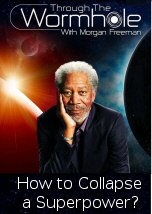
How to Collapse a Superpower

   2014    Technology
With a little imagination, could a few terrorists sabotage a mighty nation? Perhaps even tear down modern civilization? The stability of the US, Europe, China, or any global power depends on high-speed digital communication. Our increasing dependence on digital devices and global interactivity may be placing us in grave danger. Scientists around the world are dealing with new threats such as body hacking, Trojan horse viruses, and brain-damaging Internet addiction. But what if the ultimate threat isn’t an attack on technology, but the technology? Could the final superpower be the disembodied mind of the Internet itself?
Series: Through the Wormhole Season 5

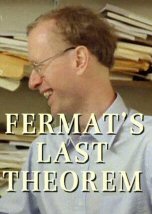
Fermat Last Theorem

   1996    Science
The Pythagorean Theorem is simple: x2 + y2 = z2. In this form, the equation can be solved. But what if the 2 is replaced with any positive integer greater than 2? Would the equation still be solvable? More than 300 years ago, amateur mathematician Pierre de Fermat said no, and claimed he could prove it. Unfortunately, the book margin in which he left this prophecy was too small to contain his thinking. Fermat's Last Theorem has since baffled mathematicians armed with the most advanced calculators and computers. Andrew Wiles methodically worked in near isolation to determine the proof for this seemingly simple equation.